North Dakota Assisted Living Costs 2026: Average $4,800/Month
Updated April 2026 · Based on Genworth Cost of Care Survey + state-specific market analysis
The 30-second answer: Assisted living in North Dakota averages $4,800/month in 2026, ranging from $4,000/mo (rural areas) to $6,500/mo (premium urban facilities). North Dakota has a Medicaid Home and Community-Based Services (HCBS) waiver that may cover some assisted living costs for low-income seniors with significant care needs. Top metros: Fargo ($6,500/mo), Bismarck, and Fargo.
North Dakota Assisted Living Cost Breakdown
| Region / Metro | Monthly Cost Range | Notes |
|---|---|---|
| North Dakota statewide average | $4,800/mo | Genworth 2024 baseline |
| Rural North Dakota | $4,000/mo | Smaller facilities, lower COL |
| Fargo | $6,500/mo | Premium urban market |
| Bismarck | $5,000/mo | Mid-sized metro |
| Fargo | $4,800/mo | Mid-sized metro |
The $4,800/month figure is the median cost statewide, half of North Dakota facilities cost more, half cost less. Costs vary based on:
- Level of care (independent living, assisted living, memory care)
- Apartment size (studio vs 1-bedroom vs 2-bedroom)
- Amenities (private vs shared, dining options, on-site medical)
- Location (urban vs suburban vs rural)
- Facility type (for-profit chain vs nonprofit vs independent)
The equipment that changes the most
Most of what caregiving costs is time. These four are the purchases that reliably buy some of it back, and they are the ones families tell us they wish they had bought sooner.
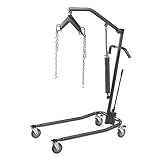 Drive Medical Hydraulic Patient Lift
A full lift is what makes one person able to manage a transfer alone. It is the single purchase that most often delays a move into residential care.
Check price on Amazon →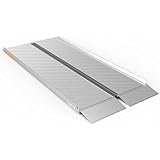 EZ-ACCESS Singlefold Wheelchair Ramp, 6 ft
Folds like a suitcase and carries in a car boot, so the same ramp handles the front step at home and the kerb at an appointment.
Check price on Amazon → Drive Medical Nitro Rollator with Seat
The seat matters more than the wheels. Being able to stop and rest is what decides whether someone still goes out at all.
Check price on Amazon → Vive Stand Assist Rail for Couch or Chair
Getting out of a low sofa is where most falls at home start. This is the cheapest thing on the list and often the first one needed.
Check price on Amazon →As an Amazon Associate we earn from qualifying purchases, at no extra cost to you. Researched guidance, not medical advice. Prices change, so check before buying.
What's Typically Included in North Dakota Assisted Living
- Housing: private or shared apartment with bathroom and small kitchen
- Three meals daily in a communal dining room
- Help with daily activities: bathing, dressing, medication management, mobility assistance
- Housekeeping and laundry service (typically weekly)
- Social activities and transportation to medical appointments
- 24/7 staff availability for emergency response
- NOT included: skilled nursing care, memory care premium, hospice (extra costs)
How to Pay for North Dakota Assisted Living
Private pay (most common)
Out-of-pocket from savings, retirement accounts, or family contributions. Most North Dakota families exhaust 2-3 years of savings before transitioning to other payment sources.
Long-term care insurance
If purchased before age 60, covers $100-$300/day toward assisted living costs. North Dakota allows tax deductions for premiums on state income tax returns.
North Dakota Medicaid waiver programs
North Dakota offers Medicaid HCBS waivers for assisted living. Eligibility requires meeting nursing-home-level care needs PLUS income/asset thresholds (typically under $2,742/mo income and $2,000 in countable assets). Waiver waitlists in North Dakota run 6-18 months, apply early through your local Department of Aging.
VA benefits (Aid & Attendance)
Wartime veterans and surviving spouses can receive $1,300-$2,800/month tax-free toward assisted living costs through the VA Aid & Attendance benefit. Must meet income, asset, and medical-need thresholds. Apply through the VA Pension office or a VA-accredited agent.
Reverse mortgage proceeds
For homeowners aged 62+, a Home Equity Conversion Mortgage (HECM) can fund 5-15 years of assisted living. Significant trade-offs (heir inheritance, fees), consult a HUD-approved counselor first.
How to Lower North Dakota Assisted Living Costs
- Move to a rural facility: saves $1,000-$2,500/month vs urban North Dakota markets
- Choose shared apartment: typical savings: $500-$1,500/month
- Skip premium amenities (private chef, concierge, salon) for $300-$800/month savings
- Negotiate for new-resident discounts: most facilities offer first-year discounts of 10-25%
- Apply for North Dakota Medicaid waiver early: many waivers have 6-18 month waitlists
- Use VA Aid & Attendance if eligible, adds $1,300-$2,800/mo of free funds
- Choose facility with no entrance fee: some North Dakota facilities charge $50,000-$300,000 upfront
North Dakota Assisted Living vs Nursing Home vs Memory Care
| Care Level | North Dakota Avg/Month | Best For |
|---|---|---|
| Independent Living | $3,200 | Active seniors, no daily help needed |
| Assisted Living | $4,800 | Help with 1-3 daily activities |
| Memory Care | $6,720 | Dementia or Alzheimer's diagnosis |
| Skilled Nursing (24/7) | $9,120 | Medical needs, post-hospital, hospice |
Memory Care Costs in North Dakota: When to Consider It
If your loved one has dementia, Alzheimer's disease, or significant cognitive decline, standard assisted living usually isn't enough. Memory care is a specialized form of assisted living designed for residents who need secure environments, structured routines, and staff trained in dementia care. In North Dakota, memory care typically costs 30-40% more than standard assisted living, with statewide averages running roughly $1,400-$1,800 per month above the $4,800 baseline for assisted living.
The premium covers higher staff-to-resident ratios (often 1:5 or 1:6 instead of the 1:8 to 1:12 typical in assisted living), specialized activity programming designed to slow cognitive decline, secured exits and wandering prevention systems, and staff certified in dementia-specific care techniques. Many North Dakota memory care communities also include enhanced safety features like motion-sensor monitoring, color-coded hallways for navigation, and dedicated outdoor courtyards with secured perimeters.
Most families find the transition to memory care necessary when a loved one begins wandering, becomes a danger to themselves through poor judgment (forgetting to turn off stoves, leaving doors unlocked), exhibits aggressive behaviors that staff in standard assisted living can't safely manage, or experiences sundowning episodes that disrupt the broader community. North Dakota facilities will assess care needs during admission to recommend the appropriate level of care.
In-Home Care vs Assisted Living in North Dakota: Cost Comparison
Many North Dakota families consider in-home care as an alternative to assisted living, especially in the early stages of declining health. The math depends heavily on how many hours of help your loved one actually needs each day. In-home caregivers in North Dakota typically charge $25-$35 per hour through licensed agencies, or $18-$25 per hour for independently hired caregivers without agency overhead.
For low-level care needs (4 hours of help per day), in-home care runs roughly $3,000-$4,200 per month, competitive with or below the North Dakota assisted living average of $4,800. But once your loved one needs 8+ hours of daily help, in-home costs climb to $6,000-$8,400 per month, making assisted living significantly cheaper. For 24/7 in-home care, expect $15,000-$25,000 per month in North Dakota, far more than even the most premium assisted living facility.
Beyond cost, in-home care has practical limitations. It works best for predictable daily routines and breaks down during medical emergencies, when caregivers call in sick, or when your loved one's needs increase faster than family can adjust scheduling. Assisted living provides 24/7 backup staffing, on-site medication management, and immediate response to falls or medical issues, none of which a single in-home caregiver can match.
Veterans Assisted Living Benefits in North Dakota
If your loved one served in the U.S. military during a wartime period (World War II, Korean War, Vietnam War, Gulf War), they may qualify for the VA Aid & Attendance pension benefit. In North Dakota, this benefit can provide $1,300-$2,800 per month tax-free toward assisted living costs, depending on marital status and care needs. Surviving spouses of qualifying veterans also qualify, though at slightly lower benefit amounts.
To qualify, the veteran (or surviving spouse) must meet three thresholds: military service requirements (at least 90 days of active duty with at least one day during a wartime period), medical need (requires assistance with at least two activities of daily living), and financial limits (assets generally under $155,356 in 2026, excluding primary residence and vehicle). Income above the benefit amount can be offset by recurring medical expenses.
Beyond Aid & Attendance, North Dakota operates several State Veterans Homes that offer subsidized assisted living and skilled nursing for qualifying veterans. These facilities typically have multi-month waitlists but offer significantly lower out-of-pocket costs than private facilities. The North Dakota Department of Veterans Affairs maintains a current list of homes and eligibility criteria. The U.S. Department of Veterans Affairs national hotline is 1-800-827-1000 for general benefit questions, and accredited Veterans Service Organizations (VSOs) like the American Legion, VFW, and DAV can help file applications at no charge.
How to Choose an Assisted Living Facility in North Dakota: Tour Checklist
Touring assisted living facilities is the single most important step in the decision process. Plan to visit at least 3-4 North Dakota facilities before deciding, and visit each at different times of day, once during a structured activity, once during a meal, and once unannounced if the facility allows. The unannounced visit is especially revealing.
During tours, pay attention to staff body language with current residents. Are residents called by name? Do staff make eye contact and engage warmly, or do they speak past residents as if they aren't there? Watch how staff respond to call lights, a 5-minute response time is acceptable; 15+ minutes is a serious red flag. Ask current residents (not just the staff-selected ambassadors) about their experience.
Critical questions to ask every North Dakota facility: What is the staff-to-resident ratio at night and on weekends (when many facilities are understaffed)? What's the annual staff turnover rate (under 50% is good; over 100% is alarming)? What happens if my loved one's care needs increase, will they be able to stay, or face an "involuntary discharge"? How are medication errors documented and reported? What was the facility's most recent North Dakota state inspection result, and were there any deficiencies?
Red flags worth walking away from: a strong odor of urine or cleaning chemicals masking other smells, residents left alone in hallways or common areas for extended periods, staff who can't answer questions about your loved one's specific medical conditions, contracts that don't clearly explain the conditions under which fees can increase, and any reluctance to share recent state inspection reports.
Resources for North Dakota Caregivers and Families
Navigating assisted living decisions in North Dakota is overwhelming, but several free resources can help. The federal Eldercare Locator (1-800-677-1116, eldercare.acl.gov) connects families to local Area Agencies on Aging in North Dakota, which offer free care planning consultations, caregiver respite programs, and benefits screening.
The North Dakota Long-Term Care Ombudsman is a federally mandated advocate who investigates complaints against assisted living facilities and helps families resolve disputes, at no charge. Every North Dakota county has an ombudsman office; find yours through the National Long-Term Care Ombudsman Resource Center at ltcombudsman.org. The ombudsman can also provide insight on which North Dakota facilities have histories of complaints versus clean records.
For caregivers experiencing burnout, the North Dakota chapter of the Alzheimer's Association (alz.org) offers 24/7 support lines, local in-person support groups, and free care consultations. The AARP Caregiver Resource Center (aarp.org/caregiving) provides legal templates, financial planning guides, and state-specific resources for North Dakota families. Many North Dakota hospitals also offer free pre-discharge planning support through their case management departments.
Tax Deductions and Financial Planning for North Dakota Assisted Living
Federal tax law allows assisted living costs to be deducted as medical expenses if the resident is "chronically ill", defined as unable to perform at least two activities of daily living without substantial assistance, or requiring substantial supervision due to cognitive impairment. A licensed healthcare provider must certify this within the past 12 months. The portion of assisted living costs attributable to medical care and personal care (not room and board for non-chronically-ill residents) is deductible to the extent it exceeds 7.5% of adjusted gross income.
For chronically ill residents in North Dakota, this often means the entire cost, including room and board, qualifies as deductible medical expenses, since the housing is medically necessary. Keep all facility invoices, the physician certification, and your loved one's care plan. Many families recover thousands in tax refunds by claiming this deduction; consult a CPA familiar with elder care tax planning if costs exceed $30,000 per year.
North Dakota families should also consider asset protection strategies before a Medicaid waiver application becomes necessary. Medicaid uses a 5-year "look-back" period: any assets transferred or gifted within 5 years of application can trigger penalty periods that delay waiver eligibility. Working with an elder law attorney 5+ years before anticipated need allows for legal asset protection through irrevocable trusts, Medicaid-compliant annuities, and spend-down strategies. Most North Dakota elder law attorneys offer free initial consultations.
How North Dakota Compares to Neighboring States
Assisted living costs in North Dakota ($4,800/month average) are influenced by regional economic factors that often span across state lines. Families considering North Dakota facilities sometimes find significant savings by exploring options in Minnesota, Montana, and South Dakota, especially if they're willing to relocate a loved one to access lower costs. However, the trade-off is distance from family, and visiting becomes harder as your loved one's care needs increase.
The Genworth Cost of Care Survey publishes annual updates with state-by-state comparisons that show how North Dakota ranks nationally. National median assisted living cost is approximately $5,350/month in 2026, so North Dakota's $4,800 average puts it in context relative to peer states. Higher-cost states tend to be coastal (Northeast, California, Pacific Northwest) and lower-cost states are concentrated in the South and parts of the Midwest.
If you're flexible on location, search for "best states for senior living 2026" rankings, these factor in cost, healthcare quality, climate, tax friendliness for retirees, and quality of assisted living regulations. Some North Dakota families relocate parents to lower-cost states with comparable healthcare quality, then visit quarterly rather than monthly. The savings can offset travel costs many times over.
North Dakota Medicaid Waiver Deep Dive: North Dakota Medicaid Waiver for Aged and Disabled
For North Dakota seniors who qualify financially and medically, the North Dakota Medicaid Waiver for Aged and Disabled is the primary pathway to Medicaid funding for assisted living. Unlike traditional Medicaid (which only covers nursing homes), this HCBS waiver allows recipients to receive long-term care in less restrictive settings, including many North Dakota assisted living facilities, though not all facilities accept waiver participants.
Eligibility typically requires meeting three thresholds: medical need (your loved one must require nursing-home-level care, assessed via a state evaluator), financial need (income generally under $2,829/month per applicant in 2026, varies slightly by state, and countable assets typically under $2,000 per individual or $148,620 for the spouse of a Medicaid applicant), and North Dakota residency. Some assets are excluded from the calculation: the primary home (up to certain equity limits), one vehicle, household belongings, and prepaid funeral arrangements.
Application processing in North Dakota typically takes 45-90 days, but the waiver itself often has a waitlist of 6-24 months due to limited federal funding. Apply as early as possible, many North Dakota families apply when a loved one is still independent, knowing the waitlist will likely match the timeline of declining health. Processing involves a medical assessment by a state-contracted evaluator, financial documentation review, and (if approved) selection of a participating facility. Your local Area Agency on Aging in North Dakota can provide free application help.
Frequently Asked Questions
What's the average cost of assisted living in North Dakota? $4,800/month for a one-bedroom assisted living apartment in 2026. Range: $4,000 (rural) to $6,500 (urban premium).
Does Medicare cover North Dakota assisted living? No. Medicare doesn't cover room/board for assisted living. It only covers medical services within the facility (doctor visits, certain therapies). Most residents pay privately or via long-term care insurance.
Does North Dakota Medicaid cover assisted living? a Medicaid Home and Community-Based Services (HCBS) waiver that may cover some assisted living costs for low-income seniors with significant care needs. Apply through your local Department of Aging.
How long do most North Dakota residents stay in assisted living? Average stay is 22 months. About 60% transition to nursing home or memory care; 30% return home or pass away during stay.
What's the entrance fee for North Dakota assisted living? Most North Dakota facilities charge a community fee of $1,500-$5,000 (one-time, sometimes refundable). CCRC (Continuing Care Retirement Community) facilities can charge $50,000-$500,000 entrance fees.
Can I deduct North Dakota assisted living costs on taxes? Yes, if the resident requires assistance with 2+ activities of daily living (ADLs) AND a doctor's certification. Up to the entire cost may be deductible as a medical expense on federal taxes; North Dakota tax treatment varies.
What's the cheapest assisted living option in North Dakota? Rural facilities and shared apartment arrangements are the most affordable North Dakota options, often $1,000-$2,500 below the statewide average of $4,800/month. Smaller, independently-owned facilities typically cost less than national chains. Some North Dakota religious-affiliated nonprofit facilities also offer subsidized rates for low-income residents.
Can I tour North Dakota assisted living facilities for free? Yes, every North Dakota facility offers free tours, and most allow you to bring your loved one to "trial" a meal or day program before committing. Be wary of any facility that requires a deposit just to schedule a tour.
What's the difference between assisted living and a nursing home in North Dakota? Assisted living provides help with daily activities (bathing, dressing, medication, mobility) for residents who don't need 24/7 medical care. Nursing homes (skilled nursing facilities) provide 24/7 medical care for residents with serious medical conditions, post-hospital recovery needs, or end-of-life care. North Dakota regulates these as separate license categories with different staffing requirements and inspection criteria.
How do I check a North Dakota facility's complaint history? The North Dakota Long-Term Care Ombudsman maintains records of complaints filed against facilities. Federal Medicare.gov also publishes inspection results for any North Dakota facility that participates in Medicare or Medicaid (most do). Search "Medicare nursing home compare" to access free inspection reports going back several years.
Does North Dakota offer state-specific tax breaks for assisted living costs? North Dakota tax treatment of medical expense deductions varies, most states follow federal rules but some have their own thresholds or additional credits. Consult a North Dakota-licensed CPA or tax preparer; many offer free initial consultations for elder care tax planning.
What happens if I run out of money paying for North Dakota assisted living? Most North Dakota facilities will not evict residents who exhaust private funds if those residents have applied for North Dakota Medicaid Waiver for Aged and Disabled or another Medicaid pathway and are awaiting approval. However, not all North Dakota facilities accept Medicaid waiver patients. Choose a "Medicaid-certified" facility from the start if you anticipate this transition.
Can North Dakota families share an apartment in assisted living? Many North Dakota facilities offer two-bedroom shared apartments for couples or sibling pairs at substantial discounts (often 15-30% below two single units). This is a common cost-savings arrangement for spouses entering care together.
What documents do I need to apply for North Dakota assisted living? Most North Dakota facilities require: recent physical exam (within 30-60 days), current medication list with dosages, copy of advance directives or POA, recent financial statements (for private pay) or Medicaid waiver approval letter, recent TB test, and identification documents. Allow 2-4 weeks to gather everything.