How to Get Power of Attorney for an Elderly Parent
Power of attorney (POA) is one of the most important legal documents for families with aging parents. Without it, you may not be able to pay their bills, make medical decisions, or access their accounts, even in an emergency.
This guide walks you through everything you need to know: what POA is, how to get it, and what to do if your parent has dementia or refuses to sign.
What Is Power of Attorney?
Power of attorney is a legal document that gives someone (called an "agent" or "attorney-in-fact") the authority to act on behalf of another person (the "principal"). Your parent is granting you permission to make decisions and take actions for them.
POA is not guardianship. Your parent retains all their rights and can revoke POA at any time, as long as they're mentally competent.
The equipment that changes the most
Most of what caregiving costs is time. These four are the purchases that reliably buy some of it back, and they are the ones families tell us they wish they had bought sooner.
 Drive Medical Hydraulic Patient Lift
A full lift is what makes one person able to manage a transfer alone. It is the single purchase that most often delays a move into residential care.
Check price on Amazon →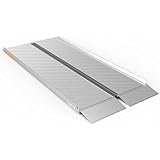 EZ-ACCESS Singlefold Wheelchair Ramp, 6 ft
Folds like a suitcase and carries in a car boot, so the same ramp handles the front step at home and the kerb at an appointment.
Check price on Amazon → Drive Medical Nitro Rollator with Seat
The seat matters more than the wheels. Being able to stop and rest is what decides whether someone still goes out at all.
Check price on Amazon → Vive Stand Assist Rail for Couch or Chair
Getting out of a low sofa is where most falls at home start. This is the cheapest thing on the list and often the first one needed.
Check price on Amazon →As an Amazon Associate we earn from qualifying purchases, at no extra cost to you. Researched guidance, not medical advice. Prices change, so check before buying.
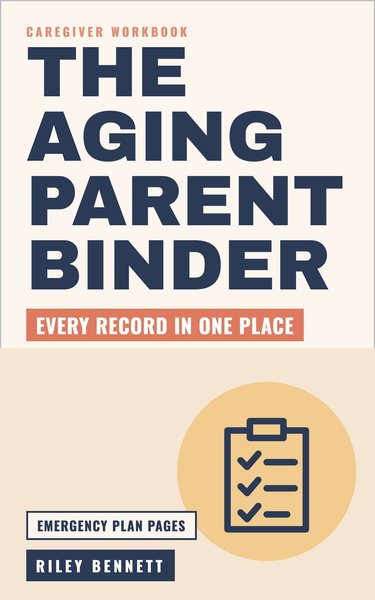
The companion book
The Aging Parent Binder
by Riley Bennett
A fill-in caregiver organizer for medical, legal, financial, insurance and daily-care information, with an emergency plan and appointment log. Worksheets for contacts, medications, insurance numbers, legal documents, home safety and a one-page emergency sheet, in one paperback you keep where the care happens.
Paperback on Amazon →Types of Power of Attorney
1. Financial Power of Attorney
Allows you to handle money matters: paying bills, managing bank accounts, filing taxes, selling property, making investment decisions.
2. Healthcare Power of Attorney (Healthcare Proxy)
Allows you to make medical decisions if your parent can't communicate their wishes. This includes treatment options, surgeries, end-of-life care.
3. Durable vs. Non-Durable
- Durable POA: Remains in effect if your parent becomes incapacitated. This is what you want.
- Non-Durable POA: Ends if your parent becomes incapacitated. Rarely useful for elder care.
4. Springing POA
Only takes effect when a specific event happens (like a doctor declaring your parent incapacitated). Sounds good but can cause delays when you need to act quickly.
Most families need at least two documents: Durable Financial POA and Healthcare POA. Many attorneys prepare these together.
Step-by-Step: How to Get POA
-
Have the conversation with your parent
Explain why POA is important, it's not about taking control, it's about being able to help them if something happens. Many parents are relieved to have this in place. -
Decide who should be the agent
Often it's one adult child, but you can name co-agents or successors. Consider: Who lives closest? Who handles finances well? Who can your parent trust? -
Get the documents prepared
Options: elder law attorney ($300-$500), online legal service, or state-specific forms. An attorney is best for complex situations or large assets. -
Your parent signs with witnesses/notary
Requirements vary by state, but typically need 2 witnesses and/or notarization. Your parent must be mentally competent at signing. -
Distribute copies to relevant parties
Banks, doctors' offices, financial institutions. Some may require their own forms, get these done now, not during a crisis.
What If Your Parent Has Dementia?
This is the critical issue: your parent must be mentally competent to sign POA. "Competent" means they understand what they're signing and its implications.
If dementia is early/mild:
They may still be competent to sign. Act quickly. An elder law attorney can assess capacity and document it, which protects against future challenges.
If dementia is moderate/severe:
If your parent truly cannot understand what they're signing, it's too late for POA. Your only option is guardianship/conservatorship: a court process where a judge appoints someone to make decisions. This is expensive ($2,000-$10,000+), time-consuming (months), and something families should avoid if possible.
If your parent is in early dementia, get POA now. Every month you wait increases the chance they'll lose capacity to sign.
What If Your Parent Refuses?
Some parents resist POA because they fear losing control or feel it means they're declining. Strategies:
- Reframe it: "This isn't about me controlling you, it's about making sure I can help if you're ever in the hospital."
- Make it mutual: "I'm setting up POA for myself too, we should all have this."
- Start with healthcare: Sometimes parents are more comfortable with medical POA than financial.
- Involve their attorney: If they have a trusted lawyer, that person may be more persuasive.
- Give it time: Plant the seed and come back to it. A health scare often changes minds.
Common POA Mistakes
- Waiting until there's a crisis: Banks and doctors will turn you away without POA.
- Not getting durable POA: Non-durable becomes useless exactly when you need it.
- Not registering with banks: Some banks won't accept POA unless it's on file before you need it.
- Having only one copy: Keep the original safe, but have certified copies for multiple institutions.
- Choosing the wrong agent: Pick for competence and availability, not just birth order.
Prepare for the Attorney Meeting
Our Elder Law Attorney Prep Pack has all the questions to ask and documents to bring.
Get the Prep PackPOA Checklist
- ☐ Have the conversation with your parent about POA
- ☐ Decide who will be agent (and backup agent)
- ☐ Get Durable Financial POA prepared and signed
- ☐ Get Healthcare POA/Healthcare Proxy prepared and signed
- ☐ Make certified copies
- ☐ Register with banks and financial institutions
- ☐ Provide copies to doctors and hospital
- ☐ Store original in a safe, accessible place