Medicare Hospital Stay Rules: What Every Caregiver Must Know
Your parent is in the hospital, and you assume Medicare is covering everything. But there's a hidden trap that catches thousands of families every year: the difference between "inpatient" and "observation" status. This single designation can mean the difference between Medicare covering skilled nursing care, or you paying tens of thousands of dollars out of pocket.
This guide explains what you need to know to protect your parent and your family's finances.
Your parent can spend 5 nights in a hospital bed, in a hospital room, receiving hospital care, and never be officially "admitted" as an inpatient. They might be on "observation status," which is technically outpatient. This matters enormously for what Medicare covers next.
Inpatient vs. Observation Status
What's the Difference?
| Inpatient Status | Observation Status |
|---|---|
| Formally admitted to the hospital | Technically "outpatient" despite staying in hospital |
| Covered by Medicare Part A | Covered by Medicare Part B |
| Counts toward 3-day requirement for SNF coverage | Does NOT count toward 3-day requirement |
| Prescription drugs covered as part of hospital stay | May pay out-of-pocket for prescription drugs |
| Doctor orders formal admission | Doctor places patient "under observation" |
Why Does This Happen?
Hospitals are under pressure from Medicare auditors. If they admit someone who doesn't meet strict criteria and Medicare later denies the claim, the hospital doesn't get paid. So hospitals have become very conservative, placing many patients on observation status to avoid audit risk.
The result: patients who look admitted (in a bed, getting IV fluids, seeing doctors) are technically outpatient and subject to very different coverage rules.
The equipment that changes the most
Most of what caregiving costs is time. These four are the purchases that reliably buy some of it back, and they are the ones families tell us they wish they had bought sooner.
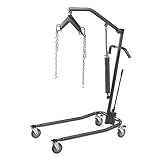 Drive Medical Hydraulic Patient Lift
A full lift is what makes one person able to manage a transfer alone. It is the single purchase that most often delays a move into residential care.
Check price on Amazon →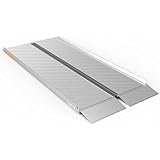 EZ-ACCESS Singlefold Wheelchair Ramp, 6 ft
Folds like a suitcase and carries in a car boot, so the same ramp handles the front step at home and the kerb at an appointment.
Check price on Amazon → Drive Medical Nitro Rollator with Seat
The seat matters more than the wheels. Being able to stop and rest is what decides whether someone still goes out at all.
Check price on Amazon → Vive Stand Assist Rail for Couch or Chair
Getting out of a low sofa is where most falls at home start. This is the cheapest thing on the list and often the first one needed.
Check price on Amazon →As an Amazon Associate we earn from qualifying purchases, at no extra cost to you. Researched guidance, not medical advice. Prices change, so check before buying.
The 3-Day Rule for Skilled Nursing
Medicare only covers skilled nursing facility (SNF) care after 3 consecutive days of inpatient hospital stay. Observation time doesn't count, not even if it was in the same hospital, in a hospital bed, for a week.
How the 3-Day Rule Works
- Your parent must be a hospital inpatient for 3 consecutive days
- The day of admission counts, but the day of discharge doesn't
- The stay must be medically necessary
- After qualifying, Medicare Part A covers up to 100 days of SNF care per benefit period
What Happens Without the 3-Day Inpatient Stay
If your parent needs skilled nursing care but doesn't meet the 3-day inpatient requirement:
- Medicare won't cover the skilled nursing facility stay
- You may have to pay out of pocket for $300-$400+ per day
- Or your parent goes home without needed rehabilitation
- Some Medicaid programs may help, but rules vary by state
Example scenario: Your parent falls and breaks a hip. They spend 4 nights in the hospital, then need rehab at a skilled nursing facility. If those 4 nights were all "observation", not inpatient, Medicare won't pay for the SNF. You could face $15,000-$30,000+ in bills.
How to Find Out Your Parent's Status
Ask Directly
As soon as possible after arrival, ask:
- "Is my parent being admitted as an inpatient or are they on observation status?"
- Ask the doctor, ask the nurse, ask the case manager
- Get a clear answer, don't assume
- Ask again each day, status can change
Required Written Notice
Hospitals are required to give patients a written notice called the Medicare Outpatient Observation Notice (MOON) if they're on observation status for more than 24 hours. This notice explains:
- That they're an outpatient on observation
- Why they're receiving observation services
- The implications for their costs
This is your alert that they're NOT inpatient. If they need SNF care afterward, the clock hasn't started on the 3-day requirement. Take action now.
What You Can Do
Talk to the Doctor
If your parent is on observation status and you're concerned about SNF coverage:
- Ask the doctor if inpatient admission is appropriate
- Explain your concern about skilled nursing coverage
- Understand that the doctor may not have control, hospital policies and Medicare rules are complex
Request a Case Manager
Every hospital has case managers or discharge planners. They can:
- Explain why the status decision was made
- Help you understand options
- Communicate with the medical team about your concerns
- Help plan for discharge and SNF if needed
File a Status Determination Request
Under the NOTICE Act, you can request that the hospital's Utilization Review Committee review the observation status decision. This is a formal process where the hospital must reconsider whether inpatient admission is appropriate.
Appeal After Discharge
If your parent was on observation status and later denied SNF coverage, you can appeal:
- Request a redetermination from the Medicare Administrative Contractor
- If denied, request reconsideration by a Qualified Independent Contractor
- Further appeals go to an Administrative Law Judge, then Medicare Appeals Council, then Federal Court
Get Help with Appeals
Contact your State Health Insurance Assistance Program (SHIP) for free counseling on Medicare issues, including appeals. Find your local SHIP at shiphelp.org or call 1-877-839-2675.
Medicare Advantage Plans (Part C)
If your parent has a Medicare Advantage plan instead of Original Medicare, rules may be different:
- Some plans have waived the 3-day hospital requirement for SNF coverage
- But they may have their own prior authorization requirements
- Network restrictions may limit which SNFs you can use
- Always call the plan directly to understand their specific rules
If your parent has Medicare Advantage, call the plan's member services line immediately when hospitalized. Ask: "Does this hospitalization qualify for SNF coverage? What are the requirements?" Get answers in writing if possible.
What Hospital Stays Cost Under Medicare
Inpatient Stay (Medicare Part A)
For 2026 benefit period:
- Days 1-60: You pay the Part A deductible ($1,676 in 2026), then Medicare pays the rest
- Days 61-90: You pay $419/day coinsurance
- Days 91+: You pay $838/day using lifetime reserve days (60 total)
Observation Status (Medicare Part B)
- Part B covers services at 80% after deductible ($257 in 2026)
- You pay 20% of costs, which can be substantial
- Prescription drugs may not be covered, you may pay full cost
- Self-administered drugs you normally take may not be covered at all
Skilled Nursing Facility Coverage
When your parent DOES qualify (after 3+ days inpatient):
- Days 1-20: Medicare pays 100%
- Days 21-100: You pay $209.50/day coinsurance (2026)
- Days 101+: Medicare doesn't cover, you pay full cost
Requirements for coverage:
- 3 consecutive days as hospital inpatient within 30 days before SNF admission
- SNF care is for condition treated in hospital (or related condition)
- Doctor certifies skilled care is needed
- SNF is Medicare-certified
Planning Ahead
If Your Parent Has a Medigap Policy
Medicare Supplement (Medigap) policies can help with:
- Part A hospital deductible
- SNF coinsurance (days 21-100)
- But Medigap only helps when Medicare covers the service first
- If Medicare doesn't cover (no 3-day inpatient stay), Medigap won't either
Consider Long-Term Care Insurance
If your parent has long-term care insurance, it may cover SNF stays that Medicare doesn't. Check the policy for:
- Benefit triggers
- Waiting periods
- Daily benefit amounts
- Covered facilities
Key Questions to Ask at the Hospital
On Admission
- Is my parent being admitted as an inpatient or placed on observation?
- If observation, what would need to change for inpatient admission?
- Who made this determination?
- Can I speak with the case manager?
Before Discharge
- What was my parent's status for this stay?
- How many inpatient days did they have?
- Will this qualify for Medicare coverage of SNF care?
- If not, what are our options?
If SNF Care Is Needed
- Is this SNF Medicare-certified?
- Has Medicare coverage been verified?
- What will our out-of-pocket costs be?
- What happens if Medicare denies coverage?
Navigate Medicare Like a Pro
Our Complete Caregiver Toolkit includes Medicare checklists, hospital discharge guides, and questions to ask at every stage of care.
Get the Complete GuideKey Takeaways
- Hospital beds don't mean inpatient status, always ask
- Only inpatient days count toward the 3-day requirement for SNF coverage
- Observation status looks the same but has very different Medicare implications
- Hospitals must give written notice (MOON) for observation stays over 24 hours
- Ask about status early and often, it can change
- Work with case managers and consider appealing if you believe status was wrong
- Medicare Advantage plans may have different rules, call and ask
Frequently Asked Questions
What is the Medicare 3-day rule for skilled nursing?
Medicare requires a qualifying 3-day inpatient hospital stay before covering skilled nursing facility care. The 3 days must be consecutive, and you must be admitted as an inpatient (not observation status). You must enter the SNF within 30 days of discharge. This rule doesn't apply to Medicare Advantage plans, which may have different requirements.
What's the difference between hospital observation and inpatient admission?
Inpatient admission means you're formally admitted to the hospital with a physician order, typically for serious conditions requiring overnight care. Observation status is technically outpatient care, you're being 'observed' to determine if admission is needed. This matters because observation days don't count toward the 3-day rule, and you may owe higher out-of-pocket costs.
How do I know if my parent is inpatient or observation?
Ask the hospital directly, you have the right to know. Request this information from nursing staff or the case manager. Hospitals must provide written notice (Medicare Outpatient Observation Notice/MOON) within 36 hours if you're on observation status. If you disagree with observation status, ask the physician to request inpatient admission or file an appeal.
Does Medicare cover a hospital stay?
Medicare Part A covers inpatient hospital stays with a deductible ($1,632 in 2024) for days 1-60, then coinsurance for days 61-90 ($408/day), and lifetime reserve days 91-150 ($816/day). Medicare Part B (not Part A) covers observation stays, meaning you pay 20% of services. Having a Medicare Supplement plan significantly reduces out-of-pocket costs.