Assisted Living vs Nursing Home: What's the Difference?
These terms are often used interchangeably, but they're very different types of care. Understanding the distinction is crucial for choosing the right option for your parent, and for understanding what insurance will (and won't) pay for.
The Quick Comparison
| Assisted Living | Nursing Home | |
|---|---|---|
| Best for | People who need help with daily activities but not medical care | People who need 24/7 medical care and supervision |
| Setting | Apartment-style living with shared amenities | Hospital-like rooms (private or shared) |
| Staff | Aides and caregivers; nurse on call or on-site | RNs and LPNs on-site 24/7; doctor visits regularly |
| 2026 Cost | $4,500-$6,500/month average | $8,000-$10,000/month average |
| Medicare coverage | No | Limited (short-term after hospital stay) |
| Medicaid coverage | Some states, through waivers | Yes, once eligible |
The equipment that changes the most
Most of what caregiving costs is time. These four are the purchases that reliably buy some of it back, and they are the ones families tell us they wish they had bought sooner.
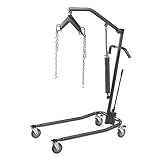 Drive Medical Hydraulic Patient Lift
A full lift is what makes one person able to manage a transfer alone. It is the single purchase that most often delays a move into residential care.
Check price on Amazon →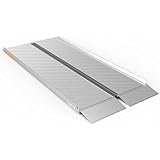 EZ-ACCESS Singlefold Wheelchair Ramp, 6 ft
Folds like a suitcase and carries in a car boot, so the same ramp handles the front step at home and the kerb at an appointment.
Check price on Amazon → Drive Medical Nitro Rollator with Seat
The seat matters more than the wheels. Being able to stop and rest is what decides whether someone still goes out at all.
Check price on Amazon → Vive Stand Assist Rail for Couch or Chair
Getting out of a low sofa is where most falls at home start. This is the cheapest thing on the list and often the first one needed.
Check price on Amazon →As an Amazon Associate we earn from qualifying purchases, at no extra cost to you. Researched guidance, not medical advice. Prices change, so check before buying.
Assisted Living Explained
Assisted Living
What it is: Residential communities where seniors live in private apartments but receive help with daily activities like bathing, dressing, medication management, and meals.
Typical services include:
- Private apartment or room
- Meals in a dining room
- Housekeeping and laundry
- Help with bathing, dressing, grooming
- Medication reminders or management
- Social activities and outings
- Transportation
- 24-hour staff and emergency call systems
What's NOT typically included:
- Skilled nursing care (IVs, wound care, injections)
- 24-hour medical monitoring
- Physical, occupational, or speech therapy (can be arranged separately)
Nursing Home Explained
Nursing Home (Skilled Nursing Facility)
What it is: Medical facilities that provide 24-hour nursing care for people who need ongoing medical treatment, supervision, or rehabilitation.
Typical services include:
- 24-hour nursing care by RNs and LPNs
- Physician oversight and regular visits
- Medication administration
- Skilled nursing (wound care, IVs, feeding tubes, etc.)
- Physical, occupational, and speech therapy
- All meals and personal care
- Room and board (often semi-private rooms)
Common reasons for nursing home care:
- Recovery after surgery or hospital stay (short-term rehab)
- Advanced dementia requiring constant supervision
- Complex medical conditions requiring monitoring
- Need for skilled nursing procedures
- Unable to perform most activities of daily living
Who Belongs Where?
- Needs help with daily activities but is medically stable
- Can get around with or without a walker/wheelchair
- Has mild to moderate memory issues (some have memory care units)
- Would benefit from socialization and activities
- Doesn't need skilled nursing or 24/7 medical care
- Needs skilled nursing care (IV medications, wound care, feeding tubes)
- Has advanced dementia and needs constant supervision
- Is bedridden or needs help with all daily activities
- Needs rehabilitation after a hospital stay
- Has complex medical conditions requiring monitoring
What About Memory Care?
Memory care is specialized care for people with Alzheimer's or other forms of dementia. It can be offered within:
- Memory care units within assisted living: Secure wings with staff trained in dementia care
- Standalone memory care facilities: Entire communities dedicated to dementia care
- Nursing homes: Many have memory care units for residents with advanced dementia
Memory care costs more than standard assisted living, typically $6,000-$8,000/month, due to additional staffing and security requirements. For a local figure, use the assisted living costs by ZIP code calculator, which estimates assisted living, independent living and memory care for your parent's ZIP.
How Payment Works
Assisted Living
- Medicare: Does NOT cover assisted living
- Medicaid: Some states cover through HCBS waivers (Home and Community-Based Services), but there are usually waitlists
- Long-term care insurance: Usually covers, check your policy
- VA benefits: Aid & Attendance can help eligible veterans
- Most pay privately using savings, retirement, or proceeds from selling the home
Nursing Home
- Medicare: Covers short-term skilled nursing (up to 100 days) after a qualifying hospital stay, but NOT long-term custodial care
- Medicaid: Covers nursing home care for those who qualify financially, this is the primary payer for long-term nursing home stays
- Long-term care insurance: Usually covers, check your policy
- VA benefits: May cover for eligible veterans
Compare Care Costs in Your Area
Use our calculator to estimate costs for different care options.
Calculate CostsCan You Start in One and Move to the Other?
Yes. Many people start in assisted living and move to a nursing home as their needs increase. Some continuing care retirement communities (CCRCs) offer all levels of care on one campus.
Important: Some assisted living facilities can accommodate increasing needs by adding services (at additional cost). Others have limits and will require residents to move if needs exceed what they can provide.
Ask about this during tours: "What would happen if my parent's needs increased significantly? At what point would they need to move?"
Questions to Ask When Choosing
For Assisted Living:
- What's the base rate? What services cost extra?
- How do you assess care levels and adjust pricing?
- What would cause a resident to need to leave?
- Do you have memory care? What's included?
- What's the staff-to-resident ratio?
For Nursing Homes:
- What's the private-pay rate? Do you accept Medicaid?
- What's the staff-to-resident ratio?
- What recent state inspection results show?
- How do you handle behavioral issues?
- What happens when the resident's care needs change?
Related Resources
- Assisted Living Cost by State (2026)
- How to Choose an Assisted Living Facility
- How to Pay for Nursing Home Care
- Facility Comparison Tool
- Assisted Living Tour Checklist
Frequently Asked Questions
What is the main difference between assisted living and nursing home?
Assisted living provides housing, meals, and help with daily activities for seniors who are mostly independent but need some support. Nursing homes (skilled nursing facilities) provide 24/7 medical care and supervision for those with significant health needs requiring daily nursing attention. Assisted living costs less and offers more independence; nursing homes provide intensive medical care.
How much does assisted living cost compared to nursing home?
Assisted living averages $4,500-$5,500 per month nationally, while nursing homes average $7,500-$9,000 per month for a semi-private room and $9,000-$10,500 for a private room. Costs vary significantly by state and level of care needed. Memory care units in assisted living add $1,000-$3,000 monthly.
Does Medicare pay for assisted living or nursing home?
Medicare does not cover assisted living. Medicare covers skilled nursing facility care only after a qualifying hospital stay (3+ days), for up to 100 days, and only for rehabilitative care, not long-term custodial care. Most nursing home residents eventually pay out-of-pocket or through Medicaid, which does cover nursing home care for those who qualify financially.
Can someone move from assisted living to nursing home if their needs increase?
Yes, this is common. Many seniors start in assisted living and transition to nursing home care as their health declines. Some communities offer both levels of care on one campus (continuing care retirement communities), making transitions easier. The transition typically occurs when 24/7 nursing care becomes necessary or when memory care needs exceed what assisted living can provide.