How we choose what to recommend.
ParentCareGuide is editorially independent. Picks come from published-spec research and verified buyer-review patterns at 4.0+ stars across 200+ reviews. We are not paid by manufacturers for placement and have not received free product from any brand listed.
Disclosure: Amazon affiliate links, we earn 2–4% commission at no extra cost. How we choose → · Affiliate disclosure →
Finding the right wheelchair for an aging parent is one of the most important, and most overwhelming, decisions a caregiver can face. The wrong chair causes pain, skin breakdown, and falls. The right chair preserves dignity, enables outings, and makes daily life manageable for both your parent and you.
We evaluated eight top-rated wheelchairs across three categories: lightweight transport chairs, self-propelling manual wheelchairs, and electric power chairs. Each review focuses on what matters most when buying for an elderly parent: comfort during long sits, weight for car loading, ease of operation, and value for money.
Quick Comparison: 8 Best Elderly Wheelchairs 2026
| Product | Type | Chair Weight | Price | Best For |
|---|---|---|---|---|
| Drive Medical Blue Streak | Transport | 24 lbs | Under $250 | Budget transport, doctor visits |
| Medline K4 Basic Lightweight | Self-Propel | 36 lbs | Under $250 | Self-propelling around the home |
| Karman S-115 Ergonomic | Self-Propel | 25 lbs | Under $1,000 | Ergonomic comfort, active users |
| Feather Folding Transport Chair | Transport | 13 lbs | Under $500 | Lightest transport, frequent travel |
| Drive Medical Cruiser III | Self-Propel | 36 lbs | Under $250 | Affordable self-propel, home use |
| Nova Lightweight | Transport | 19 lbs | Under $500 | Lightweight transport with arm options |
| Invacare Tracer SX5 | Self-Propel | 36 lbs | Under $500 | Durable hospital-grade quality |
| CHEERDMOTO Folding Electric | Power/Electric | Folding | Under $500 | Independent mobility without propelling |
The 8 Best Elderly Wheelchairs, Detailed Reviews
Drive Medical Blue Streak Wheelchair
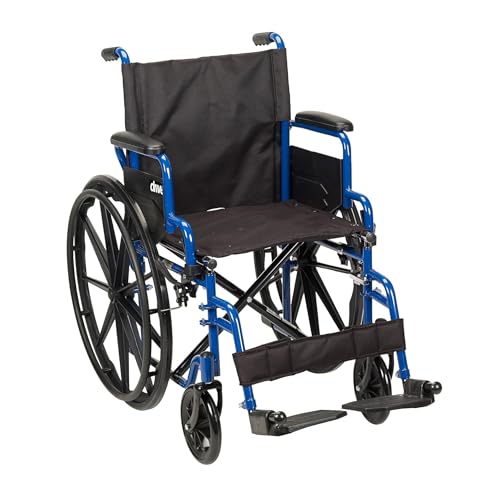 Best for: Doctor visits, errands, occasional outings with a caregiver
The Drive Medical Blue Streak is one of the most widely used transport chairs in the country, and for good reason. It hits a practical sweet spot: sturdy enough to feel safe, light enough to lift into a standard car, and affordable enough that families don't have to agonize over the purchase. At 24 lbs with the footrests removed, most adult children can handle it without strain.
The Blue Streak uses 8-inch rear wheels, which means your parent cannot self-propel, a caregiver always needs to be present. The swing-away footrests make transfers easier, and the nylon upholstery is wipe-clean for incontinence situations. This is the chair to buy if your parent primarily needs mobility support for supervised outings, not all-day independent use.
Pros
- Most affordable reviewed here
- Lightweight for car transport
- Easy-clean nylon upholstery
- Swing-away footrests
- Wide availability and replacement parts
Cons
- Cannot self-propel
- Requires caregiver at all times
- Basic comfort, thin padding
Medline K4 Basic Lightweight Wheelchair
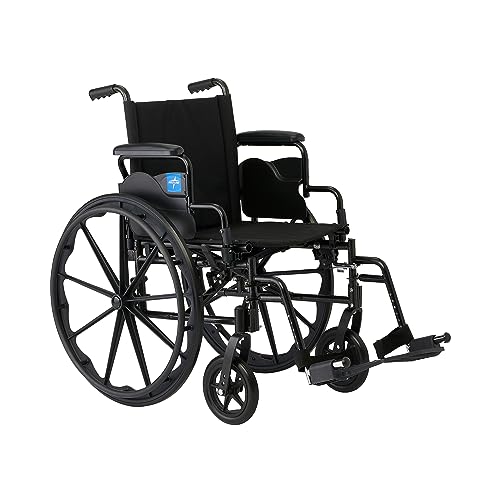 Best for: Parents with arm strength who want some independence at home
The Medline K4 Basic is the starting point for families who want their parent to have the ability to move themselves around the home. With large self-propel rear wheels, your parent can reach down and propel the chair independently, getting to the bathroom at night or moving from room to room without waiting for a caregiver. That independence matters enormously for dignity and mental health.
At 36 lbs with footrests, the K4 Basic isn't the lightest chair, but it's built solidly with a 300 lb weight capacity. The swing-back desk-length arms make it easier to pull up to a table, and the elevating leg rests help with circulation during longer sits. Medline's reputation for durable medical equipment gives meaningful confidence in long-term reliability.
Pros
- Parent can self-propel independently
- Swing-back desk-length arms
- Elevating leg rests included
- 300 lb weight capacity
- Good long-term durability
- Medicare-reimbursable category
Cons
- Heavier than transport chairs
- Requires arm strength to propel
- Larger footprint than transport chairs
Karman S-115 Ergonomic Lightweight Wheelchair
 Best for: Parents who spend many hours per day in their wheelchair
Karman Healthcare builds wheelchairs with genuine attention to posture and long-sitting comfort, a meaningful differentiation for parents who are in their chair for most of the day. The S-115 ergonomic seat geometry reduces the sacral pressure that causes skin breakdown and discomfort during extended sits. The ultra-light frame weighs in at just 25 lbs despite being a full self-propelling chair.
If your parent experiences back pain, hip discomfort, or skin integrity issues from their current chair, the Karman ergonomic design is worth the premium. The seat geometry keeps the pelvis positioned correctly, and the removable footrest makes transfers and car loading considerably easier than standard chairs.
Pros
- Superior ergonomic seat design
- Ultra-light 25 lb frame for a self-propel chair
- Reduces pressure injury risk
- Removable footrest for easier transfers
- Best for all-day sitters
Cons
- Higher price point
- May not be available through all DME suppliers
Feather Lightweight Folding Transport Chair
 Best for: Caregivers with back issues or frequent car loading
The Feather transport chair earns its name: at just 13 lbs, it's nearly half the weight of a standard transport chair. For adult children or spouses who also have physical limitations, this weight reduction is genuinely life-changing. Loading a 13-lb chair into a car trunk requires minimal exertion, which means outings happen more often because the logistics aren't exhausting.
Despite its featherweight frame, the Feather chair supports users up to 300 lbs across an 18-inch seat. It folds and unfolds with a single motion for quick storage in a trunk. If your parent's caregiver has back problems, shoulder issues, or is themselves elderly, this chair deserves serious consideration even at its higher-than-average transport chair price.
Pros
- Lightest option in this review at 13 lbs
- Ideal for caregivers with physical limitations
- 18-inch seat width
- Single-motion fold
- Supports up to 300 lbs
Cons
- Higher price than basic transport chairs
- Cannot self-propel
- This model has no handbrakes
Drive Medical Cruiser III Wheelchair
 Best for: Families wanting self-propel capability without a large investment
The Drive Medical Cruiser III makes self-propelling wheelchair capability accessible at a price close to a basic transport chair. For under $250, your parent gets large self-propel rear wheels, flip-back removable desk-length arms for easier transfers, and elevating leg rests. The powder-coated carbon steel frame is heavy relative to premium aluminum chairs but provides a sturdy, confident ride.
The Cruiser III is a workable long-term option for a parent who is at home most of the time and primarily uses the chair for getting around the house. It won't win awards for elegance or lightweight engineering, but it reliably does the job at a family-friendly price point.
Pros
- Self-propel at near-transport-chair price
- Flip-back removable desk arms
- Elevating leg rests
- Solid steel frame durability
Cons
- Heavier steel frame
- Less ergonomic than premium options
- Basic cushioning
Nova Lightweight Folding Transport Wheelchair
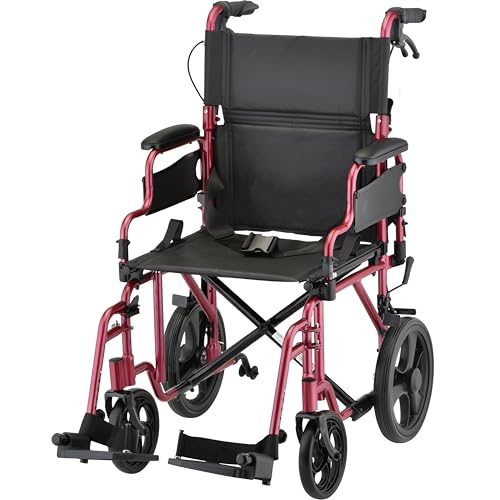 Best for: Families wanting a mid-range transport chair with better comfort
The Nova Lightweight Transport hits the middle ground between an entry-level transport chair and a premium ultralight. At 19 lbs it stays light enough for easy car loading. It uses an aluminum frame with flip-up desk arms and one-grip locking handbrakes, and Nova includes better padding than typical budget transport chairs, which significantly improves sitting comfort.
The 12-inch rear wheels provide a smoother ride over door thresholds and minor outdoor transitions than the 8-inch wheels on basic transport chairs, and the chair supports adults up to 300 lbs. This is the right choice for a family who wants to step up from the most basic transport chair without committing to premium pricing.
Pros
- Lighter than standard transport chairs
- Better padding than budget options
- Flip-up desk arms and locking handbrakes
- 12-inch rear wheels for a smoother ride
Cons
- Cannot self-propel
- More expensive than basic transport chairs
Invacare Tracer SX5 Wheelchair
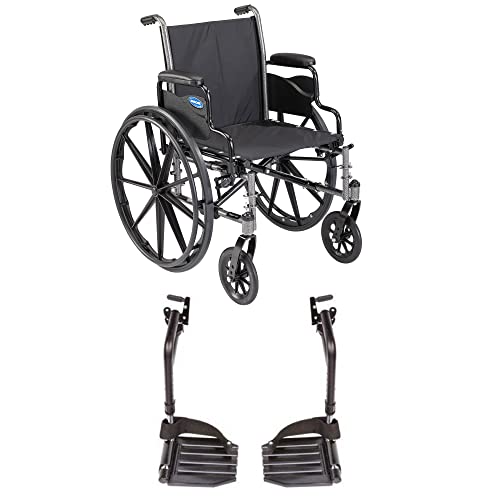 Best for: Parents with complex positioning needs or high daily use
Invacare is the brand most commonly found in hospitals and skilled nursing facilities, and for good reason. The Tracer SX5 is built to clinical standards, with a reinforced frame and high-quality bearings that stay smooth after years of hard use. This configuration ships with a 22-inch seat, footrests, and desk-length arms, a setup that fits most adults comfortably.
At under $500 it's priced between the budget self-propel options and the premium ergonomic chairs. For a parent who will use their wheelchair for several hours daily and needs a chair that will last 5 to 10 years without problems, the Invacare Tracer SX5 is a genuinely smart long-term investment.
Pros
- Hospital-grade construction
- Roomy 22-inch seat with footrests and desk arms
- Built for long-term daily use
- Self-propelling capable
- Widely available replacement parts
Cons
- Heavier than ergonomic alternatives
- Less stylish appearance
- Higher upfront cost
CHEERDMOTO Folding Electric Wheelchair
 Best for: Parents who lack arm strength to self-propel and want independence
This CHEERDMOTO folding electric wheelchair represents a different category entirely. For a parent who lacks the arm strength or stamina to self-propel and refuses to wait for a caregiver, a power chair delivers a quality-of-life transformation that is genuinely difficult to quantify. It folds to a compact size, unusual among power chairs, which makes it far more practical for car transport than traditional power chairs that require a vehicle lift.
The joystick control is intuitive for most seniors to learn within a day or two. The dual 500W motors handle indoor floors and gentle outdoor slopes, and the battery provides roughly 15 miles of range per charge, which more than covers a full day of indoor and light outdoor use. The 300-lb weight capacity covers most users. This is the right choice when your parent can't safely propel a manual chair and the family wants to preserve their independence at home.
Pros
- Full independence with no arm strength needed
- Folds for car transport (rare in power chairs)
- About 15-mile battery range
- Dual 500W motors, 300 lb capacity
- Intuitive joystick control
Cons
- Costs more than a manual chair
- Still requires lifting help to load in a car
- Battery requires regular charging
- Best for smooth surfaces, not rough terrain
Transport Chair vs. Manual Wheelchair vs. Power Chair: How to Choose
Transport Chair, Choose When:
- Your parent always has a caregiver present to push the chair
- The chair will mainly be used for outings, not all-day home mobility
- Weight and ease of car loading are top priorities
- Budget is the primary constraint
Manual Self-Propel Wheelchair, Choose When:
- Your parent has adequate arm strength to propel themselves
- Independence around the home matters deeply to your parent's sense of dignity
- Your parent will spend several hours per day in the chair
- Medicare coverage is being pursued (typically covers manual wheelchairs for home use)
Power Wheelchair, Choose When:
- Your parent cannot safely propel a manual chair
- They want independence without relying on a caregiver for movement
- Their condition is permanent rather than short-term recovery
- Home doorway widths and space accommodate the chair
Wheelchair Sizing for Elderly Adults
Proper sizing is critical for comfort, skin health, and safe transfers. Here's what to measure:
- Seat width: Measure the widest point of the hips while seated. Add 1 to 2 inches for the correct seat width. Too narrow creates pressure; too wide compromises self-propelling ability.
- Seat depth: Measure from the back of the buttocks to behind the knees. Subtract 2 to 3 inches. Seat too deep causes pressure behind the knees and encourages poor posture.
- Seat height: With your parent seated, feet flat on the footrests, thighs should be parallel to the floor and knees at 90 degrees.
- Back height: The back should support the spine to just below the shoulder blades for most users. Higher backs provide more trunk support for those with weak core muscles.
Medicare Wheelchair Coverage in 2026
Medicare Part B covers manual wheelchairs as durable medical equipment for home use when:
- A doctor documents that the wheelchair is medically necessary for use within the home
- The device is purchased from a Medicare-enrolled DME supplier
- Your parent has a documented mobility limitation that prevents ambulation
Power wheelchairs require additional documentation: a face-to-face clinical evaluation by the prescribing physician within six months before the order, and documentation that a manual wheelchair cannot meet the patient's mobility needs.
Affiliate disclosure. The product picks above are Amazon affiliate links. ParentCareGuide earns 2–4% commission when you buy through them, at no extra cost to you. We are editorially independent, manufacturers do not pay us for placement and we did not receive free product from any brand listed. Read our full disclosure →
Frequently Asked Questions About Senior Wheelchairs
What is the difference between a transport wheelchair and a regular wheelchair?
A transport wheelchair has small rear wheels (typically 8 to 12 inches) and cannot be self-propelled, a caregiver must push it. A standard manual wheelchair has large rear wheels (24 inches) that the user can push themselves. Transport chairs are lighter and easier to fold; manual chairs provide independence.
Will Medicare cover my parent's wheelchair?
Medicare Part B may cover a manual wheelchair when a physician documents that it is medically necessary for home use and your parent purchases it through a Medicare-enrolled supplier. Power wheelchairs require additional documentation and a clinical evaluation. Your parent typically pays 20% of the Medicare-approved amount after the deductible.
How wide should my parent's wheelchair be?
Measure the widest point of your parent's hips while seated, then add 1 to 2 inches. This gives the correct seat width. Most standard adult wheelchairs are 16, 18, or 20 inches wide. Getting this right prevents both pressure sores from a narrow chair and instability from an excessively wide one.
How do I get a wheelchair into my car?
Most folding manual wheelchairs can be loaded into a standard car trunk by removing the footrests (which reduces weight by 4 to 6 lbs) and folding the chair. A caregiver then lifts from the seat and armrests. Using a car handle assist device can reduce the back strain of this motion. For heavier users with power chairs, a vehicle lift may be needed.
How do I prevent pressure sores from wheelchair sitting?
Pressure sores are a serious risk for wheelchair users who sit for long periods. Key prevention strategies include: using a quality pressure-relief cushion (gel or air), repositioning your parent or having them perform weight shifts every 30 minutes, ensuring the chair is properly fitted (improper sizing increases pressure points), keeping skin clean and dry, and checking skin daily at pressure points like the tailbone, hips, and heels.
Can my parent use a wheelchair on carpet?
Yes, though thick carpet significantly increases the effort required to self-propel a manual wheelchair. For homes with thick carpet throughout, consider a power wheelchair for independent mobility. Transportation chairs pushed by a caregiver are less affected by carpet since the caregiver absorbs the extra resistance.
What accessories should I get with the wheelchair?
Essential accessories include: a pressure-relief cushion for extended sitting, a seatbelt for users with balance or cognitive issues, a wheelchair bag or pouch for carrying personal items, anti-tip tubes for safety on inclines, and push handle padding for caregiver comfort. For power chairs, a rain cover for outdoor use is practical.
How long does a wheelchair last?
Quality wheelchairs from reputable manufacturers typically last 5 to 10 years with normal residential use. Medicare replaces covered wheelchairs on a five-year cycle for this reason. Regular maintenance, tire inflation, wheel bearing checks, and frame inspections, extends lifespan significantly.
Get the Complete Caregiver Toolkit
Includes equipment tracking logs, home safety checklists, safe transfer technique guides, and 40+ more resources for caring for an aging parent.
Get the Complete Toolkit for $39One more time, because this matters. Every product recommendation on this page is independent. We accept no manufacturer payment, no sponsored placement, and no free product in exchange for coverage. When you buy through an Amazon link here, we earn 2–4% commission, that's how we keep ParentCareGuide free to read. If a pick stops being our honest recommendation, we remove it. Our editorial standards → · Affiliate disclosure →