Approximately one-third of adults over 65 have some degree of hearing loss, and that number rises to nearly half for those over 75. If your parent struggles to hear, you've likely experienced the frustration, on both sides, of repeated conversations, misunderstandings, and the exhaustion of trying to communicate.
Good communication with a hearing-impaired parent isn't just about speaking louder. Understanding how hearing loss affects perception and learning specific techniques can dramatically improve your interactions and your relationship.
Age-related hearing loss (presbycusis) typically affects high-frequency sounds first. Your parent may hear that you're speaking but struggle to distinguish specific words, especially consonants like s, f, th, sh, and k. Speaking louder doesn't clarify; speaking more clearly does.
Understanding Your Parent's Experience
Before focusing on techniques, it helps to understand what hearing loss actually feels like. This builds patience and empathy.
What Hearing Loss Is Like
- Words sound mumbled: Speech sounds unclear, not just quiet
- Background noise overwhelms: Restaurants, gatherings, TV on in background make hearing nearly impossible
- Listening is exhausting: Straining to hear all day causes real fatigue
- Uncertainty is constant: Not sure if they heard correctly; afraid to ask again
- Social situations become stressful: Group conversations move too fast; easier to withdraw
Untreated hearing loss is strongly linked to social isolation, depression, and cognitive decline. Your parent's frustration or withdrawal isn't stubbornness, it's a protective response to exhausting, embarrassing communication struggles. Addressing hearing loss is a quality of life issue.
Common Responses You Might See
- Bluffing, nodding and smiling without understanding
- Avoiding phone calls or group gatherings
- Turning TV volume very high
- Answering questions inappropriately (didn't hear the question correctly)
- Becoming irritable or defensive about hearing issues
- Withdrawing from conversations, especially in noisy environments
The equipment that changes the most
Most of what caregiving costs is time. These four are the purchases that reliably buy some of it back, and they are the ones families tell us they wish they had bought sooner.
 Drive Medical Hydraulic Patient Lift
A full lift is what makes one person able to manage a transfer alone. It is the single purchase that most often delays a move into residential care.
Check price on Amazon →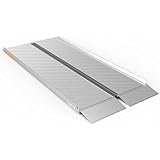 EZ-ACCESS Singlefold Wheelchair Ramp, 6 ft
Folds like a suitcase and carries in a car boot, so the same ramp handles the front step at home and the kerb at an appointment.
Check price on Amazon → Drive Medical Nitro Rollator with Seat
The seat matters more than the wheels. Being able to stop and rest is what decides whether someone still goes out at all.
Check price on Amazon → Vive Stand Assist Rail for Couch or Chair
Getting out of a low sofa is where most falls at home start. This is the cheapest thing on the list and often the first one needed.
Check price on Amazon →As an Amazon Associate we earn from qualifying purchases, at no extra cost to you. Researched guidance, not medical advice. Prices change, so check before buying.
Essential Communication Techniques
Before You Start Speaking
- Get their attention first: Say their name, make eye contact, or gently touch their arm before speaking
- Face them directly: Let them see your face and mouth; don't talk from another room
- Reduce background noise: Turn off TV, move away from crowds, close windows
- Ensure good lighting: They need to see your face clearly to read lips and expressions
- Get closer: Speak from 3-6 feet away, not across the room
For important conversations, be within 3-6 feet, facing them, in good light, with minimal background noise. These conditions make more difference than anything you can do with your voice.
How to Speak
- Speak clearly, not necessarily louder: Enunciate distinctly without exaggerating
- Slightly slower pace: Don't rush, but don't speak unnaturally slowly
- Don't shout: Shouting distorts sound and appears aggressive
- Don't cover your mouth: Keep hands, food, or objects away from your face
- Pause between topics: Clear topic transitions help them follow
- Use normal lip movement: Don't exaggerate mouth movements, it actually makes lip-reading harder
Rephrase, Don't Repeat
When they don't understand, repeating the exact same words often doesn't help. Instead:
| Instead of Repeating | Try Rephrasing |
|---|---|
| "The appointment is at three fifteen." | "Your doctor visit is at 3:15 in the afternoon." |
| "Did you take your medication?" | "Did you have your pills this morning?" |
| "We're having fish tonight." | "Salmon for dinner, your favorite." |
Starting a sentence with context helps them follow: "About your appointment tomorrow, " or "Speaking of groceries, " gives their brain a framework to fill in words they might miss.
Use Visual Supports
- Write it down: For important information (appointments, medication changes, phone numbers)
- Use gestures: Point, gesture, and use facial expressions to add meaning
- Show rather than describe: Show the medication bottle rather than describing it
- Text instead of call: For quick information, texts may be easier than phone calls
- Use a small whiteboard: For back-and-forth communication when needed
Handling Specific Situations
Phone Conversations
Phone calls are particularly difficult, no lip-reading cues, sometimes poor audio quality.
- Video calls when possible: FaceTime or Zoom allows them to see your face
- Amplified phones: Phones designed for hearing loss with volume boost and tone control
- Captioned telephones: Display written captions of what the caller says in real-time
- Schedule calls: So they can be in a quiet place with hearing aids in
- Keep calls simple: Save complex topics for in-person visits
Many states offer free captioned telephones for people with hearing loss. CapTel and CaptionCall are common services. Check your state's equipment distribution program or ask an audiologist.
Group Gatherings
Family dinners, holidays, and social events are often the hardest for people with hearing loss.
- Seat them strategically: Against a wall (no noise behind), able to see most faces
- Reduce competing noise: Lower music, minimize clattering
- One conversation at a time: Side conversations are confusing; include them in the main discussion
- Slow down group discussions: Fast crosstalk is impossible to follow
- Check in: Periodically make sure they're following; fill them in if needed
- Take breaks: They may need quiet time to recover from listening fatigue
Medical Appointments
Accurate communication with healthcare providers is critical.
- Inform staff: Tell reception and providers about the hearing loss upfront
- Attend together: Accompany your parent to help ensure information is understood
- Request written instructions: Medication changes, follow-up steps, etc.
- Quiet room: Ask for a quieter exam room if possible
- Face-to-face: Ask providers to face your parent when speaking, not talk while typing
- Repeat back: Summarize what was said to confirm understanding
"My mother has significant hearing loss. Would you please face her when speaking and speak a bit more slowly? If you have any written instructions, that would be very helpful."
Technology and Hearing Aids
If They Have Hearing Aids
- Make sure they're wearing them: Many people forget or avoid wearing aids
- Check batteries: Dead batteries are a common issue
- Keep them clean: Earwax buildup affects performance
- Attend audiology appointments: Regular adjustments improve function
- Be patient during adjustment: New hearing aids take weeks to adapt to
If They Resist Hearing Aids
Many people resist hearing aids due to stigma, cost, or past bad experiences.
- Address the stigma: Modern hearing aids are small and discreet; many are invisible
- Explain the health connection: Untreated hearing loss is linked to cognitive decline
- Start with a hearing test: An audiologist can explain exactly what they're missing
- Consider OTC options: Over-the-counter hearing aids are now available for milder loss at lower cost
- Trial periods: Most providers offer trial periods; low risk to try
- Focus on what they're missing: "Don't you want to hear the grandchildren?"
Even with hearing aids, your parent may struggle in noisy environments or when people speak quickly. Aids help, but communication techniques are still essential. Don't assume the aids solved everything.
Assistive Listening Devices
Beyond hearing aids, other devices can help:
| Device | Use |
|---|---|
| TV amplifiers | Wireless headphones that amplify TV without affecting room volume |
| Personal amplifiers | Pocket devices with headphones for one-on-one conversations |
| Loop systems | Work with telecoil in hearing aids; used in theaters, churches |
| Captioned devices | Captioned phones, closed captions on TV |
| Alerting devices | Flashing lights for doorbell, phone, smoke detectors |
| Smartphone apps | Live transcription apps (Live Transcribe, Otter.ai) convert speech to text |
Managing Your Own Frustration
Communication difficulties are frustrating for caregivers too. Repeating yourself, being misunderstood, watching a parent withdraw, it takes a toll.
Healthy Coping Strategies
- Recognize it's the hearing, not them: They're not ignoring you or being difficult
- Take breaks: If frustration builds, pause the conversation
- Lower expectations for noisy environments: Accept that family dinners will be hard
- Celebrate small wins: When communication goes smoothly, notice it
- Get support: Connect with other caregivers who understand
Think of communication accommodations not as extra work but as connection work. Each technique you use is an act of love that says, "Staying connected to you is worth this effort."
What to Avoid
- "Never mind, it wasn't important": This is dismissive and hurtful
- Talking about them in their presence: They often hear more than you think
- Visible frustration: Eye-rolling, sighing, giving up
- Excluding them: Having conversations they can't participate in
- Making jokes about their hearing: Unless they initiate humor about it
Helping Them Advocate for Themselves
Encourage your parent to take an active role in improving communication:
- Tell people: "I have hearing loss. Please face me when you speak."
- Choose good environments: Suggest quieter restaurants, corner tables
- Ask for clarification: "Could you say that again?" is always okay
- Position strategically: Sit where they can see speakers and have less background noise
- Use technology: Embrace captioning and amplification without shame
Help your parent practice: "I don't hear as well as I used to. I'll understand you better if you look at me when you talk and speak a little more slowly. Thanks for understanding."
When Hearing Loss May Be Something More
Sometimes what looks like hearing problems might involve other issues:
- Cognitive changes: Difficulty processing language can accompany dementia
- Sudden hearing loss: Rapid hearing loss is a medical emergency, see a doctor immediately
- Ear infections or blockage: Treatable causes of temporary hearing reduction
- Medication effects: Some medications are ototoxic (harmful to hearing)
If your parent experiences sudden significant hearing loss (especially in one ear), this is a medical emergency. Treatment within 24-48 hours can often restore hearing. Don't wait, call the doctor immediately.
Communication Scripts for Caregivers
Our Difficult Conversation Scripts include language for discussing hearing aids, medical appointments, and navigating family communication challenges.
Get the Complete Caregiver KitCreating a Hearing-Friendly Environment
Simple changes to your parent's living space can make daily communication easier:
- Reduce hard surfaces: Rugs, curtains, and upholstered furniture absorb sound and reduce echo
- Good lighting: Especially where conversations happen most
- Visual alerts: Flashing lights for doorbell, phone, alarms
- Designated quiet spaces: A room where important conversations can happen without background noise
- TV setup: Closed captioning enabled, TV speakers or sound bar facing seating area
- Hearing loss makes communication exhausting and isolating for your parent
- Speak clearly (not just loudly) from close range with face visible
- Reduce background noise before important conversations
- Rephrase rather than repeat when they don't understand
- Write down important information
- Technology helps: hearing aids, captioned phones, TV amplifiers
- Be patient, communication requires extra effort from both of you
- Advocate for them in medical and social settings