Walking into your aging parent's home and finding it packed floor to ceiling with newspapers, broken appliances, and decades of accumulated possessions is shocking. The kitchen you once cooked in together is now impassable. The bedroom where you were tucked in as a child has become a storage unit. The person who raised you is living in conditions that frighten you.
You're not alone. Hoarding affects an estimated 2-6% of the population, and it becomes more common and more severe with age. For adult children, watching a parent live this way brings a complicated mix of emotions: fear for their safety, frustration at their resistance to help, guilt about not noticing sooner, and grief for the parent you remember.
This guide will help you understand hoarding disorder, communicate with your parent effectively, address safety concerns, and find the help you both need, all while preserving your relationship and your parent's dignity.
Hoarding disorder is a recognized mental health condition, not a character flaw or sign of laziness. The brain of a person who hoards processes possessions differently, discarding items causes genuine psychological distress. Understanding this is the first step toward helping effectively.
Understanding Hoarding Disorder
What Is Hoarding?
Hoarding disorder is characterized by persistent difficulty discarding possessions, regardless of their actual value. This difficulty is due to a perceived need to save items and distress associated with letting them go. The result is an accumulation of possessions that clutter living spaces and substantially compromise their intended use.
Hoarding is different from collecting. Collectors display their items with pride, keep them organized, and feel pleasure from their possessions. People who hoard often feel embarrassed, keep items in disorganized piles, and experience distress both from the clutter and from the thought of removing it.
Why Hoarding Gets Worse with Age
Several factors make hoarding more common and severe in older adults:
- Lifetime accumulation: More years means more opportunities to acquire possessions
- Loss and grief: Objects become anchors to memories of deceased loved ones, past careers, earlier chapters of life
- Declining executive function: Decision-making, organizing, and categorizing become harder with cognitive changes
- Physical limitations: Reduced mobility makes it harder to maintain the home or take things out
- Social isolation: Fewer visitors means less external pressure to maintain appearances
- Depression and anxiety: Often co-occur with hoarding and worsen with age-related losses
- Dementia: Can trigger or worsen hoarding behaviors
The Emotional Roots of Hoarding
To help your parent, it helps to understand why possessions feel so important to them:
- Emotional attachment: Objects represent memories, relationships, identity
- Perceived utility: "I might need this someday" feels very real to them
- Fear of waste: Throwing away something "good" feels morally wrong
- Responsibility for objects: They feel obligated to care for items, not discard them
- Comfort and security: Being surrounded by possessions feels safe
- Control: In a life where they may be losing independence, possessions are something they control
The instinct to hire a dumpster and clean out the house while your parent is away almost always backfires. Forced cleanouts cause severe psychological trauma, can trigger depression or hospitalization, and rarely solve the problem, the person typically re-accumulates. Your relationship may never recover.
The equipment that changes the most
Most of what caregiving costs is time. These four are the purchases that reliably buy some of it back, and they are the ones families tell us they wish they had bought sooner.
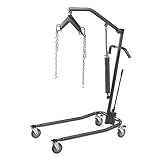 Drive Medical Hydraulic Patient Lift
A full lift is what makes one person able to manage a transfer alone. It is the single purchase that most often delays a move into residential care.
Check price on Amazon →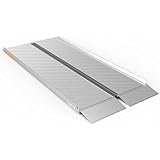 EZ-ACCESS Singlefold Wheelchair Ramp, 6 ft
Folds like a suitcase and carries in a car boot, so the same ramp handles the front step at home and the kerb at an appointment.
Check price on Amazon → Drive Medical Nitro Rollator with Seat
The seat matters more than the wheels. Being able to stop and rest is what decides whether someone still goes out at all.
Check price on Amazon → Vive Stand Assist Rail for Couch or Chair
Getting out of a low sofa is where most falls at home start. This is the cheapest thing on the list and often the first one needed.
Check price on Amazon →As an Amazon Associate we earn from qualifying purchases, at no extra cost to you. Researched guidance, not medical advice. Prices change, so check before buying.
Recognizing the Signs and Severity
Warning Signs of Hoarding
- Rooms that can no longer be used for their intended purpose
- Narrow pathways between piles of possessions
- Stacks on stairs, in front of exits, blocking windows
- Difficulty finding important items (medications, bills, keys)
- Refusing to let anyone into the home
- Excessive acquisition of items (shopping, free items, garbage picking)
- Distress when asked to discard anything
- Social isolation increasing over time
The Hoarding Severity Scale
Understanding how severe the situation is helps determine what interventions are appropriate:
Level 1 - Mild: Clutter is present but all rooms and doorways are accessible. Minor housekeeping issues. No safety concerns.
Level 2 - Moderate: One room is blocked or unusable. Some appliances not working. Mildew in kitchen or bathroom. One exit blocked.
Level 3 - Significant: Multiple rooms unusable. Visible structural damage. Dirty dishes and old food present. Light bug or rodent evidence. At least two exits blocked.
Level 4 - Severe: Structural damage affecting home safety. Bathroom or kitchen unusable. Standing water, sewage, or hazardous materials. Significant pest infestation. No exits easily accessible.
Level 5 - Uninhabitable: Major structural damage. Human or animal waste present. No running water, electricity, or working refrigerator. Fire hazard. Rotting food. Major infestation.
If your parent's home has blocked exits, fire hazards, no running water, pest infestations, or structural damage, you may need to involve adult protective services even without your parent's cooperation. Their safety must come first, even if it damages the relationship temporarily.
Starting the Conversation
How to Approach Your Parent
The way you initiate this conversation matters enormously. People who hoard are often deeply ashamed and defensive. Coming in with criticism or ultimatums will shut down communication.
Do:
- Choose a calm moment, not during a crisis
- Express love and concern, not judgment
- Focus on safety and quality of life, not the mess
- Ask about their feelings and perspective
- Listen more than you talk
- Validate that this is hard
- Offer to help, not to fix
Don't:
- Use words like "junk," "garbage," "hoarder"
- Compare them to TV shows
- Issue ultimatums or threats
- Touch or move their things without permission
- Argue about the value of specific items
- Bring multiple family members to "confront" them
Scripts for Starting the Conversation
Leading with love: "Mom, I love you and I'm worried about you. I noticed it's getting harder to move around the house, and I'm scared you might fall. Can we talk about how I can help?"
Leading with their goals: "Dad, I know you want to stay in your home as long as possible. I want that for you too. But I'm concerned that some safety issues might make that harder. Could we look at this together?"
Leading with curiosity: "I've noticed you've been holding onto a lot of things. I'd love to understand what makes them important to you. Would you tell me about some of them?"
Where you see a stack of newspapers from 2008, your parent may see a repository of important information they haven't had time to read yet. Where you see worthless knickknacks, they see cherished memories. Entering their perspective, even when you disagree, is essential for any progress.
Getting Professional Help
Mental Health Treatment
Hoarding responds best to specialized treatment. General therapy or antidepressants alone rarely resolve it.
Cognitive Behavioral Therapy (CBT) for Hoarding: The most effective treatment. Helps the person understand their thought patterns, develop decision-making skills, and gradually reduce acquisition and increase discarding.
What to look for in a therapist:
- Specific training in hoarding disorder
- Willingness to do home visits
- Experience with older adults
- Patient, non-judgmental approach
- Understanding that progress will be slow
Finding help:
- International OCD Foundation's hoarding center
- Buried in Treasures workshop (group-based program)
- Psychology Today's therapist finder (filter by "hoarding")
- Local Area Agency on Aging
- Geriatric psychiatrist for medication evaluation
Professional Organizers Who Specialize in Hoarding
Not all professional organizers are equipped to work with hoarding. Look for:
- Certification from the Institute for Challenging Disorganization (ICD)
- Specific training in chronic disorganization or hoarding
- A compassionate, client-centered approach
- Willingness to work at your parent's pace
- Experience working with older adults
Hoarding Task Forces and Cleanup Services
Many communities now have hoarding task forces that coordinate services from housing, health, fire, and social services. These can provide:
- Assessment of the situation
- Connection to appropriate services
- Intervention when safety is at risk
- Resources for cleanup when appropriate
Specialized hoarding therapy may run $150-250 per session. Professional organizers who specialize in hoarding charge $50-100+ per hour and may need many hours over many months. Major cleanouts can cost $5,000-30,000 or more. This investment is worthwhile if it produces lasting change, but cleanouts without therapy usually fail.
Practical Strategies for Helping
Working on the Clutter Together
If your parent is willing to work with you, approach it as a partnership:
Start small: One drawer, one shelf, one category of items. Success builds momentum.
Let them lead: They decide what stays and what goes. You're the helper, not the decision-maker.
Focus on safety first: Clear paths to exits, remove fire hazards, ensure access to bathroom and bedroom.
Work in short sessions: 15-30 minutes may be all they can handle. Decision fatigue is real.
Celebrate every decision: Each item they let go represents emotional effort. Acknowledge it.
Never rescue items from the discard pile: If they see you taking something they discarded, trust is broken.
Questions That Help Decision-Making
- "When did you last use this?"
- "Do you have another one that works better?"
- "If you were shopping today, would you buy this?"
- "Is this worth the space it takes up?"
- "Could someone else use this more than you?"
- "What's the worst that would happen if this was gone?"
Making Discarding Easier
- Donating: Knowing items will help others reduces guilt
- Selling: Getting money validates the item's worth
- Gifting to specific people: "Your granddaughter would love this"
- Taking photos: Preserves the memory without keeping the object
- One in, one out rule: For every new item, one must go
- Waiting area: Items sit in a box for 30 days before final decision
Progress with hoarding is measured in months and years, not days or weeks. Your parent may do well for a time and then regress. New stuff may come in as fast as old stuff goes out. This is normal. Celebrate small wins and don't give up when progress stalls.
When Your Parent Won't Accept Help
Understanding Resistance
Many people who hoard don't see a problem or don't believe they can change. This isn't stubbornness, it's part of the condition. They may:
- Minimize the severity ("It's not that bad")
- Defend the possessions ("I need all of this")
- Become angry or refuse to discuss it
- Promise to handle it themselves (and never do)
- Agree to accept help but then cancel or refuse entry
What You Can Still Do
Maintain the relationship: Keep visiting, keep calling. Don't make every interaction about the hoarding.
Watch for crisis points: Health emergencies, housing code violations, or fires sometimes create openings for intervention.
Document the conditions: Take photos when you can. You may need them for adult protective services or guardianship proceedings.
Set boundaries for yourself: You can decide not to stay overnight, not to eat food prepared there, not to bring grandchildren.
Address your own feelings: Therapy for yourself can help you cope with the frustration, grief, and helplessness.
Legal Options When Safety Is at Risk
If your parent lacks capacity to make safe decisions, you may need to consider:
- Adult Protective Services: Can investigate and require corrections for safety issues
- Code enforcement: May require cleanup for fire and safety violations
- Guardianship/conservatorship: Court-appointed authority to make decisions for them
- Capacity evaluation: Determines if they can legally make their own decisions
Involving authorities or seeking guardianship may be necessary for safety but will likely damage your relationship severely. Your parent may feel betrayed. Consider these steps carefully, consult an elder law attorney, and exhaust other options first unless immediate danger exists.
Taking Care of Yourself
The Emotional Toll
Having a hoarding parent is exhausting and heartbreaking. Common feelings include:
- Grief for the parent you remember or wish you had
- Anger at their choices and resistance
- Guilt that you can't fix it
- Shame about others knowing
- Anxiety about their safety
- Hopelessness when nothing seems to help
Protecting Your Own Mental Health
- Accept that you cannot control or cure this
- Set limits on how much time and energy you devote to it
- Find a support group for family members of people who hoard
- Consider therapy for yourself
- Don't sacrifice your own home, finances, or relationships
- Remember that your parent's hoarding is not your failure
Grant me the serenity to accept that I cannot declutter my parent's home for them, the courage to keep offering support and resources, and the wisdom to know when to step back to protect myself.
Planning for the Future
What Happens When They Can't Live Alone?
Eventually, most aging parents need more care than they can manage at home. For parents who hoard, this transition has special challenges:
- They may refuse to move because they can't leave their possessions
- Moving them requires dealing with a houseful of stuff
- They may try to bring the hoarding behavior to a new setting
- Assisted living facilities may not tolerate accumulation
Estate Planning and the Hoard
After your parent passes, you'll likely face cleaning out the home. This can be overwhelming. Consider:
- Hiring an estate cleanout service
- Renting a dumpster and enlisting family help
- Having items appraised (rarely is there hidden treasure, but occasionally)
- Allowing yourself to discard without guilt
- Keeping a few meaningful items without recreating the hoard
Need Help Having Hard Conversations?
Our Difficult Conversations Guide includes scripts and strategies for talking to parents about sensitive subjects like their living conditions.
Get the Complete Caregiver KitResources and Support
Organizations
- International OCD Foundation Hoarding Center: hoarding.iocdf.org
- Children of Hoarders: childrenofhoarders.com - peer support community
- Institute for Challenging Disorganization: challengingdisorganization.org
- Clutterers Anonymous: 12-step program for those who hoard
Books
- Buried in Treasures by Tolin, Frost, and Steketee - self-help workbook
- Stuff: Compulsive Hoarding and the Meaning of Things by Frost and Steketee - understanding the condition
- Digging Out by Tompkins and Hartl - guide for family and friends
- Dirty Secret by Jessie Sholl - memoir of growing up with a hoarding parent
- Hoarding is a mental health condition, not laziness or a choice
- Forced cleanouts without therapy rarely work and cause lasting trauma
- Approach your parent with love and curiosity, not judgment
- Professional help from hoarding specialists is often essential
- Progress is measured in months and years, be patient
- Focus on safety issues first: clear exits, reduce fire hazards
- You can offer help, but you cannot force change
- Protect your own mental health and set boundaries
- Legal intervention may be necessary when safety is at serious risk
- You are not alone, support groups exist for families affected by hoarding