Few topics split families apart more quickly than inheritance. Adult children who've been close for decades suddenly become strangers over a disputed piece of furniture or perceived unfairness in a will. Parents who intended to leave a legacy of love instead leave a legacy of resentment and litigation.
The tragedy is that most of this conflict is preventable. When families talk openly about inheritance before a parent dies, when expectations are clarified rather than assumed, when everyone understands the reasoning behind decisions, the conflicts that tear families apart rarely materialize.
This guide will help you navigate inheritance conversations with your aging parents and your siblings, understand the basics of estate planning, and prevent the conflicts that destroy so many families after a parent's death.
Inheritance isn't really about money. It's about love, fairness, recognition, and family history. When a sibling gets more, it can feel like they were loved more. When an heirloom goes to someone else, it can feel like your connection to your parent didn't matter. Understanding the emotional weight beneath the financial surface is essential for handling these conversations well.
Why Families Need to Talk About Inheritance
The Cost of Silence
Many families consider inheritance a taboo topic. Parents don't want to seem like they're dying. Children don't want to seem greedy. Everyone assumes they know what will happen, and those assumptions often differ wildly from reality.
The result: surprise and conflict when the will is read. Common scenarios include:
- A sibling who assumed they'd inherit the family home discovers it's being sold and split equally
- One child who provided years of caregiving receives the same share as siblings who did nothing
- A late-life spouse inherits everything, leaving children from an earlier marriage with nothing
- Multiple children each believe they were promised the same item
- A sibling is unexpectedly left out entirely
- Assets were spent on care, leaving far less than expected
The Benefits of Open Conversation
Families that discuss inheritance openly experience:
- Fewer surprises: Everyone knows what to expect
- Opportunity to explain: Parents can share their reasoning
- Chance to object: Concerns can be raised while changes are still possible
- Practical planning: Issues like care costs and Medicaid can be addressed
- Better relationships: Transparency builds trust
- Peace of mind: Parents can ensure their wishes are understood
These conversations are best had while your parent is healthy and mentally sharp. Once dementia begins or a health crisis hits, it's too late to discuss their wishes meaningfully, and any estate planning changes may be legally vulnerable to challenge.
The equipment that changes the most
Most of what caregiving costs is time. These four are the purchases that reliably buy some of it back, and they are the ones families tell us they wish they had bought sooner.
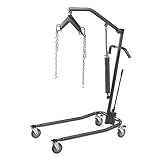 Drive Medical Hydraulic Patient Lift
A full lift is what makes one person able to manage a transfer alone. It is the single purchase that most often delays a move into residential care.
Check price on Amazon →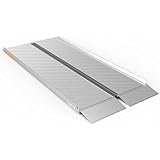 EZ-ACCESS Singlefold Wheelchair Ramp, 6 ft
Folds like a suitcase and carries in a car boot, so the same ramp handles the front step at home and the kerb at an appointment.
Check price on Amazon → Drive Medical Nitro Rollator with Seat
The seat matters more than the wheels. Being able to stop and rest is what decides whether someone still goes out at all.
Check price on Amazon → Vive Stand Assist Rail for Couch or Chair
Getting out of a low sofa is where most falls at home start. This is the cheapest thing on the list and often the first one needed.
Check price on Amazon →As an Amazon Associate we earn from qualifying purchases, at no extra cost to you. Researched guidance, not medical advice. Prices change, so check before buying.
Starting the Conversation with Parents
Overcoming Reluctance
Many parents resist discussing inheritance. Common reasons include:
- "I don't want to think about dying"
- "It's none of their business until I'm gone"
- "They'll fight about it"
- "I don't want them to think I'm rich (or poor)"
- "I haven't decided yet"
- "Talking about money is rude"
Address these concerns directly while respecting their autonomy:
Scripts for Initiating the Conversation
Frame it as planning, not death: "Mom, I'm not asking because I'm expecting you to die soon. I'm asking because having a plan makes everything easier when the time eventually comes. It's really about protecting you and protecting our family."
Focus on preventing conflict: "Dad, I've seen families torn apart over inheritance. I don't want that for us. Having a conversation now, while we can all discuss things calmly, could save us a lot of pain later."
Make it about their wishes: "I want to make sure your wishes are honored, whatever they are. The only way I can do that is if I understand what you want. I promise I'll respect whatever you decide."
Ask about documents first: "I don't need to know the details of who gets what. But I do need to know: do you have a will? Is it current? Where are the important documents kept?"
Remember that your parent has the right to do whatever they want with their assets. They can leave everything to charity, divide things unequally, or spend every last penny on their own care. Your role is to understand their wishes, not to dictate them. If you disagree with their choices, you can express your perspective respectfully, but ultimately, it's their decision.
Understanding Estate Planning Basics
Essential Documents
Every adult should have these documents in place. Help your parent ensure they're current:
Will: Specifies how assets are distributed, names an executor to manage the estate, and can name guardians for minor children. Without a will, state law determines who inherits.
Trust (optional but valuable): Can avoid probate, provide for management of assets, protect assets from creditors, and allow more complex distribution plans. Revocable living trusts are most common.
Power of Attorney (Financial): Names someone to manage finances if your parent becomes incapacitated. Essential for paying bills, managing investments, selling property.
Healthcare Power of Attorney: Names someone to make medical decisions if your parent cannot. Different from financial POA.
Living Will / Advance Directive: Specifies wishes for end-of-life care, resuscitation, life support, feeding tubes, etc.
Beneficiary Designations: Many assets pass by beneficiary designation, not by will, including retirement accounts (401k, IRA), life insurance, and some bank accounts. These must be kept current.
Common Estate Planning Mistakes
- Outdated will: Doesn't reflect current wishes, assets, or family situation
- Forgotten beneficiaries: Ex-spouse still named on life insurance, deceased person named on accounts
- Joint ownership confusion: Adding a child to a deed for convenience creates unintended consequences
- No backup: Named executor or POA dies or becomes unable to serve
- DIY documents: Internet forms done without attorney may be invalid or create problems
- Medicaid ignorance: Transfers made without understanding the 5-year look-back period
While simple situations may be handled with basic forms, consult an elder law attorney if: there are significant assets, a family business, multiple marriages, estranged family members, a child with special needs, potential for Medicaid, real estate in multiple states, or any complexity. The cost of proper planning is far less than the cost of probate disputes.
Handling Common Inheritance Issues
Unequal Distribution
Parents sometimes choose to leave more to one child than another. Reasons may include:
- One child provided caregiving and deserves compensation
- One child has greater financial need
- One child already received substantial gifts during life
- One child is irresponsible with money
- One child is estranged from the family
- A step-child is included or excluded
For parents considering unequal distribution:
- Document your reasoning in a letter (not in the will itself)
- Consider telling children your plans in advance
- Explain that unequal doesn't mean unloved
- Consider life insurance to equalize
- Consult an attorney about protecting the will from challenge
For children facing unequal distribution:
- Try to understand your parent's reasoning
- Recognize that fairness doesn't always mean equal
- Separate your inheritance from your relationship
- Consider whether the inequality reflects something you could have done differently
- Decide if challenging the will is worth destroying family relationships
The Family Home
The family home is often the most emotionally loaded asset. Issues include:
- Multiple children want to keep it
- One child wants to keep it but can't buy out siblings
- The house holds memories everyone wants to preserve
- Maintenance and taxes require ongoing costs
- Selling feels like erasing the family's history
Options to consider:
- Sell and divide proceeds equally
- One child buys out others at fair market value
- One child lives there and pays rent to the estate
- Keep it jointly as a family vacation property (requires clear agreements)
- Give one child right to purchase at a set price within a time period
Leaving a house jointly to multiple children sounds fair but usually creates problems. Who pays property taxes? Who handles maintenance? What if one wants to sell and others don't? What if one child's spouse moves in? These arrangements require detailed agreements to work, and often still end in conflict.
Personal Items and Heirlooms
Ironically, families often fight more bitterly over items of sentimental value than over large financial assets. Mom's engagement ring, dad's watch, grandmother's china, these can tear siblings apart.
Strategies for dividing personal items:
- Parent assigns items in advance: Label items or create a list of who gets what
- Round-robin selection: Children take turns choosing items
- Bid system: Each child gets equal "credits" to bid on desired items
- Mediator: Neutral third party helps divide items fairly
- Sell everything and split proceeds: Avoids conflict but may feel cold
For particularly contested items:
- Consider sharing (alternating years with a piece of art, for example)
- Have copies made (photos, videos of home movies)
- Acknowledge that the item's meaning may differ for different people
- Ask: is this worth losing a sibling relationship over?
Caregiver Compensation
When one child provides substantial caregiving, questions of fair compensation arise. This is one of the most common sources of inheritance conflict.
Arguments for compensating the caregiver:
- Caregiving has real economic value (often $50,000+ per year if hired)
- Caregiving child may have sacrificed career, income, retirement savings
- Other children benefited from not having to contribute
- Equal division when contributions were unequal is itself unfair
Arguments against unequal inheritance for caregiving:
- Caregiving was a choice, not an obligation
- The caregiver may have received other benefits (free housing, for example)
- Parent's love should be divided equally regardless of who did what
- Can create incentive for caregivers to isolate and manipulate parents
Best practice: Formalize any caregiver compensation while the parent is alive and competent. A written Caregiver Agreement specifying payment for services protects everyone and is important if Medicaid may be needed.
Equal means everyone gets the same amount. Equitable means everyone gets what's fair given the circumstances. A parent who leaves 40% to a caregiving child and 30% each to two non-caregiving children may be being equitable, even though it's not equal. Deciding which principle should govern is a values question each family must work through.
Preventing and Managing Sibling Conflict
Before the Parent Dies
- Have family meetings: Discuss expectations, concerns, and parent's plans openly
- Encourage parents to explain: Understanding reasoning reduces conflict
- Address caregiving inequity now: Don't wait until after death to raise resentments
- Identify potential conflicts early: What items or issues might be contentious?
- Accept that you might not agree: Understanding doesn't require agreement
- Focus on the relationship: Siblings are more important than stuff
After the Parent Dies
- Allow time for grief: Don't rush into dividing assets while emotions are raw
- Be transparent: The executor should share information with all beneficiaries
- Follow the will: Even if you disagree, honor your parent's wishes
- Consider what your parent would want: They wouldn't want you fighting
- Pick your battles: Is this worth damaging a sibling relationship?
- Get help if needed: Mediators, estate attorneys, or therapists can help
When to Consider Legal Action
Contesting a will or challenging an executor should be a last resort. Consider legal action only if:
- You believe the will doesn't reflect your parent's true wishes (undue influence, lack of capacity)
- The executor is mismanaging the estate or self-dealing
- There's clear evidence of fraud or forgery
- Assets are being hidden or distributed improperly
Be aware that legal challenges are expensive, often unsuccessful, and virtually always destroy family relationships permanently. Consult an estate litigation attorney before deciding to proceed.
Estate litigation typically costs tens of thousands of dollars and takes years to resolve. Beyond the financial cost, consider the emotional cost: depositions where siblings testify against each other, relationships destroyed forever, the next generation growing up hearing how terrible their aunts and uncles are. Most inheritance disputes aren't worth this price.
Special Situations
Blended Families
When parents have remarried, inheritance becomes more complicated:
- Conflict between surviving spouse and children from prior marriage
- Step-siblings with different expectations
- Concern that assets will go to step-parent's family
- Questions about who "really" deserves to inherit
Planning strategies for blended families:
- Use trusts to provide for spouse while preserving assets for children
- Life insurance can provide for spouse without affecting children's inheritance
- Clear communication about intentions during life
- Consider a prenuptial agreement in late-life marriages
Estranged Children
If a parent chooses to disinherit a child, or leave them substantially less:
- The will should specifically mention the child (to show it wasn't an oversight)
- Document reasons separately in case of a challenge
- Consider a small bequest with a no-contest clause
- Be aware that complete disinheritance may be challenged more easily
When Parents Spend Down Assets
Long-term care costs can consume savings that children expected to inherit:
- Nursing home care averages $8,000-12,000 per month
- A few years of care can deplete a lifetime of savings
- Children may need to adjust expectations
- This is not "losing your inheritance", it's parents paying for their own care
Parents have the right to spend their money on themselves. An expected inheritance is not an entitlement.
Some families face a painful choice: spend down assets on quality care, or preserve assets for inheritance by using minimal care or Medicaid. This is an individual values decision each family must make, but consider: your parent earned that money. Using it to ensure their comfort and dignity in their final years is a valid choice.
Receiving an Inheritance Wisely
Practical Steps After Inheriting
- Don't rush: Take time to process grief before making financial decisions
- Understand tax implications: Most inheritances aren't taxed, but retirement accounts have rules
- Pay off high-interest debt: Often the best first use of inherited funds
- Build emergency fund: If you don't have one
- Consider the source: How would your parent want you to use this money?
- Avoid lifestyle inflation: A one-time windfall isn't ongoing income
- Get professional advice: For significant inheritances, consult a financial advisor
Emotional Processing
Receiving an inheritance brings complicated emotions:
- Guilt about benefiting from a parent's death
- Grief triggered by dealing with their assets
- Conflict about what to do with meaningful items
- Pressure to use the money "correctly"
- Complicated feelings if inheritance was unequal
Give yourself time and grace. There's no right way to feel about inheriting.
Need Help with Family Financial Conversations?
Our Financial Planning Guide includes checklists and conversation starters for discussing money with aging parents.
Get the Complete Caregiver KitCreating Your Own Estate Plan
Dealing with your parents' inheritance is a reminder to get your own affairs in order. Don't put your own children through the same uncertainty and conflict.
Steps to Take Now
- Create or update your will
- Review beneficiary designations on all accounts
- Consider whether a trust makes sense for your situation
- Complete healthcare directives
- Name powers of attorney
- Tell your family where important documents are kept
- Consider having the conversation you wish your parents had had with you
- Inheritance conflict usually stems from lack of communication, not greed
- Have conversations about inheritance while parents are healthy
- It's your parent's money, they can do whatever they want with it
- Equal isn't always equitable, especially when caregiving was unequal
- Document caregiver compensation formally while the parent is alive
- Personal items cause more conflict than financial assets, plan for them
- Joint ownership of property rarely works well
- Legal challenges are expensive and destroy relationships, use as last resort
- Give yourself time to grieve before making major financial decisions
- Use this experience to get your own estate plan in order