Dementia changes how your parent processes information, forms memories, and uses language. The communication techniques that worked your whole life, logic, explanations, reminders, often don't work anymore. This isn't their fault, and it's not yours either.
Learning new ways to communicate can reduce frustration for both of you and help you maintain connection even as the disease progresses.
The most important shift: stop trying to bring them into your reality. Instead, enter theirs. Correcting, reminding, and arguing almost never works and usually causes distress. Meet them where they are.
General Communication Principles
How to Speak
- Use simple sentences: One idea at a time
- Speak slowly and clearly: But not condescendingly
- Use a calm, warm tone: They read tone even when words confuse them
- Make eye contact: Get their attention before speaking
- Use their name: Helps focus attention
- Avoid pronouns: Say "Mom" instead of "she"
- Give one instruction at a time: Break tasks into steps
- Allow time: Wait for response, don't rush them
What to Avoid
- Don't correct or argue: "You're wrong" creates conflict, not understanding
- Don't quiz or test: "Do you remember who I am?" is frustrating and embarrassing
- Don't use logic: "You already ate" won't override their feeling of hunger
- Don't talk about them in front of them: They often understand more than they can express
- Don't raise your voice: Louder doesn't help; clearer does
- Don't use sarcasm or idioms: They may take things literally
Don't: "I already told you, we had lunch an hour ago. Don't you remember?"
Do: "Are you hungry? Let me get you something to eat."
The equipment that changes the most
Most of what caregiving costs is time. These four are the purchases that reliably buy some of it back, and they are the ones families tell us they wish they had bought sooner.
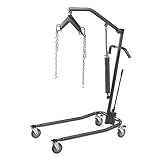 Drive Medical Hydraulic Patient Lift
A full lift is what makes one person able to manage a transfer alone. It is the single purchase that most often delays a move into residential care.
Check price on Amazon →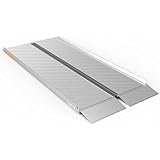 EZ-ACCESS Singlefold Wheelchair Ramp, 6 ft
Folds like a suitcase and carries in a car boot, so the same ramp handles the front step at home and the kerb at an appointment.
Check price on Amazon → Drive Medical Nitro Rollator with Seat
The seat matters more than the wheels. Being able to stop and rest is what decides whether someone still goes out at all.
Check price on Amazon → Vive Stand Assist Rail for Couch or Chair
Getting out of a low sofa is where most falls at home start. This is the cheapest thing on the list and often the first one needed.
Check price on Amazon →As an Amazon Associate we earn from qualifying purchases, at no extra cost to you. Researched guidance, not medical advice. Prices change, so check before buying.
Responding to Repetitive Questions
Your parent may ask the same question dozens of times. This is one of the hardest aspects of dementia care.
Why It Happens
- They genuinely don't remember asking
- They're anxious and seeking reassurance
- They're trying to hold onto something that feels important
- The question may represent an unmet need
How to Respond
- Answer as if it's the first time: Your irritation shows; their confusion remains
- Address the underlying need: "What time is dinner?" may mean "I'm hungry" or "I'm anxious"
- Redirect: Answer briefly, then change the subject
- Write it down: Sometimes a visible note provides reassurance
- Use visual cues: Clock, calendar, whiteboard with daily schedule
"When is my husband coming?" asked by a widow may really mean "I feel alone and want comfort." Address the feeling, not the factual question. "You must miss him. Tell me about when you first met."
When They Don't Recognize You
One of the most painful parts of dementia is when your parent doesn't know who you are. This usually happens in later stages.
What's Happening
- Their image of you may be frozen at a younger age
- They may confuse you with someone from their past
- They may know you're familiar but can't place you
- Emotional recognition often outlasts name recognition
How to Respond
- Don't force it: "I'm your daughter!" often causes distress
- Gently identify yourself: "It's Sarah. I'm here to visit you"
- Focus on connection, not recognition: If they think you're a nice visitor, be a nice visitor
- Use photos: Looking at old photos together may help
- Protect yourself: This is grief. Your feelings matter too
Don't: "Mom, I'm your daughter! How can you not know me?"
Do: "Hi, it's Sarah. I'm so happy to see you today."
Therapeutic Fibbing
Sometimes the most compassionate response involves entering their reality rather than insisting on factual truth.
When It May Be Appropriate
- They ask about a deceased spouse or parent
- They want to "go home" (to a childhood home that no longer exists)
- They're worried about going to a job they retired from decades ago
- The truth would cause distress without any benefit
Examples
- "Where's my mother?" → "Tell me about your mother. What was she like?"
- "I need to get to work." → "It's your day off. What would you like to do?"
- "I want to go home." → "What do you miss about home? Let's look at some photos."
Some families believe in honesty at all costs. Others find that repeatedly telling someone their spouse died causes fresh grief each time. There's no perfect answer. The goal is reducing suffering, not being "right."
Communication Beyond Words
As verbal communication becomes more difficult, other forms of connection become more important:
Non-Verbal Connection
- Touch: Holding hands, gentle back rubs, hugs (if welcomed)
- Eye contact: Looking at them when you speak
- Presence: Just sitting together quietly
- Facial expressions: Smile, look calm and warm
- Body language: Sit at their level, face them, appear relaxed
Music and Sensory Connection
- Play familiar music: Songs from their youth often remain accessible
- Sing together: Lyrics may be remembered when other words are lost
- Look at photos together: Old photos can spark memories
- Engage senses: Familiar smells, textures, tastes
Even when your parent can't remember what happened or what you said, they remember how you made them feel. A visit that felt warm and loving leaves a residue of wellbeing, even if the specific memory fades. Your presence matters more than perfect communication.
Managing Difficult Behaviors Through Communication
Agitation and Anger
- Stay calm, your agitation escalates theirs
- Speak softly and slowly
- Don't argue or try to explain
- Acknowledge their feelings: "You seem upset. I'm sorry this is hard"
- Try to identify the trigger (pain, overstimulation, need)
- Redirect to a calming activity
Paranoia and Accusations
- Don't defend yourself or argue, it doesn't help
- Respond to the feeling: "That sounds scary"
- Help them feel safe
- Check whether something real prompted the fear (lost item, confusing situation)
- Redirect to something comforting
Don't: "No one is stealing from you! I would never do that!"
Do: "I can see you're worried about your things. Let me help you find them."
Refusing Care
- Don't demand or force
- Try again later
- Offer choices: "Would you like to take a bath or just wash up?"
- Make it matter-of-fact: "It's time to get ready for dinner"
- Use distraction: start a conversation while doing the task
Taking Care of Yourself
Communication challenges are emotionally exhausting. Remember:
- You will lose patience. That's human, not failure
- Step away when you need to, even briefly
- The person you knew is still in there, even if they can't show it
- Find support from others who understand
- Grieve the losses as they happen, don't wait until the end
Dementia Care Resources
Our Dementia Care Kit includes communication guides, activity ideas, and behavior tracking tools.
Get the Complete Caregiver Kit- Enter their reality instead of correcting them
- Use simple sentences, calm tone, and give time to respond
- Don't quiz, argue, or test their memory
- Repetitive questions often signal an underlying need
- Therapeutic fibbing may be kinder than painful truths
- Non-verbal connection matters as much as words
- Feelings last longer than facts, your presence matters
- Take breaks and care for yourself too