Dementia Stages: What to Expect at Each Stage
Watching dementia progress in a parent is heartbreaking. But understanding what lies ahead can help you prepare, plan, and provide the best care possible at each stage.
This guide covers the three general stages of dementia, early, middle, and late, including what to expect and what to do.
- Every person's dementia journey is different. Not everyone experiences all symptoms.
- Progression speed varies widely, some decline quickly, others remain stable for years.
- These stages often overlap. The boundaries aren't clear-cut.
- This guide focuses primarily on Alzheimer's disease, the most common form. Other dementias may progress differently.
In early stage dementia, your parent can still function independently in many ways. Changes may be subtle and sometimes mistaken for normal aging.
Common Signs
- Forgetting recent events or conversations
- Repeating questions or stories
- Trouble finding the right words
- Losing track of dates, appointments, or bills
- Misplacing items
- Difficulty with complex tasks (finances, cooking elaborate meals)
- Getting lost in familiar places occasionally
- Mood or personality changes (withdrawal, anxiety, irritability)
What They Can Still Do
- Live independently or with minimal support
- Perform most daily activities
- Carry on conversations (though may search for words)
- Recognize family and friends
- Make decisions about their care and legal matters (with support)
What to Do in Early Stage
- Get legal documents in place NOW: Power of attorney, healthcare proxy, and living will while they can still participate in decisions
- Have financial conversations: Understand their accounts, bills, and wishes
- Address safety: Driving, cooking, medication management
- Start care planning: Research care options before you need them
- Support their independence: Use reminders, calendars, routines
- Consider support groups: For them and for you
This is typically the longest and most challenging stage. Your parent will need increasing help with daily activities, and behavioral changes may become more pronounced.
Common Signs
- Significant memory loss (may forget personal history, not recognize some people)
- Confusion about time, place, and situation
- Difficulty with dressing, bathing, toileting
- Sleep disturbances (sleeping during day, awake at night)
- Wandering or getting lost
- Sundowning (increased confusion and agitation in late afternoon/evening)
- Behavioral changes (suspicion, paranoia, aggression, repetitive behaviors)
- Hallucinations or delusions
- Incontinence (may begin in this stage)
What They Can Often Still Do
- Participate in activities they enjoy (with guidance)
- Walk and move around (though may need supervision)
- Feed themselves (with setup help)
- Respond to music, touch, and familiar faces
- Express emotions and preferences (though communication becomes harder)
What to Do in Middle Stage
- Ensure 24/7 supervision: They shouldn't be alone for extended periods
- Simplify environment: Remove clutter, lock dangerous items, install safety features
- Establish routines: Predictability reduces anxiety
- Learn behavioral strategies: Redirection, validation, staying calm
- Consider day programs: Provides stimulation and gives you respite
- Evaluate living situation: Is home still safe? Is memory care needed?
- Get respite care: You cannot do this alone
In late stage dementia, your parent will need total care. They'll lose the ability to communicate verbally and perform any activities of daily living.
Common Signs
- Loss of ability to speak (may say only a few words or none)
- May not recognize close family members
- Unable to walk or sit without support
- Complete incontinence
- Difficulty swallowing
- Significant weight loss
- Increased susceptibility to infections (especially pneumonia)
- May sleep most of the time
What They May Still Be Able to Do
- Respond to touch and physical affection
- React to music or familiar voices
- Show emotions, even if communication is limited
What to Do in Late Stage
- Focus on comfort: Quality of life becomes the priority
- Consider hospice: Provides comfort care and support for families
- Prevent complications: Skin breakdown, infections, contractures
- Connect through senses: Gentle touch, music, familiar scents
- Make end-of-life decisions: Review advance directives, discuss with healthcare team
- Take care of yourself: Grief is ongoing throughout this process
The 7-Stage Model
Some doctors use a more detailed 7-stage scale (the Global Deterioration Scale/Reisberg Scale). Here's how it maps:
- Stage 1: No cognitive decline
- Stage 2: Very mild decline (may be normal aging)
- Stage 3: Mild decline (early symptoms noticed by family), Early Stage
- Stage 4: Moderate decline (clear symptoms, diagnosis made), Early/Middle Stage
- Stage 5: Moderately severe decline (needs help with daily activities), Middle Stage
- Stage 6: Severe decline (needs extensive help, major personality changes), Middle/Late Stage
- Stage 7: Very severe decline (loss of speech and movement), Late Stage
The time to plan is early stage, not when you're in crisis. Legal documents, care preferences, financial planning, and family discussions are all easier to address while your parent can still participate and make decisions.
As an Amazon Associate, we earn from qualifying purchases.
Recommended Dementia Care Resources
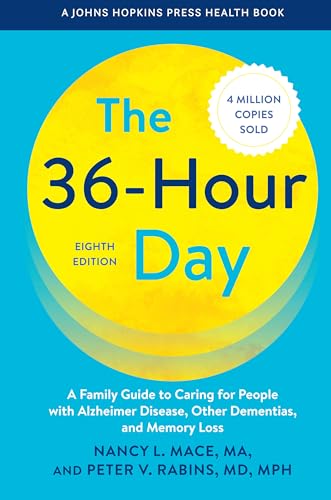 The 36-Hour Day Essential guide for each stage of dementia care
 Day Clock for Dementia Reduce confusion about time and day
 GPS Tracker for Seniors Safety monitoring for wandering concerns
 Medical Alert System Emergency help at every stage
How Long Does Each Stage Last?
There's no reliable way to predict progression. Factors that may influence speed:
- Type of dementia: Some types progress faster than Alzheimer's
- Age at diagnosis: Earlier onset often progresses faster
- Overall health: Other conditions can affect progression
- Genetics: Family history may play a role
On average, people live 4-8 years after diagnosis, though some live 20+ years. The uncertainty is difficult, but planning for various scenarios helps.
Newly Diagnosed? Start Here.
Our First 90 Days with Dementia guide walks you through exactly what to do after a diagnosis.
Get the Guide