Caring for an elderly parent is expensive, home care, medical bills, prescriptions, equipment. The good news: the IRS offers several ways to reduce your tax burden if you're paying for a parent's care. The bad news: these tax benefits are complicated and often overlooked.
This guide covers the main tax deductions and credits available to caregivers for the 2026 tax year.
This guide provides general information about caregiver tax benefits. Tax situations are individual, consult a tax professional for advice specific to your situation. Tax laws change; verify current rules with the IRS or a CPA.
Claiming Your Parent as a Dependent
If you provide more than half of your parent's financial support, you may be able to claim them as a dependent, which can unlock additional tax benefits.
Requirements to Claim a Parent
- Support test: You provide more than half of their total support for the year
- Income test: Their gross income is less than $5,050 (2026 estimate; check current threshold)
- Citizenship: They must be a U.S. citizen, resident, or national
- Not claimed elsewhere: They can't be claimed on someone else's return
Support includes: housing (fair rental value), food, utilities, medical care, insurance premiums, clothing, transportation, recreation. It does NOT include Medicare or Medicaid benefits, income they don't spend, or their savings.
Multiple Support Agreement
If several siblings together provide more than half of a parent's support, but no single person provides more than half, you can agree on who claims the dependent using IRS Form 2120. The person claiming must have contributed at least 10% of support.
The equipment that changes the most
Most of what caregiving costs is time. These four are the purchases that reliably buy some of it back, and they are the ones families tell us they wish they had bought sooner.
 Drive Medical Hydraulic Patient Lift
A full lift is what makes one person able to manage a transfer alone. It is the single purchase that most often delays a move into residential care.
Check price on Amazon →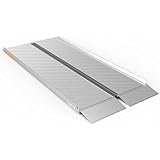 EZ-ACCESS Singlefold Wheelchair Ramp, 6 ft
Folds like a suitcase and carries in a car boot, so the same ramp handles the front step at home and the kerb at an appointment.
Check price on Amazon → Drive Medical Nitro Rollator with Seat
The seat matters more than the wheels. Being able to stop and rest is what decides whether someone still goes out at all.
Check price on Amazon → Vive Stand Assist Rail for Couch or Chair
Getting out of a low sofa is where most falls at home start. This is the cheapest thing on the list and often the first one needed.
Check price on Amazon →As an Amazon Associate we earn from qualifying purchases, at no extra cost to you. Researched guidance, not medical advice. Prices change, so check before buying.
Medical Expense Deduction
You can deduct medical expenses you pay for a parent if:
- You could claim them as a dependent (ignoring the income test), OR
- You provide more than half their support
What Medical Expenses Qualify
| Deductible | Not Deductible |
|---|---|
| Doctor visits, hospital bills | General household help |
| Prescription medications | Over-the-counter vitamins/supplements |
| Medical equipment (walkers, wheelchairs) | Non-prescription items |
| Nursing home (if for medical care) | Assisted living room & board (usually) |
| Home health aides (medical portion) | Companionship services |
| Transportation for medical care | General transportation |
| Long-term care insurance premiums (limits apply) | , |
| Home modifications for medical purposes | Cosmetic changes |
The 7.5% AGI Threshold
You can only deduct medical expenses that exceed 7.5% of your Adjusted Gross Income (AGI).
Example: If your AGI is $80,000 and you paid $12,000 in medical expenses for your parent:
- 7.5% of $80,000 = $6,000
- $12,000 - $6,000 = $6,000 deductible
If your parent is in a nursing home primarily for medical care (not just custodial care), the entire cost, including room and board, may be deductible as a medical expense. Get a statement from the facility documenting the medical nature of care.
Dependent Care Credit
The Dependent Care Credit helps offset costs of care that allows you to work. For elderly parents:
Requirements
- Your parent must be physically or mentally incapable of self-care
- Your parent must be your dependent (or would be except for income test)
- The care must enable you (and spouse) to work or look for work
- The care provider can't be another dependent
Credit Amount (2026 Estimated)
- Maximum eligible expenses: $3,000 for one qualifying person
- Credit percentage: 20-35% depending on income
- Maximum credit: Up to $1,050
If your employer offers a Dependent Care FSA, compare the tax savings to the credit, you generally can't use both for the same expenses. FSA may save more if you're in a higher tax bracket.
Long-Term Care Insurance Deduction
Premiums for qualified long-term care insurance are deductible as medical expenses, but there are age-based limits on how much you can deduct:
2026 Estimated Premium Limits
| Age at End of Tax Year | Maximum Deductible Premium |
|---|---|
| 40 or under | ~$480 |
| 41-50 | ~$890 |
| 51-60 | ~$1,790 |
| 61-70 | ~$4,770 |
| Over 70 | ~$5,960 |
These limits are for each person's own policy and are subject to the 7.5% AGI threshold.
State Tax Benefits
Many states offer additional tax benefits for caregivers:
State Caregiver Credits/Deductions
- Some states offer caregiver tax credits separate from federal
- Some allow deductions for care expenses
- Rules vary significantly by state
Check Your State
- California, New York, and others have caregiver provisions
- Check with your state's tax authority or a local CPA
- State benefits can add significantly to federal savings
Record Keeping Tips
To claim these deductions, you'll need documentation:
- Keep receipts: All medical expenses, care costs, medications
- Document support: Track all payments you make for your parent
- Get statements: From nursing homes/assisted living about medical vs. custodial care
- Keep care provider info: Name, address, SSN or EIN of anyone you pay for care
- Track mileage: For medical transportation (IRS standard rate)
If your parent pays you for caregiving, that's income to you (possibly self-employment income). However, there are legal ways to structure caregiver payments that may benefit both parties tax-wise. Consult a tax professional.
Other Financial Benefits
Family and Medical Leave Act (FMLA)
While not a tax benefit, FMLA allows eligible employees up to 12 weeks unpaid leave to care for a parent with a serious health condition, with job protection.
Employer Benefits
- Dependent Care FSA (pre-tax dollars for care expenses)
- Employee Assistance Programs
- Caregiver support programs
- Flexible work arrangements
Medicaid Caregiver Payments
Some states allow Medicaid to pay family caregivers directly. These payments may be taxable income. Check your state's Medicaid waiver programs.
Track Your Caregiving Expenses
Our Care Cost Calculator and Expense Tracker help you document costs for tax purposes.
Get the Complete Caregiver Kit- You may claim your parent as a dependent if you provide more than half their support
- Medical expenses over 7.5% of AGI are deductible
- Nursing home costs may be fully deductible if care is medical in nature
- Dependent Care Credit can offset costs that allow you to work
- Long-term care insurance premiums are deductible with age-based limits
- Check your state for additional caregiver tax benefits
- Keep detailed records of all expenses and support payments
- Consult a tax professional for your specific situation