When an elderly parent needs help eating, mealtimes become about much more than nutrition. They involve safety, dignity, and often patience. Whether due to weakness, stroke, dementia, or other conditions, this guide covers how to help your parent eat safely while making mealtimes as pleasant as possible.
Swallowing problems (dysphagia) affect up to 40% of elderly in care settings. If your parent coughs, chokes, or has a "wet" voice after eating or drinking, they need a swallowing evaluation before you continue feeding. Aspiration pneumonia is a leading cause of death in elderly.
Before You Begin: Positioning
Proper positioning is the most important safety factor:
Sit Upright
Parent should be at 90 degrees, not reclined. In bed, raise the head of bed fully. Sitting in a chair is even better if possible.
Chin Slightly Down
Head neutral or chin slightly tucked. Looking up while swallowing increases choking risk. A pillow behind the head may help.
Feet Supported
Feet flat on floor or footrest. Dangling feet create instability and poor posture for swallowing.
Stay Upright After
Keep them upright for at least 30 minutes after eating. Lying down too soon risks reflux and aspiration.
The equipment that changes the most
Most of what caregiving costs is time. These four are the purchases that reliably buy some of it back, and they are the ones families tell us they wish they had bought sooner.
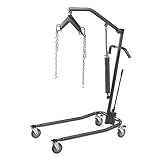 Drive Medical Hydraulic Patient Lift
A full lift is what makes one person able to manage a transfer alone. It is the single purchase that most often delays a move into residential care.
Check price on Amazon →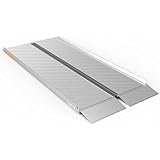 EZ-ACCESS Singlefold Wheelchair Ramp, 6 ft
Folds like a suitcase and carries in a car boot, so the same ramp handles the front step at home and the kerb at an appointment.
Check price on Amazon → Drive Medical Nitro Rollator with Seat
The seat matters more than the wheels. Being able to stop and rest is what decides whether someone still goes out at all.
Check price on Amazon → Vive Stand Assist Rail for Couch or Chair
Getting out of a low sofa is where most falls at home start. This is the cheapest thing on the list and often the first one needed.
Check price on Amazon →As an Amazon Associate we earn from qualifying purchases, at no extra cost to you. Researched guidance, not medical advice. Prices change, so check before buying.
Adaptive Equipment for Self-Feeding
Many seniors can feed themselves with the right tools. Always encourage independence before moving to full feeding assistance.
Weighted Utensils
Heavy handles reduce tremor effects. Helpful for Parkinson's and essential tremor.
Built-Up Handle Utensils
Large, soft-grip handles for arthritis or weak grip. Easy to grasp.
Rocker Knives
Curved blade cuts with rocking motion, one-handed cutting possible.
Scoop Plates
Raised edge on one side helps push food onto utensil. Prevents spills.
Non-Slip Mats
Dycem or silicone mats keep plates from sliding during eating.
Two-Handle Cups
Easier to grip and control than standard cups. Some have lids to prevent spills.
Bendable Utensils
Can be angled for one-handed use or limited range of motion.
Plate Guards
Clip-on rim converts any plate into a scoop plate.
When You Need to Feed Them
If your parent cannot self-feed, here's how to do it safely:
The Feeding Process
Sit at Their Level
Sit beside them, not standing over them. Eye level contact feels more dignified and you can watch for swallowing problems.
Offer Small Bites
Half-teaspoon amounts. Place food on the stronger side of the mouth if they've had a stroke. Let them see and smell the food first.
Wait for Complete Swallow
Watch their throat, you should see the swallow. Ask them to open their mouth to confirm it's empty before the next bite. Never rush.
Alternate Liquids and Solids
Sips of liquid between bites help clear the throat. But be careful, thin liquids are harder to swallow than solids for many people.
Describe what you're offering: "Here's some mashed potatoes with gravy." Let them choose what to eat next when possible. Play familiar music. Keep conversation light. Avoid TV, it's distracting and increases aspiration risk.
Swallowing Difficulties (Dysphagia)
Dysphagia is common after stroke, with Parkinson's, dementia, and many other conditions. It's dangerous but manageable.
Signs of Swallowing Problems
- Coughing or choking during or after eating/drinking
- "Wet" or "gurgly" voice after swallowing
- Food remaining in mouth after swallowing
- Drooling or difficulty controlling food/liquid in mouth
- Taking a long time to chew or swallow
- Recurrent pneumonia (sign of silent aspiration)
- Unexplained weight loss or dehydration
If you see these signs, request a swallowing study. A speech-language pathologist will assess swallowing and recommend diet modifications. This is not optional, it's a safety requirement.
Modified Diet Textures
A speech therapist may recommend texture modifications:
Regular → Mechanical Soft → Pureed
Mechanical soft: Foods that require minimal chewing, soft, moist, ground, or minced. No tough meats, raw vegetables, or hard foods.
Pureed: Smooth, pudding-like consistency. No chunks or pieces. All foods blended smooth.
Thickened Liquids
Thin liquids (water, juice, coffee) move too fast for impaired swallowing. Thickening levels:
- Nectar thick: Coats spoon, pours slowly (like tomato juice)
- Honey thick: Drops slowly from spoon
- Pudding thick: Holds shape, must be spooned
Commercial thickeners (ThickIt, SimplyThick) or pre-thickened drinks are available.
Special Situations
After Stroke
Weakness on one side affects swallowing and eating. Place food on the unaffected side. Check the "pocketing" on the weak side, food gets trapped there. May need pureed foods and thickened liquids initially.
Parkinson's Disease
Tremor makes self-feeding difficult; use weighted utensils. Slowness means meals take longer, keep food warm with warming plates. Swallowing often affected, especially in later stages. Time meals for when medication is working best.
Dementia
May forget how to eat or what utensils are for. Put utensil in their hand; start the motion. Use finger foods when possible. One food at a time on the plate reduces confusion. Keep it simple. In late stages, may need feeding assistance even if swallowing is intact.
If They Won't Eat
Refusal to eat has many causes:
- Dental problems: Pain from teeth or ill-fitting dentures
- Medications: Many cause nausea, taste changes, or dry mouth
- Depression: Common in elderly; reduces appetite
- Constipation: Creates uncomfortable fullness
- Diminished taste/smell: Food isn't appealing
- Fatigue: Too tired to eat; time meals when energy is best
- End of life: Natural appetite decrease as body shuts down
Strategies That Help
- Small, frequent meals instead of three large ones
- Nutrient-dense foods: make every bite count
- Favorite foods: comfort foods may be more appealing
- Enhanced flavors: elderly may need stronger tastes
- Social eating: eating with others increases intake
- Treat underlying causes: pain, depression, dental issues
As death approaches, the body naturally stops wanting food. Forcing nutrition doesn't prolong life and may cause discomfort. Focus on comfort: small sips, mouth care, ice chips. This is a natural process, not a failure of care.
Emergency: Choking Response
Know what to do if choking occurs:
If They Can Cough
Encourage forceful coughing. Don't interfere if they're coughing effectively, the cough can dislodge the obstruction.
If They Cannot Cough, Speak, or Breathe
- Call 911 immediately
- Perform abdominal thrusts (Heimlich maneuver): Stand behind them, wrap arms around waist, make a fist above navel, thrust inward and upward
- If in wheelchair: Can do thrusts from behind while they're seated
- Repeat until object is expelled or they become unconscious
- If unconscious: Begin CPR; look for object in mouth after each cycle of compressions
Every caregiver should know CPR and choking response. The Red Cross, American Heart Association, and many hospitals offer classes. Some are specifically for caregivers of elderly.
Get the Complete Care Toolkit
Daily care checklists, nutrition tracking, and emergency protocols, all in one organized system.
Explore Caregiver Resources