How to Get Paid to Care for Your Parent in 2026
Caring for an aging parent often means reducing work hours or leaving your job entirely. What many families don't realize: there are legitimate programs that can pay you for the care you're already providing.
This guide covers every way family caregivers can get compensated in 2026.
Family caregivers provide an estimated $600 billion worth of unpaid care annually. While you can't capture all that value, these programs can provide meaningful income, and recognition, for your work.
5 Ways to Get Paid as a Family Caregiver
Many states allow Medicaid recipients to hire their own caregivers, including family members. These programs go by various names:
- Consumer-Directed Personal Assistance (CDPA)
- Self-Directed Services
- Participant-Directed Care
- Cash & Counseling
How it works: Your parent receives a monthly budget for care. They (or you, as their representative) can use that budget to hire and pay you as their caregiver.
Requirements:
- Parent must be eligible for Medicaid
- Parent must need home care services
- State must offer self-directed options
- Some states exclude spouses; most allow adult children
If your parent is a veteran enrolled in VA healthcare, they may qualify for Veteran-Directed Care, which gives them a budget to hire their own caregivers.
How it works: The VA provides a monthly budget based on care needs. Your parent can use this to pay family members (including you) for caregiving.
Requirements:
- Parent must be enrolled in VA healthcare
- Must need nursing home level of care (but want to stay home)
- Program availability varies by VA medical center
Even without government programs, your parent can pay you directly for caregiving through a formal Caregiver Agreement (also called a Personal Care Agreement).
How it works: You and your parent sign a written contract specifying services, hours, and payment. Your parent pays you from their own funds.
Why this matters:
- Documents the arrangement for Medicaid planning (not a "gift")
- Can help spend down assets legitimately
- Creates a paper trail if siblings question finances
- You receive income for work you're doing anyway
Caregiver Agreements must be at fair market rates, in writing, for future services only (not retroactive), and documented with time logs. Get an elder law attorney to draft it.
Many states have programs specifically designed to pay family caregivers. These go beyond Medicaid self-direction:
- California: In-Home Supportive Services (IHSS) - family can be paid
- New York: Consumer Directed Personal Assistance Program (CDPAP)
- Washington: Individual Provider program
- Oregon: Independent Choices Program
- Minnesota: Consumer Support Grant
- Texas: Consumer Directed Services
Contact your state's Medicaid office or Area Agency on Aging to learn about local options.
If your parent has a long-term care insurance policy, some policies will pay benefits even when family provides care. Check the policy for:
- Whether family caregivers qualify as providers
- Any licensing or certification requirements
- Daily or monthly benefit amounts
- How to submit claims for family care
Not all policies cover family caregivers, but many newer policies are more flexible. It's worth checking.
The equipment that changes the most
Most of what caregiving costs is time. These four are the purchases that reliably buy some of it back, and they are the ones families tell us they wish they had bought sooner.
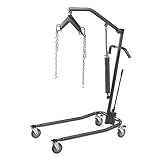 Drive Medical Hydraulic Patient Lift
A full lift is what makes one person able to manage a transfer alone. It is the single purchase that most often delays a move into residential care.
Check price on Amazon →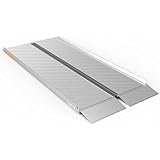 EZ-ACCESS Singlefold Wheelchair Ramp, 6 ft
Folds like a suitcase and carries in a car boot, so the same ramp handles the front step at home and the kerb at an appointment.
Check price on Amazon → Drive Medical Nitro Rollator with Seat
The seat matters more than the wheels. Being able to stop and rest is what decides whether someone still goes out at all.
Check price on Amazon → Vive Stand Assist Rail for Couch or Chair
Getting out of a low sofa is where most falls at home start. This is the cheapest thing on the list and often the first one needed.
Check price on Amazon →As an Amazon Associate we earn from qualifying purchases, at no extra cost to you. Researched guidance, not medical advice. Prices change, so check before buying.
How to Find Programs in Your State
- Contact your state Medicaid office: Ask specifically about "self-directed" or "consumer-directed" options
- Call your Area Agency on Aging: Find yours at eldercare.acl.gov
- For veterans: Contact the social worker at your parent's VA medical center
- Check with an elder law attorney: They know local programs and can set up Caregiver Agreements
These programs can be hard to find and navigate. Many families are told "no" initially or get lost in bureaucracy. Persistence pays off. Try multiple contacts and don't take the first "no" as final.
Tax Implications of Getting Paid
Income from caregiving is generally taxable. Here's what to know:
- Medicaid programs: Usually paid through a fiscal intermediary who handles taxes and issues a W-2
- VA programs: Similar to Medicaid, handled by a financial management service
- Private pay (Caregiver Agreement): You're typically considered self-employed. You'll need to report income and pay self-employment tax.
- Exception: In some states, "difficulty of care" payments to family caregivers may be exempt from income tax. Consult a tax professional.
Check Your Parent's Eligibility
Our free tool helps identify what benefits and programs your parent may qualify for.
Check EligibilityWhat About Programs That Promise Thousands?
Be wary of companies that charge upfront fees promising to get you paid as a caregiver. Many legitimate programs are free to apply for. If someone asks for hundreds of dollars to "enroll" you, that's a red flag.
The legitimate programs described above are run by government agencies and don't require paying a company to access them.
Related Resources
- Caregiver Tax Deductions 2026
- VA Benefits for Elderly Parents
- Medicaid Spend-Down Rules
- Caregiver Burnout: Signs & Solutions
- Best Caregiver Essentials Kit 2026, Everything you need to start caregiving