Medicaid Spend-Down Rules 2026: How It Works
"Spend-down" is the process of reducing your parent's assets to qualify for Medicaid coverage of long-term care. It's one of the most confusing, and anxiety-inducing, parts of elder care planning.
This guide explains exactly how it works, what counts as an asset, and legal strategies to protect what you can.
What is Medicaid Spend-Down?
Medicaid is a needs-based program. To qualify for nursing home coverage, your parent must have limited income and assets. If they have too much, they must "spend down" those assets until they reach the limit.
This isn't about gaming the system, it's how Medicaid was designed to work. People pay for their own care until they can't, then Medicaid steps in.
The equipment that changes the most
Most of what caregiving costs is time. These four are the purchases that reliably buy some of it back, and they are the ones families tell us they wish they had bought sooner.
 Drive Medical Hydraulic Patient Lift
A full lift is what makes one person able to manage a transfer alone. It is the single purchase that most often delays a move into residential care.
Check price on Amazon →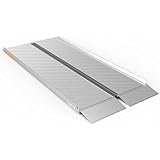 EZ-ACCESS Singlefold Wheelchair Ramp, 6 ft
Folds like a suitcase and carries in a car boot, so the same ramp handles the front step at home and the kerb at an appointment.
Check price on Amazon → Drive Medical Nitro Rollator with Seat
The seat matters more than the wheels. Being able to stop and rest is what decides whether someone still goes out at all.
Check price on Amazon → Vive Stand Assist Rail for Couch or Chair
Getting out of a low sofa is where most falls at home start. This is the cheapest thing on the list and often the first one needed.
Check price on Amazon →As an Amazon Associate we earn from qualifying purchases, at no extra cost to you. Researched guidance, not medical advice. Prices change, so check before buying.
2026 Asset Limits
Limits vary by state, but typical 2026 limits are:
- Individual: $2,000 in countable assets
- Married couple (both need care): $3,000
- Married couple (one needs care): Community Spouse Resource Allowance (CSRA) up to $154,140
Income limits are typically around $2,829/month for an individual in 2026. However, in many states, income over the limit can go directly to the nursing home as a "patient pay" amount, so income is less of a barrier than assets.
What Counts as an Asset?
Countable Assets (Must Spend Down)
- Cash, checking, and savings accounts
- Stocks, bonds, mutual funds
- CDs and money market accounts
- IRAs and 401(k)s (in most states)
- Second homes or vacation properties
- Additional vehicles beyond one
- Cash value of life insurance over $1,500
- Investment property
Exempt Assets (Don't Count)
- Primary residence (with equity limits, typically $713,000 in 2026)
- One vehicle
- Personal belongings and household goods
- Prepaid burial/funeral plans
- Burial plot and headstone
- Wedding/engagement rings
- Term life insurance (no cash value)
- Property used for self-support (business, farm)
Legal Ways to Spend Down Assets
You can reduce assets through legitimate expenses. The key: money must be spent on things of fair value, not given away.
Approved Spend-Down Strategies
- Pay off debt: Mortgage, credit cards, car loans
- Home improvements: Roof, HVAC, accessibility modifications
- Vehicle purchase: Replace an older car (one vehicle is exempt)
- Prepaid funeral: Irrevocable funeral plans are exempt
- Pay for care: Home care, assisted living before Medicaid (estimate local rates with the assisted living cost calculator by ZIP code)
- Medical expenses: Dental work, hearing aids, glasses
- Legal fees: Elder law attorney for Medicaid planning
- Pay off family loans: Must be documented, legitimate debts
Don't give money to family members to "hide" it. Medicaid has a 5-year look-back period. Any gifts made within 5 years of applying can result in a penalty period where Medicaid won't pay for care.
The 5-Year Look-Back Period
When your parent applies for Medicaid, the state reviews all financial transactions from the past 5 years (60 months). They're looking for gifts or transfers made for less than fair market value.
What Happens If They Find Gifts?
The total value of improper transfers is divided by the average monthly cost of nursing home care in your state. The result is a penalty period during which Medicaid won't pay.
Example: If your parent gave away $100,000 and nursing home care costs $10,000/month, they'd face a 10-month penalty period. During those 10 months, they'd need to pay for care themselves, without the money they gave away.
Families who gave away money thinking they were planning ahead can find themselves with no money AND no Medicaid coverage. The nursing home still needs to be paid. This is why working with an elder law attorney is so important.
Spousal Protections
Medicaid rules protect the "community spouse" (the one who doesn't need nursing home care). They can keep:
- The home: No equity limit if spouse lives there
- One vehicle: Any value
- Community Spouse Resource Allowance (CSRA): Up to $154,140 in 2026
- Monthly income allowance: Some of the nursing home spouse's income can go to the community spouse
A married couple with a $300,000 house and $150,000 in savings could potentially keep all of it if one spouse needs nursing home care, the house is exempt, and the CSRA protects most of the savings.
Advanced Medicaid Planning Strategies
Elder law attorneys use legal strategies to protect assets while qualifying for Medicaid. These must be done properly to avoid penalties:
- Medicaid-compliant annuities: Convert countable assets to an income stream
- Caregiver agreements: Pay family members fair market rate for care provided
- Promissory notes: Structured loans rather than gifts
- Irrevocable trusts: Must be created 5+ years before needing care
- Home equity protection: Various strategies depending on state
Need Help with Medicaid Planning?
Download our Elder Law Attorney Prep Pack to prepare for your consultation.
Get the Prep PackStep-by-Step: The Spend-Down Process
- Calculate total countable assets: List everything, determine what's exempt
- Determine the gap: How much needs to be spent to reach the limit?
- Create a spend-down plan: Prioritize legitimate expenses
- Keep meticulous records: Save every receipt, document every expense
- Apply for Medicaid: When assets are at or near the limit
- Submit documentation: 5 years of bank statements, bills, receipts
- Wait for approval: Can take 45-90 days
Common Questions
Can I sell my parent's house?
Yes, but proceeds become countable assets that must be spent down. If a spouse still lives there, the house is protected. If not, you may want to explore other options with an attorney.
What about my parent's retirement accounts?
In most states, IRAs and 401(k)s count as assets. However, in some states, if the account is in "payout status" (taking required minimum distributions), only the income counts, not the principal. Check your state's rules.
Can I pay myself for caregiving?
Yes, but it must be documented with a formal Caregiver Agreement, at fair market rates, and for services actually provided. Retroactive payments for past care are often seen as gifts.
How long does Medicaid approval take?
Typically 45-90 days, but it can take longer if there are issues with documentation. Many nursing homes will admit residents "pending Medicaid" and Medicaid will pay retroactively once approved.
Related Resources
- Medicare vs Medicaid Explained
- How to Pay for Nursing Home Care
- Benefits Eligibility Checker
- Estate Planning Workbook
Common questions about the Medicaid spend-down
What is a Medicaid spend-down and how does it work?
A spend-down is the process of reducing countable assets (and sometimes income) to your state's Medicaid limit so an aging parent can qualify for long-term-care coverage. Money is spent on allowed costs, care, medical bills, home repairs, paying off debt, prepaid funerals, not given away, which would trigger a penalty.
What is the Medicaid look-back period?
When applying for long-term-care Medicaid, most states review the prior 60 months (5 years) of financial records. Gifts or below-value asset transfers during that window can create a penalty period of Medicaid ineligibility. California has been phasing out its look-back; rules vary by state.
What assets are exempt from the Medicaid spend-down?
Commonly exempt (non-countable) assets include a primary home up to the state equity limit (with a spouse or dependent living there), one vehicle, personal belongings, a prepaid irrevocable funeral, and certain retirement accounts in some states. A spouse who remains at home is also protected by spousal-impoverishment rules.
Authoritative sources: Medicaid.gov and Eldercare Locator (ACL). Asset and income limits vary by state, confirm with your state Medicaid office or an elder-law attorney.
Medicaid spend down explained: more questions
What is Medicaid spend down, explained simply?
Medicaid spend down means using up a person's countable assets, and in some states the income above a limit, on allowed expenses until they meet the state's Medicaid limit for nursing home or long-term care coverage. In a typical state the limit for a single applicant is about $2,000 in countable assets, though it varies by state. Allowed expenses include paying off debt, home modifications, prepaid funeral plans, and paying for care at fair market value.
Do Medicaid spending down rules apply to income as well as assets?
Yes, in some states. Where income is over the limit, many states let the extra income go toward the cost of care as a monthly patient-pay amount. Some states have a medically needy spend down, where a person qualifies by spending income above the limit on medical bills each month, and states with a strict income cap often require a Miller trust (qualified income trust). Ask your state Medicaid agency which applies.
Is there a Medicare spend down?
No. Spend down is a Medicaid rule. Medicare has no asset test and does not pay for long-term custodial care, only limited skilled nursing care after a qualifying hospital stay. People who search for Medicare spend down rules are usually looking for the Medicaid rules on this page.
Can spend down money be used for family care, meals, or 24 hour supervision?
Money can be spent on care at fair market value, including paying a family caregiver under a written caregiver agreement. Paying a family member without a written agreement, or paying above the going rate, can be treated as a gift and trigger a penalty under the 5-year look-back. An elder law attorney can draft the agreement before the payments begin.
General information, not legal or financial advice. Rules vary by state; confirm with an elder law attorney or your state Medicaid office. Updated 2026.