Medicare vs Medicaid 2026: What's the Difference?
If you're helping care for an aging parent, you've probably heard "Medicare" and "Medicaid" used interchangeably, but they're two completely different programs. Understanding the difference is crucial because Medicare doesn't cover long-term care, which is often the biggest expense families face.
Quick answer: Medicare is federal health insurance for people 65+, earned through work history; Medicaid is need-based state/federal assistance for people with low income and assets. Medicare does not cover long-term care; Medicaid does. The table below shows the 2026 differences at a glance, and the rest of this guide explains each program in plain English.
The Quick Difference
| Medicare | Medicaid | |
|---|---|---|
| What it is | Federal health insurance | State/federal assistance program |
| Who qualifies | People 65+ (or disabled) | Low-income individuals of any age |
| Based on | Age and work history | Income and assets |
| Covers long-term care? | No (only short-term rehab) | Yes (nursing home, home care) |
| 2026 Cost | $185/month for Part B | Little to no cost |
Most seniors have Medicare for their regular healthcare. But if they need long-term care (nursing home, assisted living, or extensive home care), Medicaid is usually the only program that covers it.
The equipment that changes the most
Most of what caregiving costs is time. These four are the purchases that reliably buy some of it back, and they are the ones families tell us they wish they had bought sooner.
 Drive Medical Hydraulic Patient Lift
A full lift is what makes one person able to manage a transfer alone. It is the single purchase that most often delays a move into residential care.
Check price on Amazon →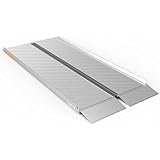 EZ-ACCESS Singlefold Wheelchair Ramp, 6 ft
Folds like a suitcase and carries in a car boot, so the same ramp handles the front step at home and the kerb at an appointment.
Check price on Amazon → Drive Medical Nitro Rollator with Seat
The seat matters more than the wheels. Being able to stop and rest is what decides whether someone still goes out at all.
Check price on Amazon → Vive Stand Assist Rail for Couch or Chair
Getting out of a low sofa is where most falls at home start. This is the cheapest thing on the list and often the first one needed.
Check price on Amazon →As an Amazon Associate we earn from qualifying purchases, at no extra cost to you. Researched guidance, not medical advice. Prices change, so check before buying.
Medicare Explained (2026)
Medicare is federal health insurance for people 65 and older. Most Americans qualify automatically if they (or their spouse) worked and paid Medicare taxes for at least 10 years.
Medicare Parts
- Part A (Hospital Insurance): Covers hospital stays, skilled nursing facility care (up to 100 days after hospitalization), hospice, and some home health. Most people pay no premium.
- Part B (Medical Insurance): Covers doctor visits, outpatient care, preventive services. 2026 premium: $185/month.
- Part C (Medicare Advantage): Private insurance plans that include Parts A, B, and usually D. Often include extras like dental, vision, gym memberships.
- Part D (Prescription Drugs): Covers medications. Premiums vary by plan.
- Long-term nursing home care (beyond 100 days post-hospitalization)
- Assisted living
- Ongoing home care (personal care aides)
- Dental, vision, hearing (unless you have Medicare Advantage)
Medicaid Explained (2026)
Medicaid is a joint federal-state program that helps people with limited income and assets pay for healthcare, including long-term care. Each state runs its own program with different names (Medi-Cal in California, MassHealth in Massachusetts, etc.).
Medicaid Eligibility in 2026
Requirements vary by state, but generally:
- Income limit: Typically around $2,829/month for an individual (can be higher in some states)
- Asset limit: Usually $2,000 for an individual ($3,000 for a couple in some states)
- Assets that don't count: Primary home (with equity limits), one car, personal belongings, prepaid funeral
What Medicaid Covers
- Nursing home care (this is the big one, often $8,000-$15,000/month)
- Home and community-based services (HCBS waivers)
- Personal care assistance
- Adult day care
- Medical care Medicare doesn't cover
Can Your Parent Have Both?
Yes! This is called being "dual eligible" and it's actually common among low-income seniors.
When someone has both Medicare and Medicaid:
- Medicare pays first for covered services
- Medicaid fills in the gaps and pays Medicare premiums
- Medicaid covers long-term care that Medicare doesn't
Medicare Savings Programs
If your parent doesn't qualify for full Medicaid, they might still qualify for programs that help pay Medicare costs:
- QMB (Qualified Medicare Beneficiary): Pays Part A and B premiums, deductibles, and copays
- SLMB (Specified Low-Income Medicare Beneficiary): Pays Part B premium
- QI (Qualifying Individual): Pays Part B premium (higher income limits than SLMB)
- Extra Help (LIS): Helps pay Part D prescription costs
Millions of seniors qualify for Medicare Savings Programs but don't know about them. Contact your state Medicaid office or SHIP (State Health Insurance Assistance Program) to check eligibility.
What If Your Parent Has Too Much Money for Medicaid?
Many middle-class families face this situation. Your parent may have too many assets to qualify for Medicaid, but not nearly enough to pay for years of nursing home care.
Options include:
- Spend down: Pay for care until assets reach the limit (this happens faster than most people expect)
- Medicaid planning: Legal strategies to protect some assets while qualifying
- Spousal protections: If one spouse needs care, the other can keep significant assets
Check Your Parent's Benefits Eligibility
Our free tool helps you understand what programs your parent might qualify for.
Check Eligibility NowKey Takeaways for 2026
- Medicare = health insurance for 65+ based on age/work history. Does NOT cover long-term care.
- Medicaid = assistance for low-income. DOES cover long-term care (nursing home, home care).
- Many seniors have BOTH, Medicare for regular healthcare, Medicaid for long-term care.
- If your parent doesn't qualify for Medicaid now, they might after paying for care reduces their assets.
- Medicare Savings Programs can help even if your parent doesn't qualify for full Medicaid.
Next Steps
- Use our Benefits Eligibility Checker to see what your parent might qualify for
- Contact your State SHIP program for free counseling
- Consider consulting an elder law attorney for Medicaid planning if assets are a concern