Hearing Aids for Elderly Parents: A Complete Guide for Caregivers
Your parent says "what?" constantly. They turn the TV up to levels that shake the walls. Phone conversations have become impossible. You know they need hearing aids, but they resist, claiming they can hear "just fine" or that hearing aids are for "old people."
Hearing loss affects one-third of adults over 65 and nearly half of those over 75. Untreated, it leads to social isolation, depression, and even cognitive decline. The good news: hearing aids have never been better or more accessible. This guide walks you through everything from convincing a reluctant parent to choosing the right devices and ensuring they actually wear them.
Research shows untreated hearing loss significantly increases dementia risk, possibly because the brain works harder to process sound, leaving fewer resources for memory and thinking. Treating hearing loss may be one of the most important things you can do for your parent's cognitive health.
Signs Your Parent Needs Hearing Aids
Hearing loss often develops gradually. Your parent may not realize how much they're missing:
- Frequently asking people to repeat themselves
- Turning up TV or radio to uncomfortable levels
- Difficulty following conversations in groups or noisy places
- Misunderstanding words (responding incorrectly to questions)
- Withdrawing from conversations or social situations
- Complaining that others "mumble"
- Difficulty hearing on the telephone
- Not hearing doorbells, alarms, or approaching cars
- Speaking unusually loudly
- Fatigue after social events (from straining to hear)
If your parent experiences sudden hearing loss in one or both ears, this is a medical emergency. Seek care within 24-72 hours, prompt treatment with steroids can sometimes restore hearing. Don't wait.
The equipment that changes the most
Most of what caregiving costs is time. These four are the purchases that reliably buy some of it back, and they are the ones families tell us they wish they had bought sooner.
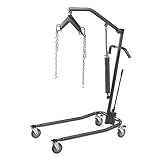 Drive Medical Hydraulic Patient Lift
A full lift is what makes one person able to manage a transfer alone. It is the single purchase that most often delays a move into residential care.
Check price on Amazon →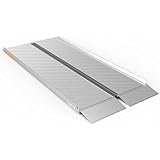 EZ-ACCESS Singlefold Wheelchair Ramp, 6 ft
Folds like a suitcase and carries in a car boot, so the same ramp handles the front step at home and the kerb at an appointment.
Check price on Amazon → Drive Medical Nitro Rollator with Seat
The seat matters more than the wheels. Being able to stop and rest is what decides whether someone still goes out at all.
Check price on Amazon → Vive Stand Assist Rail for Couch or Chair
Getting out of a low sofa is where most falls at home start. This is the cheapest thing on the list and often the first one needed.
Check price on Amazon →As an Amazon Associate we earn from qualifying purchases, at no extra cost to you. Researched guidance, not medical advice. Prices change, so check before buying.
Getting a Hearing Test
Before getting hearing aids, your parent needs a proper evaluation:
Who to See
- Audiologist (AuD): Doctorate-level hearing specialist who tests hearing and fits hearing aids. Recommended for most people.
- ENT (Otolaryngologist): Medical doctor who can diagnose and treat underlying conditions. See first if there's ear pain, drainage, or sudden hearing loss.
- Hearing Instrument Specialist: Licensed to test hearing and fit hearing aids (not a doctorate; scope varies by state).
The Hearing Test
A comprehensive hearing evaluation typically includes:
- Pure-tone audiometry: Listening for beeps at various frequencies and volumes
- Speech audiometry: Understanding spoken words at different volumes
- Tympanometry: Checking eardrum and middle ear function
- Results on an audiogram: A chart showing hearing ability at different frequencies
Original Medicare (Parts A & B) covers diagnostic hearing exams if ordered by a doctor for a medical reason, but does NOT cover routine hearing tests, hearing aids, or fittings. Some Medicare Advantage plans include hearing aid benefits, check your parent's specific plan.
Types of Hearing Aids
Modern hearing aids come in various styles and technology levels:
Styles
Behind-the-Ear (BTE)
The hearing aid sits behind the ear with a tube carrying sound into the ear canal. Pros: Larger, easier to handle; longest battery life; works for all hearing loss levels; easier to clean. Cons: More visible; may be uncomfortable with glasses.
Receiver-in-Canal (RIC/RITE)
Similar to BTE but smaller; the receiver (speaker) sits in the ear canal. Pros: More discreet than BTE; natural sound quality; comfortable. Cons: Receiver can be damaged by earwax; smaller batteries.
In-the-Ear (ITE)
Fills the outer ear; custom-made from an ear impression. Pros: Easy to insert; longer battery life than smaller types. Cons: Visible; may feel occluded; earwax can clog.
In-the-Canal (ITC) / Completely-in-Canal (CIC)
Fits partially or completely in the ear canal. Pros: Less visible; natural sound collection. Cons: Tiny batteries difficult for arthritic hands; limited features; earwax issues; not for severe hearing loss.
Invisible-in-Canal (IIC)
Sits deep in the ear canal, nearly invisible. Pros: Cosmetically appealing. Cons: Very difficult to handle; tiny batteries; limited features; not for all ear canal shapes; not for severe loss.
Behind-the-ear or receiver-in-canal styles are generally best for elderly users. They're easier to handle with stiff fingers, have longer battery life, and work for almost all hearing loss levels. Vanity shouldn't trump practicality, a hearing aid that's too small to handle properly won't be worn.
OTC vs. Prescription Hearing Aids
Since 2022, over-the-counter (OTC) hearing aids have been available without a prescription or professional fitting. Here's how they compare:
| Factor | OTC Hearing Aids | Prescription Hearing Aids |
|---|---|---|
| Cost | $200-$1,500/pair | $2,000-$7,000/pair |
| Best for | Mild to moderate hearing loss | All levels including severe |
| Professional fitting | Not included (self-fit or optional) | Included with purchase |
| Customization | Limited, preset programs | Precisely programmed to audiogram |
| Follow-up care | Varies; may have remote support | In-person adjustments included |
| Where to buy | Retail stores, online | Audiologists, hearing centers |
| Return period | Varies (check policy) | Usually 30-60 day trial |
When OTC Might Work
- Mild to moderate hearing loss (can still hear some speech without aids)
- Comfortable with technology and self-adjustment
- Budget is a primary concern
- Willing to try and potentially return if unsatisfactory
When Prescription Is Better
- Moderate-to-severe or severe hearing loss
- Need for professional guidance and ongoing support
- Difficulty with technology or self-adjustment
- Other ear conditions requiring monitoring
- Previous unsuccessful OTC attempts
Costco offers prescription hearing aids at significantly lower prices than most audiologists (around $1,500-2,500/pair for premium aids). You don't need a membership to use their hearing center in most states. They employ licensed hearing professionals and offer good trial periods.
Hearing Aid Features to Consider
Essential Features for Elderly Users
- Rechargeable batteries: Eliminates tiny battery changes (highly recommended for dexterity issues)
- Telecoil (T-coil): Connects to hearing loop systems in theaters, churches, etc.
- Volume control: Simple button to adjust volume
- Multiple programs: For different listening environments
- Noise reduction: Reduces background noise
- Feedback suppression: Prevents whistling
Advanced Features (May Add Complexity)
- Bluetooth connectivity: Streams audio from phones, TV, but requires smartphone comfort
- Smartphone app control: Useful if they're comfortable with apps
- Automatic environment adjustment: Detects and adapts to surroundings
- Directional microphones: Focuses on speech in front
- Artificial intelligence: Learns preferences over time
More features isn't always better. For elderly parents who struggle with technology, a simpler hearing aid that "just works" may be more successful than an advanced model with features they'll never use or that confuse them.
Convincing a Reluctant Parent
Many elderly people resist hearing aids. Common objections and how to address them:
"I can hear fine."
They genuinely may not realize how much they're missing. Try: keeping a log of misheard words or missed sounds to show them objectively. Suggest a hearing test "just to check", the audiogram results are concrete evidence.
"Hearing aids are for old people."
Point out that asking "what?" constantly, missing conversations, and turning up the TV loudly are far more age-identifying than small, modern hearing aids. Many celebrities wear them. Today's devices are nearly invisible.
"They're too expensive."
OTC options now start around $200. Costco and online retailers offer prescription aids at lower costs. Some states have assistance programs. Consider it an investment in quality of life, safety, and cognitive health.
"They don't work / I tried them before."
Technology has improved dramatically. Many failures were from poor fitting, unrealistic expectations, or giving up too soon. A good audiologist and proper adjustment period make all the difference.
"They're uncomfortable / annoying."
This is often about fit and adjustment. A skilled audiologist can modify the fit. The brain also needs 2-4 weeks to adapt to hearing sounds it's been missing. Encourage persistence through the adjustment period.
Connect hearing aids to their priorities: "You could hear the grandkids better." "You wouldn't miss parts of your favorite shows." "You could talk on the phone with your sister again." "You'd feel safer knowing you can hear cars approaching."
The Adjustment Period
Getting used to hearing aids takes time, typically 2-4 weeks of consistent wear. Help your parent understand what to expect:
Week 1-2: Everything Sounds Strange
- Their own voice sounds loud and strange
- Background sounds they'd forgotten about are suddenly present (clocks ticking, refrigerator humming)
- Sounds may seem tinny or artificial
- They may feel exhausted from processing new sounds
Week 3-4: Adaptation
- Brain starts filtering background sounds better
- Speech understanding improves
- Sounds become more natural
- Comfort with wearing aids increases
Tips for the Adjustment Period
- Start with a few hours daily and increase gradually
- Wear at home first in quiet environments before busy places
- Read aloud to get used to their own voice
- Don't give up if the first days are uncomfortable
- Keep all follow-up appointments for adjustments
- Keep a log of what's working and what isn't
Hearing Aid Care and Maintenance
Proper care extends hearing aid life and ensures optimal performance:
Daily Care
- Wipe hearing aids with a dry cloth each night
- Open battery door (if applicable) to allow moisture to escape
- Store in a dry, safe place (not the bathroom)
- Check for earwax buildup on the receiver/tip
- For rechargeable models, place in charger each night
Weekly Care
- Clean with provided brush and tools
- Change wax guards if clogged
- Check tubing (BTE) for cracks or moisture
- Use a drying kit or dehumidifier if moisture is an issue
Common Problems and Solutions
- No sound: Check battery, volume, wax guard, and that it's turned on
- Weak sound: Replace battery, clean wax guard, clean receiver
- Whistling (feedback): Re-seat in ear, reduce volume, check for wax in ear
- Distorted sound: Change battery, check for moisture damage
- Discomfort: Contact audiologist for adjustment
Even with good home care, hearing aids benefit from professional cleaning every 6 months. The audiologist has specialized tools to clean ports and receivers thoroughly and can check for developing issues.
Accessories That Help
- TV streamers: Send TV audio directly to hearing aids wirelessly
- Remote microphones: Partner wears a mic; audio goes to hearing aids (great for restaurants)
- Phone clip: Streams phone calls to hearing aids
- Hearing aid clips/retainers: Prevent loss if aids fall out
- Dehumidifier/drying box: Removes moisture overnight
- Captioned phones: Show written text of what caller says
If Your Parent Has Dementia
Hearing aids for people with dementia present unique challenges:
- Simpler is better: Avoid complex features they can't manage
- Rechargeable strongly recommended: Eliminates battery confusion
- Consider retention devices: Clips or retainers to prevent loss
- Label everything: Right (red) and Left (blue)
- Establish a routine: Same place to store, same time to insert
- Be prepared for loss: Check for insurance or loss/damage coverage
- Communicate with care staff: Ensure facility knows how to handle hearing aids
Sometimes what looks like cognitive decline is actually hearing loss. A person who can't hear questions will give inappropriate responses. Someone who can't follow conversations may withdraw and seem confused. Treating hearing loss can significantly improve apparent cognitive function.
Making Hearing Aids Stick
Many hearing aids end up in drawers. Strategies to ensure your parent actually wears theirs:
- Be involved in the fitting process: attend appointments
- Understand how they work so you can troubleshoot
- Encourage daily wear: the more they wear them, the more natural they feel
- Check in regularly: ask if they're comfortable, if sounds seem right
- Praise the benefits: reinforce positive experiences
- Address problems immediately: don't let discomfort fester
- Make follow-up appointments: adjustments are often needed
- Be patient: adaptation takes time
Track Medical Information in One Place
Our Care Coordination Binder helps you keep hearing aid information, appointment notes, and care instructions organized, so all caregivers know how to help.
Get OrganizedKey Takeaways
- Hearing loss affects health: untreated, it increases dementia risk and isolation
- Get a professional evaluation before buying hearing aids
- OTC options work for mild to moderate loss if cost is a concern
- For elderly users, choose easy-to-handle styles: BTE or RIC with rechargeable batteries
- Expect an adjustment period: 2-4 weeks of consistent wear
- Proper care extends life: daily cleaning and moisture protection
- Follow-up adjustments matter: keep audiologist appointments
- Your support makes the difference: encouragement and troubleshooting help
Hearing aids can transform your parent's quality of life, reducing isolation, improving safety, protecting cognitive health, and restoring connection with family. The technology is better than ever, and with your support through the adjustment process, success is achievable.
Related Guides
Products that help with hearing loss
We independently research every recommendation. As an Amazon Associate we earn from qualifying purchases, at no extra cost to you. Disclosure.
- Amplified Phones →Loud, big-button landline phones for hard-of-hearing parents.
- Hearing Aids & Amplifiers →OTC hearing aids and amplifiers that restore conversation.