Long-Distance Caregiving: Tips for Caring from Afar
You live hundreds of miles from your aging parent. You worry constantly. You can't pop in to check on them. You feel guilty about not being there. And when something happens, you're scrambling to figure out what's going on from afar.
You're not alone. About 15% of family caregivers provide care from a distance. Here's how to make it work.
Generally, living an hour or more away from your parent, making it impractical to provide regular in-person care.
Essential First Steps
1. Get Legal Documents in Place
If you're far away and something happens, you need authority to act. Essential documents:
- Healthcare Power of Attorney
- Financial Power of Attorney
- HIPAA Authorization (so doctors will talk to you)
- Copy of their insurance cards, IDs, Medicare information
2. Build a Local Support Network
You need people on the ground. Identify and build relationships with:
- Neighbors who can check in and call you if something's wrong
- Nearby family members, friends, or church members
- Their primary care doctor and specialists
- Home care aides or agencies
- Geriatric care manager (professional who can coordinate everything locally)
3. Gather Critical Information
Keep a master document with:
- All doctor names, addresses, phone numbers
- Complete medication list with dosages
- Health conditions and allergies
- Insurance information
- Financial accounts and bills
- Key contacts (neighbors, friends, clergy)
- Spare key location or who has a key
The equipment that changes the most
Most of what caregiving costs is time. These four are the purchases that reliably buy some of it back, and they are the ones families tell us they wish they had bought sooner.
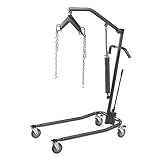 Drive Medical Hydraulic Patient Lift
A full lift is what makes one person able to manage a transfer alone. It is the single purchase that most often delays a move into residential care.
Check price on Amazon →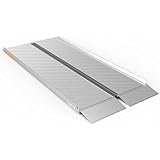 EZ-ACCESS Singlefold Wheelchair Ramp, 6 ft
Folds like a suitcase and carries in a car boot, so the same ramp handles the front step at home and the kerb at an appointment.
Check price on Amazon → Drive Medical Nitro Rollator with Seat
The seat matters more than the wheels. Being able to stop and rest is what decides whether someone still goes out at all.
Check price on Amazon → Vive Stand Assist Rail for Couch or Chair
Getting out of a low sofa is where most falls at home start. This is the cheapest thing on the list and often the first one needed.
Check price on Amazon →As an Amazon Associate we earn from qualifying purchases, at no extra cost to you. Researched guidance, not medical advice. Prices change, so check before buying.
Technology to Help You Monitor
Medical Alert Systems
Devices your parent can wear to call for help if they fall or need assistance. Many now include fall detection and GPS tracking.
Video Check-In
Regular video calls let you see how they look, not just hear them. Set up an Echo Show, Facebook Portal, or iPad for easy use.
Smart Home Sensors
Motion sensors can alert you to unusual patterns, like no movement in the morning, or bathroom visits increasing at night.
Medication Dispensers
Automatic pill dispensers can alert you if medications aren't taken on time.
Smart Locks
Let you grant access to caregivers or neighbors without your parent needing to answer the door.
Doorbell Cameras
See who's coming and going. Useful for monitoring caregiver arrivals and checking for unusual visitors.
Talk to your parent before installing monitoring devices. Respect their autonomy. Focus on safety, not surveillance. If they have cognitive decline, more monitoring may be appropriate, but involve them in decisions as much as possible.
Staying Connected
Establish Regular Communication
- Schedule regular calls (same time, same day, predictability helps)
- Use video when possible to see how they look
- Ask specific questions ("What did you eat today?") not just "How are you?"
- Listen for changes in voice, mood, or cognition
Make Visits Count
When you do visit:
- Schedule doctor appointments during your visit so you can attend
- Assess the home for safety issues
- Check the refrigerator (what's the food situation really?)
- Look at mail for unpaid bills or scam letters
- Review medications
- Meet with local caregivers and neighbors
- Handle tasks that require your presence (legal, banking, etc.)
- Spend quality time, not just task time
Hiring a Geriatric Care Manager
A geriatric care manager (also called an aging life care professional) is a professional, usually a social worker or nurse, who can be your "boots on the ground."
They can:
- Assess your parent's needs
- Coordinate with doctors and attend appointments
- Hire and supervise home care workers
- Handle crises locally
- Give you regular updates
- Navigate systems (Medicare, Medicaid, VA)
Cost: $100-200/hour, with initial assessments running $300-700. Not covered by insurance.
Worth it? For long-distance caregivers, often yes. Find one through the Aging Life Care Association.
Managing the Emotional Toll
Dealing with Guilt
Long-distance caregivers often struggle with guilt about not being there. Remind yourself:
- You can't be everywhere. You made life decisions that led you to where you are.
- You're doing what you can from where you are.
- Coordination, research, and emotional support are real contributions.
- Your parent may not want you to uproot your life.
Managing Worry
- Set up systems (monitoring, check-ins) that give you information
- Accept that you can't control everything
- Focus on what you CAN do, not what you can't
- Find a support group for long-distance caregivers
Working with Local Siblings
If a sibling lives near your parent and provides more hands-on care:
- Acknowledge their effort: They're doing the day-to-day work
- Contribute in other ways: Research, financial help, phone support, taking over during visits
- Stay in regular communication: Don't just call during crises
- Don't second-guess: Trust their on-the-ground judgment
- Offer respite: Take over for a weekend so they can get a break
Stay Organized
Our Care Coordination Binder helps you keep all your parent's information in one place, essential for long-distance caregivers.
Get the BinderEmergency Planning
Plan now for what you'll do in a crisis:
- Who will respond locally? Neighbor? Friend? Geriatric care manager?
- How quickly can you get there? Know flight options, keep a bag packed
- Who has spare keys? What's the lockbox code?
- Which hospital do they go to? Have the number saved
- What's covered by FMLA? Understand your work leave options