You're at the hospital. Your parent is unconscious. The doctor needs to make treatment decisions, but the hospital won't talk to you. The bank won't let you pay their bills. You have no legal authority to help the person you're caring for.
This scenario happens every day to families who assumed they'd figure out the paperwork "later." Power of attorney documents take an hour to set up but can prevent months of legal complications. Here's what you need to know.
Power of attorney can only be granted when someone has mental capacity to understand what they're signing. If your parent already has dementia or becomes incapacitated, it's too late. The only option then is guardianship, a costly, time-consuming court process. Get these documents while you can.
What Is Power of Attorney?
Power of attorney (POA) is a legal document that gives one person (the "agent" or "attorney-in-fact") the authority to act on behalf of another person (the "principal"). It's not about becoming someone's attorney, it's about having legal authority to make decisions for them.
Key Terms
- Principal: The person granting the power (your parent)
- Agent/Attorney-in-fact: The person receiving the power (you)
- Durable: Remains valid if the principal becomes incapacitated
- Springing: Only becomes effective when a specific event occurs (like incapacity)
The equipment that changes the most
Most of what caregiving costs is time. These four are the purchases that reliably buy some of it back, and they are the ones families tell us they wish they had bought sooner.
 Drive Medical Hydraulic Patient Lift
A full lift is what makes one person able to manage a transfer alone. It is the single purchase that most often delays a move into residential care.
Check price on Amazon →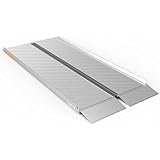 EZ-ACCESS Singlefold Wheelchair Ramp, 6 ft
Folds like a suitcase and carries in a car boot, so the same ramp handles the front step at home and the kerb at an appointment.
Check price on Amazon → Drive Medical Nitro Rollator with Seat
The seat matters more than the wheels. Being able to stop and rest is what decides whether someone still goes out at all.
Check price on Amazon → Vive Stand Assist Rail for Couch or Chair
Getting out of a low sofa is where most falls at home start. This is the cheapest thing on the list and often the first one needed.
Check price on Amazon →As an Amazon Associate we earn from qualifying purchases, at no extra cost to you. Researched guidance, not medical advice. Prices change, so check before buying.
Types of Power of Attorney
| Type | What It Covers | When You Need It |
|---|---|---|
| Financial POA | Banking, bills, investments, property, taxes | Always, every adult should have one |
| Healthcare POA | Medical decisions when unable to decide | Always, essential for medical emergencies |
| General POA | Broad authority over most matters | When comprehensive authority is needed |
| Limited POA | Specific tasks only (e.g., sell a house) | One-time transactions |
Financial Power of Attorney
What It Allows
- Access and manage bank accounts
- Pay bills and manage finances
- File taxes
- Manage investments
- Buy, sell, or manage property
- Handle insurance claims
- Apply for benefits
Why "Durable" Matters
A standard POA becomes invalid if the principal becomes incapacitated. A durable power of attorney specifically states it remains in effect even if the principal can no longer make decisions. For caregiving purposes, you always want durable.
Even with a valid POA, some banks require their own forms or have strict acceptance policies. After getting the POA signed, take it to your parent's bank while they're still competent. Have the bank review and accept it. Get confirmation in writing.
Immediate vs. Springing
- Immediate: Effective as soon as signed
- Springing: Only effective when a triggering event occurs (usually incapacity)
Springing POAs sound safer but can cause delays, proving incapacity takes time when you need to act quickly. Most elder law attorneys recommend immediate durable POAs with a trusted agent.
Healthcare Power of Attorney
Also called a healthcare proxy, medical power of attorney, or healthcare agent designation. This gives someone authority to make medical decisions when the principal cannot.
What It Covers
- Consenting to or refusing treatment
- Choosing doctors and facilities
- Accessing medical records
- Making end-of-life decisions
- Organ donation decisions
Related Documents
- Living Will: Written instructions about end-of-life care preferences
- Advance Directive: Combines living will and healthcare POA
- HIPAA Authorization: Allows access to medical information
- DNR/POLST: Specific medical orders about resuscitation
A living will states what someone wants. A healthcare POA names who decides if they can't. You need both. The living will guides your decisions; the healthcare POA gives you authority to make them.
How to Get Power of Attorney
Step 1: Have the Conversation
- Approach it as protection, not control
- Explain why it's needed (emergencies, illness)
- Reassure them they keep control while competent
- Discuss who should be named and why
Step 2: Choose the Right Agent
Consider:
- Trustworthiness: Will they act in your parent's interest?
- Availability: Can they respond quickly when needed?
- Capability: Can they handle financial or medical decisions?
- Geography: Are they close enough to help?
- Relationship dynamics: Will siblings accept their authority?
Step 3: Create the Documents
Options:
- Elder law attorney: Best option; ensures proper drafting for your state ($200-500)
- Online legal services: Cheaper but may miss state-specific requirements ($50-150)
- State forms: Some states provide free statutory forms
Step 4: Execute Properly
- Principal must sign while mentally competent
- Most states require notarization
- Some require witnesses (rules vary by state)
- Keep originals in a safe but accessible place
- Give copies to agent, backup agent, doctors, banks
Power of attorney laws differ significantly by state. What's valid in one state may not be recognized in another. If your parent has property in multiple states, you may need POAs that comply with each state's requirements. An elder law attorney can navigate this.
What If There's No POA?
Without power of attorney, you have no legal authority to:
- Access their bank accounts
- Pay their bills
- Make medical decisions
- Talk to their doctors (HIPAA)
- File their taxes
- Manage their property
- Apply for benefits on their behalf
The Alternative: Guardianship/Conservatorship
If someone becomes incapacitated without a POA, the only option is court-appointed guardianship:
- Cost: $3,000-10,000+ in legal fees
- Time: Several months to complete
- Process: Court petition, evaluation, hearing
- Ongoing: Annual court reports, accountings
- Public: Court records are not private
- Loss of rights: The person loses legal decision-making
In a medical emergency, hospitals will treat without consent (implied consent). But for ongoing care decisions, you need legal authority. Don't wait for an emergency to discover you can't help.
Common Questions
Can POA be revoked?
Yes. The principal can revoke POA at any time while mentally competent. This is done in writing, and all copies should be destroyed or marked revoked. Notify the agent and any institutions that have the old POA.
Can there be multiple agents?
Yes, but this can complicate things. Options:
- Joint agents: Must act together (can cause delays)
- Separate agents: Each can act independently (can cause conflicts)
- Successor agents: Backup if primary can't serve (usually best)
Does POA mean I'm responsible for their debts?
No. You're acting on their behalf using their resources. You're not personally liable for their debts unless you misuse the POA or co-sign loans.
Does POA give me their assets?
No. POA is about managing their affairs, not ownership. You must act in their best interest and keep records. Misusing POA for personal gain is a crime.
What happens when they die?
POA ends at death. The executor of the will or estate administrator then handles affairs. POA does not allow you to handle matters after death.
Protecting Against Abuse
Safeguards to Consider
- Require accounting: Agent must keep records of all transactions
- Limit scope: Restrict to specific accounts or actions if concerned
- Co-agents: Require two signatures for large transactions
- Professional oversight: Name an attorney or accountant to review
Warning Signs of POA Abuse
- Unexplained withdrawals or transfers
- Unpaid bills despite available funds
- Changes to estate planning documents
- Agent living beyond their means
- Isolation of the principal from family
POA abuse is financial exploitation, a form of elder abuse. Report to Adult Protective Services, local police, or the state attorney general's office. The court can revoke the POA and appoint a guardian if the principal can't revoke it themselves.
Checklist: Getting POA in Place
- ☐ Have conversation with parent about need for POA
- ☐ Decide who should be agent (and backup agent)
- ☐ Determine what powers are needed (financial, healthcare, both)
- ☐ Consult elder law attorney or use reputable legal service
- ☐ Ensure documents are properly executed (signed, witnessed, notarized)
- ☐ Register financial POA with banks and financial institutions
- ☐ Provide healthcare POA to doctors and hospitals
- ☐ Store originals safely but accessibly
- ☐ Give copies to relevant parties
- ☐ Review periodically (every few years or after major life changes)
Legal Documents Checklist
Our Estate Planning Workbook includes checklists for all essential legal documents, questions to ask an attorney, and a tracking system for important papers.
Get the Complete Caregiver Kit- POA must be signed while mentally competent, don't wait
- You need both financial and healthcare POAs
- Make sure it's "durable" to remain valid during incapacity
- Register with banks and doctors after signing
- Without POA, guardianship is the expensive, time-consuming alternative
- An elder law attorney ensures documents are properly drafted
- POA gives authority to manage, not own, act in their best interest