The average senior takes 4-5 prescription medications. At retail prices, that can cost hundreds per month. But there are dozens of ways to cut costs, from free discount apps to manufacturer programs that provide medications for $0. Here's how to save.
Quick Wins: Start Here
1. Use GoodRx, RxSaver, or SingleCare (Free)
These free apps and websites show prices at different pharmacies and provide instant discount coupons. No insurance needed. Simply show the pharmacist the coupon on your phone or print it.
How to use: Search the medication, compare prices at nearby pharmacies, and present the coupon at checkout. Sometimes the discount price beats your insurance copay.
2. Ask for Generic Medications
Generics contain the same active ingredients as brand-name drugs but cost a fraction. Always ask: "Is there a generic available?" About 90% of prescriptions filled are generics.
Example: Brand Lipitor: $400/month. Generic atorvastatin: $10-20/month.
3. $4/$2 Generic Programs at Major Pharmacies
Walmart, Costco, and other stores offer hundreds of generic medications for $4/month or $10/90 days. Some are even free (like metformin at some chains).
Tip: You don't need a Costco membership to use their pharmacy.
The equipment that changes the most
Most of what caregiving costs is time. These four are the purchases that reliably buy some of it back, and they are the ones families tell us they wish they had bought sooner.
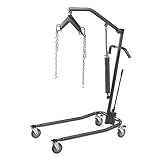 Drive Medical Hydraulic Patient Lift
A full lift is what makes one person able to manage a transfer alone. It is the single purchase that most often delays a move into residential care.
Check price on Amazon →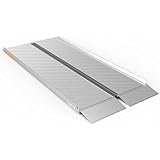 EZ-ACCESS Singlefold Wheelchair Ramp, 6 ft
Folds like a suitcase and carries in a car boot, so the same ramp handles the front step at home and the kerb at an appointment.
Check price on Amazon → Drive Medical Nitro Rollator with Seat
The seat matters more than the wheels. Being able to stop and rest is what decides whether someone still goes out at all.
Check price on Amazon → Vive Stand Assist Rail for Couch or Chair
Getting out of a low sofa is where most falls at home start. This is the cheapest thing on the list and often the first one needed.
Check price on Amazon →As an Amazon Associate we earn from qualifying purchases, at no extra cost to you. Researched guidance, not medical advice. Prices change, so check before buying.
Medicare Part D Savings
Extra Help (Low Income Subsidy)
If your parent has limited income and assets, they may qualify for Extra Help, a federal program that pays most Part D costs.
- Income: Under ~$22,590/individual or ~$30,660/couple
- Assets: Under ~$17,220/individual or ~$34,360/couple
- Excludes: Home, car, burial plot, life insurance up to $1,500
What Extra Help provides:
- $0 or very low monthly premium
- $0 deductible
- Copays of $0-$11 per prescription
- No coverage gap ("donut hole")
How to apply: Online at ssa.gov/extrahelp, by phone at 1-800-772-1213, or in person at a Social Security office.
Compare Part D Plans Annually
Part D plans change every year, formularies, prices, and pharmacy networks. During Open Enrollment (Oct 15 - Dec 7), compare plans at Medicare.gov/plan-compare to find the lowest total cost for your parent's specific medications.
Patient Assistance Programs (PAPs)
Drug manufacturers offer free or low-cost medications to people who can't afford them. These programs are underutilized but can provide thousands in savings.
Brand-Name Drug Programs
Almost every major drug company has a patient assistance program. These typically require income under 200-400% of the federal poverty level (about $30,000-$60,000 for an individual in 2026).
How to Find and Apply
Search by Medication
Go to NeedyMeds.org or RxAssist.org and search for your parent's medications. These databases list all available assistance programs.
Check Eligibility
Most programs have income limits (typically 200-400% FPL). Some require that applicants don't have prescription coverage, while others work alongside insurance.
Complete Application
Applications usually require proof of income (tax return or Social Security statement), prescription from doctor, and basic information. Many are now online.
Renew Annually
Most programs require annual renewal. Set a calendar reminder to reapply before running out.
Major Manufacturer Programs
| Company | Program | Website |
|---|---|---|
| Pfizer | Pfizer RxPathways | pfizerrxpathways.com |
| Merck | Merck Patient Assistance | merckhelps.com |
| Johnson & Johnson | J&J Patient Assistance Foundation | jjpaf.org |
| AstraZeneca | AZ&Me | azandmeapp.com |
| Eli Lilly | Lilly Cares | lillycares.com |
| Bristol-Myers Squibb | BMS Patient Assistance | bmsaccesssupport.bmscustomerconnect.com |
| AbbVie | AbbVie Patient Assistance | abbvie.com/patients |
Mail-Order and 90-Day Supplies
90-Day Supplies
Buying 3 months at once is usually cheaper than 3 separate fills. Part D plans often offer better pricing for 90-day supplies.
Mail-Order Pharmacies
Plans' mail-order pharmacies often have lower copays than retail. Medications arrive automatically, no pharmacy trips needed.
Cost Plus Drugs
Mark Cuban's Cost Plus Drugs (costplusdrugs.com) sells generics at manufacturing cost plus 15%. Often cheapest option for generics.
Amazon Pharmacy
Prime members get discounts on many medications. Compare prices, sometimes competitive with GoodRx.
Pill Splitting
Many medications cost the same regardless of strength. If you split a higher-dose pill in half, you get twice the supply for the same price.
- Statins (atorvastatin, simvastatin)
- ACE inhibitors (lisinopril)
- SSRIs (sertraline, citalopram)
- Most uncoated immediate-release tablets
- Extended-release or time-release medications
- Enteric-coated tablets
- Capsules
- Medications with narrow therapeutic windows (Coumadin, thyroid)
- Chemotherapy drugs
How to do it: Ask the doctor to prescribe double the dose, then use a pill splitter (not a knife) to cut each pill in half. Get a quality pill splitter for $5-10 at any pharmacy.
State Pharmaceutical Assistance Programs (SPAPs)
Many states have programs that help seniors pay for medications. These vary widely, some supplement Medicare Part D, others help the uninsured.
States with notable programs include: Connecticut, Delaware, Illinois, Maine, Maryland, Massachusetts, New Jersey, New York, Pennsylvania, Vermont, and Wisconsin.
To find your state's program: Visit Medicare.gov and search "State Pharmaceutical Assistance Programs" or call your State Health Insurance Assistance Program (SHIP) at 1-877-839-2675.
Therapeutic Substitution
Ask the doctor if a different medication in the same class would be equally effective but cheaper. Within most drug classes, there are expensive brand-names and cheap generics that work similarly.
- Brand proton pump inhibitor → Generic omeprazole or pantoprazole
- Expensive statin → Generic atorvastatin or simvastatin
- Brand blood pressure med → Generic in same class
- Expensive diabetes med → Older, proven generics
Other Money-Saving Strategies
Medication Review
Ask the pharmacist or doctor if your parent truly needs all their medications. Deprescribing, safely stopping unnecessary medications, can improve health AND save money.
Over-the-Counter Alternatives
Some prescription medications are available OTC for less. Examples: Prilosec (omeprazole), Claritin (loratadine), Flonase (fluticasone). Ask the doctor if OTC versions are appropriate.
Discount Cards
Beyond GoodRx, other free discount programs include:
- AARP Prescription Discounts (free, no AARP membership needed)
- Blink Health
- ScriptSave WellRx
- Inside Rx
340B Pharmacies
Federally qualified health centers and certain hospitals participate in the 340B program, offering deeply discounted medications. If your parent receives care at one of these facilities, ask about their pharmacy.
When Your Parent Can't Afford Medications
If cost is causing your parent to skip doses or not fill prescriptions:
- Talk to the doctor immediately - They may have samples or know of alternatives
- Apply for Extra Help - Even borderline cases may qualify
- Contact patient assistance programs - Most people who apply get help
- Ask about hardship programs - Many pharmacies have them
- Contact local charities - Organizations like Lions Club, Kiwanis, or church groups sometimes help
Sample Action Plan
- List all current medications and current costs
- Check GoodRx/SingleCare prices at different pharmacies
- Ask doctor about generic alternatives for brand-names
- Apply for Extra Help if income-eligible
- Apply to patient assistance programs for expensive medications
- Compare Part D plans during open enrollment
- Consider 90-day supplies and mail-order
- Ask about pill splitting for appropriate medications
- Check your state for pharmaceutical assistance programs
Track Medications and Costs
Our caregiver resources include medication tracking tools to organize prescriptions and monitor expenses.
View Caregiver Resources