Your parent's doctor mentioned a DNR order. Or maybe you found one in their documents and don't know what it means. Or you're wondering if your parent should have one. These are difficult topics, but understanding them helps you honor your parent's wishes.
This guide explains what a DNR is, what it does and doesn't cover, and how to approach this decision with your parent.
A DNR (Do Not Resuscitate) order is a medical order that tells healthcare providers not to perform CPR if your parent's heart stops beating or they stop breathing. It applies ONLY to CPR, not to other treatments.
What CPR Actually Involves
Many people's understanding of CPR comes from TV, which dramatically overstates its effectiveness. In reality:
What CPR Includes
- Chest compressions: Forceful pressing on the chest (often breaks ribs in elderly)
- Rescue breathing: Mouth-to-mouth or bag-valve mask
- Defibrillation: Electric shocks to restart the heart
- Medications: Drugs injected to stimulate the heart
- Intubation: Tube down the throat connected to a breathing machine
CPR Success Rates (The Reality)
- Overall survival to hospital discharge: about 10-12%
- For elderly in nursing homes: about 2-5%
- For those with serious chronic illness: even lower
- Survivors often have significant complications (brain damage, broken ribs, need for long-term ventilator)
On medical TV shows, CPR works about 75% of the time and patients recover quickly. In reality, it works about 10% of the time, and many survivors have serious complications. This gap affects how people think about DNR decisions.
The equipment that changes the most
Most of what caregiving costs is time. These four are the purchases that reliably buy some of it back, and they are the ones families tell us they wish they had bought sooner.
 Drive Medical Hydraulic Patient Lift
A full lift is what makes one person able to manage a transfer alone. It is the single purchase that most often delays a move into residential care.
Check price on Amazon →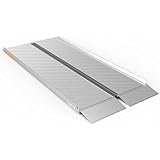 EZ-ACCESS Singlefold Wheelchair Ramp, 6 ft
Folds like a suitcase and carries in a car boot, so the same ramp handles the front step at home and the kerb at an appointment.
Check price on Amazon → Drive Medical Nitro Rollator with Seat
The seat matters more than the wheels. Being able to stop and rest is what decides whether someone still goes out at all.
Check price on Amazon → Vive Stand Assist Rail for Couch or Chair
Getting out of a low sofa is where most falls at home start. This is the cheapest thing on the list and often the first one needed.
Check price on Amazon →As an Amazon Associate we earn from qualifying purchases, at no extra cost to you. Researched guidance, not medical advice. Prices change, so check before buying.
DNR vs. Other Directives
| Document | What It Covers |
|---|---|
| DNR Order | Only CPR, what to do if heart stops or breathing stops |
| POLST/MOLST | Broader medical orders: CPR, hospitalization, feeding tubes, antibiotics |
| Living Will | General wishes about life-sustaining treatment |
| Healthcare Power of Attorney | Who makes decisions if patient can't |
A DNR does NOT mean "do not treat." A person with a DNR still receives all other medical care, medications, surgeries, treatments, pain management. It only applies if their heart stops or they stop breathing.
Types of DNR Orders
In-Hospital DNR
Written by a doctor for patients in the hospital. Goes in the medical chart. Applies while they're in that facility.
Out-of-Hospital DNR (OHDNR)
Also called a "community DNR" or "pre-hospital DNR." This tells emergency responders (EMTs, paramedics) not to perform CPR at home or in the community. Usually requires a special form signed by a physician.
POLST/MOLST
Some states use POLST (Physician Orders for Life-Sustaining Treatment) or MOLST (Medical Orders for Life-Sustaining Treatment). These are broader and include DNR plus other preferences.
If you call 911, EMTs are legally required to perform CPR unless you have proper documentation visible. A living will or healthcare power of attorney is NOT enough, you need a state-specific out-of-hospital DNR or POLST form, usually on brightly colored paper, posted visibly or readily available.
When to Consider a DNR
A DNR might be appropriate when:
- Terminal illness: Advanced cancer, end-stage heart/lung/kidney disease
- Advanced dementia: Late stages where quality of life is very limited
- Very frail elderly: Where CPR is unlikely to succeed and likely to cause harm
- Personal values: Preference for natural death over aggressive intervention
- Previous wishes: They've always said they wouldn't want this
A DNR might NOT be appropriate when:
- They're relatively healthy and CPR might work
- The condition is potentially reversible
- They want all possible interventions
- They haven't made their wishes known
Having the Conversation
If Your Parent Can Participate
- Choose a calm time: Not during a health crisis
- Ask about values: "What matters most to you about how you live?"
- Provide accurate information: About what CPR actually involves and its success rate
- Listen to their concerns: Fear of pain, fear of abandonment, religious beliefs
- Involve their doctor: Physicians can explain medical realities
Conversation Starters
- "Have you ever thought about what you'd want if your heart stopped?"
- "I read about DNR orders. Do you know what you'd want?"
- "If you couldn't tell doctors what you wanted, what should I tell them?"
- "What matters most to you about the end of your life?"
If Your Parent Has Dementia
If they can no longer make this decision:
- Review any advance directives they previously signed
- Consider what they previously said about end-of-life care
- Think about their values and what they would choose
- Consult with their healthcare power of attorney
- Discuss with their physician
Choosing a DNR is not "giving up" or "hastening death." It's choosing to allow a natural death rather than invasive interventions that are unlikely to help and may cause suffering. It can be an act of love and respect for their wishes.
How to Get a DNR Order
In a Hospital or Facility
- Discuss with the attending physician
- Patient (or healthcare agent) requests or agrees to DNR
- Doctor writes the order in the medical record
- Order applies while in that facility
For Home/Community
- Talk to your parent's primary care physician
- Request the state-specific out-of-hospital DNR or POLST form
- Physician completes and signs the form
- Keep original in visible location (refrigerator door is common)
- Give copies to family members, home care providers
Important Considerations
DNR Can Be Changed
- A DNR can be revoked at any time by the patient
- Circumstances change; wishes can change
- Review periodically, especially after health changes
Family Disagreement
- The patient's wishes come first (if known)
- Healthcare agent makes decisions if patient can't
- Consider a family meeting facilitated by physician or social worker
- Ethics consultation available in hospitals for complex cases
Religious and Cultural Considerations
- Some faiths have specific teachings about end-of-life care
- Chaplain or religious leader can help navigate
- Cultural values about death and dying vary
- These beliefs should be respected in the decision
If there's no DNR documentation and you're unsure what your parent would want, EMTs will perform CPR. This is the default. If you believe they wouldn't want it, try to get proper documentation in place before an emergency occurs.
Document End-of-Life Wishes
Our Advance Directive Guide helps you capture your parent's wishes and ensure they're honored.
Get the Complete Caregiver Kit- A DNR applies only to CPR, not to other medical treatments
- CPR success rates are much lower than TV suggests, especially for elderly
- Out-of-hospital DNR requires specific state form for EMTs to honor
- DNR can be appropriate for terminal illness, advanced dementia, or personal values
- Have the conversation before a crisis when possible
- A DNR is not "giving up", it's allowing natural death
- DNR orders can be changed at any time
- Keep documentation visible and give copies to family