Vertigo and Dizziness in Elderly Parents: Understanding and Managing Balance Problems
Your parent says the room is spinning. They grab walls when they walk. They're afraid to turn their head quickly. Dizziness is one of the most common complaints in elderly patients, and one of the most dangerous, because it dramatically increases fall risk.
Nearly 30% of people over 65 experience dizziness or balance problems. While often treatable, dizziness in the elderly can signal anything from a simple inner ear issue to stroke or heart problems. This guide helps you understand the causes, know when to worry, and support your parent through treatment.
Call 911 immediately if dizziness is accompanied by: sudden severe headache, slurred speech or difficulty speaking, weakness or numbness (especially on one side), vision changes, chest pain, difficulty breathing, or loss of consciousness. These could indicate stroke or heart attack.
Types of Dizziness: What Your Parent Is Experiencing
"Dizziness" means different things to different people. Clarifying the type helps identify the cause:
Vertigo
A false sensation of movement, usually spinning (like after spinning in circles as a child). The room seems to rotate, or they feel like they're moving when they're not. Often triggered by head movements. Usually caused by inner ear problems.
Lightheadedness/Presyncope
Feeling faint or like they might pass out. The world doesn't spin, but they feel unsteady and weak. Often related to blood pressure, heart issues, or dehydration.
Disequilibrium
A sense of imbalance or unsteadiness while walking, without spinning or faintness. May feel like the floor is tilting. Often related to nerve, muscle, or brain problems affecting balance.
Vague Dizziness
A hard-to-describe "off" feeling, disconnected, foggy, or floating. Can be caused by anxiety, medication effects, or chronic conditions.
Ask: "Does the room spin, or do you feel faint like you might pass out?" The answer helps doctors identify the cause. If possible, note when it happens (with head movement? upon standing? constantly?), how long it lasts, and any other symptoms.
The equipment that changes the most
Most of what caregiving costs is time. These four are the purchases that reliably buy some of it back, and they are the ones families tell us they wish they had bought sooner.
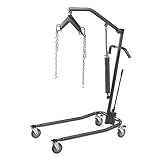 Drive Medical Hydraulic Patient Lift
A full lift is what makes one person able to manage a transfer alone. It is the single purchase that most often delays a move into residential care.
Check price on Amazon →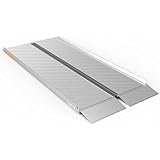 EZ-ACCESS Singlefold Wheelchair Ramp, 6 ft
Folds like a suitcase and carries in a car boot, so the same ramp handles the front step at home and the kerb at an appointment.
Check price on Amazon → Drive Medical Nitro Rollator with Seat
The seat matters more than the wheels. Being able to stop and rest is what decides whether someone still goes out at all.
Check price on Amazon → Vive Stand Assist Rail for Couch or Chair
Getting out of a low sofa is where most falls at home start. This is the cheapest thing on the list and often the first one needed.
Check price on Amazon →As an Amazon Associate we earn from qualifying purchases, at no extra cost to you. Researched guidance, not medical advice. Prices change, so check before buying.
Common Causes of Dizziness in Elderly
BPPV (Benign Paroxysmal Positional Vertigo)
What it is: Tiny calcium crystals in the inner ear become dislodged and move into a semicircular canal where they don't belong, sending false signals about head position.
Symptoms: Brief (30 seconds to 2 minutes) intense spinning vertigo triggered by specific head movements, turning in bed, looking up, bending over. May cause nausea.
Treatment: Epley maneuver or other repositioning exercises performed by a provider or physical therapist. Often cured in 1-2 sessions. Can recur.
Prognosis: Excellent, usually resolves completely with treatment.
Medication Side Effects
Culprits: Blood pressure medications (especially if overmedicated), sedatives, antidepressants, anticonvulsants, muscle relaxants, pain medications, antihistamines.
Symptoms: Various, may be lightheadedness, unsteadiness, or general dizziness. Often worse when starting a new medication or increasing dose.
Solution: Review all medications with the doctor. Never stop medications without medical guidance, but ask about alternatives or dose adjustments.
Orthostatic Hypotension
What it is: Blood pressure drops significantly when standing up, causing insufficient blood flow to the brain.
Symptoms: Lightheadedness or faintness upon standing from sitting or lying down. May improve after standing for a minute. Can cause falls.
Treatment: Standing slowly, staying hydrated, compression stockings, adjusting blood pressure medications, raising the head of bed.
Note: Common in elderly, especially those on blood pressure medications or with diabetes, Parkinson's, or prolonged bed rest.
Meniere's Disease
What it is: Excess fluid in the inner ear causes episodes of vertigo, hearing loss, ringing in ears (tinnitus), and ear fullness.
Symptoms: Vertigo episodes lasting 20 minutes to several hours. Fluctuating hearing loss, often in one ear. Tinnitus and ear pressure.
Treatment: Low-salt diet, diuretics, medications for acute attacks. Surgery in severe cases. Hearing aids for hearing loss.
Vestibular Neuritis / Labyrinthitis
What it is: Viral infection of the vestibular nerve or inner ear. Often follows a cold or flu.
Symptoms: Sudden severe vertigo lasting days to weeks, nausea, difficulty walking. Labyrinthitis also includes hearing loss.
Treatment: Time (weeks to months for full recovery), vestibular rehabilitation therapy, medications for symptom relief.
Cardiac Arrhythmias
What it is: Abnormal heart rhythms can reduce blood flow to the brain, causing lightheadedness or fainting.
Symptoms: Sudden lightheadedness, feeling like might pass out, palpitations (feeling heartbeat). May actually faint.
Treatment: Depends on type, medications, pacemaker, or other interventions. Requires cardiac evaluation.
Warning: Fainting spells in elderly need heart evaluation. Could be life-threatening.
Stroke or TIA
What it is: Blockage or bleeding affecting parts of the brain that control balance.
Symptoms: Sudden onset vertigo or unsteadiness, often with other neurological signs: slurred speech, vision changes, weakness, coordination problems, severe headache.
Treatment: EMERGENCY, call 911. Time-sensitive treatment can prevent permanent damage.
Other Common Causes
- Dehydration: Common in elderly; causes lightheadedness
- Low blood sugar: Especially in diabetics on medication
- Anemia: Insufficient oxygen-carrying capacity causes lightheadedness
- Ear wax impaction: Can affect balance; easily treated
- Anxiety: Can cause chronic vague dizziness
- Cervical spondylosis: Neck arthritis affecting blood flow or nerves
- Peripheral neuropathy: Nerve damage affecting position sense in feet
- Vision problems: Poor vision affects balance and spatial orientation
If your parent's dizziness is new, sudden, severe, or accompanied by other neurological symptoms (weakness, speech changes, vision problems), this needs urgent medical evaluation. Don't assume it's just an inner ear problem.
Getting a Diagnosis
Diagnosis requires detective work to identify the type and cause:
Medical History Questions
- What exactly does the dizziness feel like? (Spinning? Faintness? Unsteadiness?)
- When does it happen? (Upon standing? With head movement? Constantly?)
- How long does each episode last? (Seconds? Hours? Days?)
- What other symptoms occur? (Nausea? Hearing changes? Weakness?)
- What medications are you taking?
- Have you had recent illness, head injury, or stress?
Physical Examination
- Blood pressure: Lying, sitting, and standing (orthostatic vital signs)
- Dix-Hallpike test: Moves head to trigger BPPV symptoms
- Neurological exam: Checks for stroke or other brain issues
- Eye movement examination: Specific patterns indicate certain conditions
- Hearing tests: If ear-related causes suspected
- Balance and gait assessment
Possible Tests
- Blood tests: Check for anemia, blood sugar, thyroid, infection
- ECG/Holter monitor: Check heart rhythm
- MRI or CT: If stroke or brain problem suspected
- Electronystagmography (ENG) or VNG: Detailed vestibular testing
- Audiometry: Hearing test for Meniere's disease
Start with the primary care doctor. They may refer to: an ENT (ear, nose, throat specialist) for inner ear problems, a neurologist if brain/nerve issues suspected, a cardiologist if heart-related, or a physical therapist specializing in vestibular rehabilitation.
Treatment Approaches
For BPPV
Repositioning maneuvers (Epley, Semont, or others) performed by a trained provider or physical therapist. These move the displaced crystals out of the semicircular canal. Often curative in 1-2 treatments. Home exercises may be taught for recurrences.
Vestibular Rehabilitation Therapy (VRT)
Specialized physical therapy that helps the brain compensate for inner ear problems. Includes:
- Gaze stabilization exercises
- Balance training
- Habituation exercises (gradually reducing sensitivity to triggers)
- Walking and movement practice
Very effective for chronic vestibular problems. Usually covered by insurance.
Medications
- Meclizine (Antivert): Reduces vertigo and nausea; causes drowsiness
- Dimenhydrinate (Dramamine): Similar to meclizine
- Promethazine: For severe nausea/vomiting
- Benzodiazepines: For acute severe vertigo (short-term only)
- Diuretics: For Meniere's disease
- Corticosteroids: For vestibular neuritis
Medications like meclizine should only be used short-term for acute symptoms. Long-term use slows the brain's natural compensation and can worsen chronic dizziness. They also increase fall risk in elderly.
Treating Underlying Causes
- Adjusting blood pressure medications if causing orthostatic hypotension
- Treating anemia with iron or other supplements
- Addressing dehydration with fluids
- Correcting blood sugar issues
- Removing ear wax impaction
- Treating heart rhythm problems
Fall Prevention: The Critical Priority
Dizziness is a major fall risk factor. Falls in elderly can be catastrophic, hip fractures, head injuries, loss of independence. Prevention is essential.
Home Safety Modifications
- Remove trip hazards: Loose rugs, clutter, cords
- Install grab bars: Bathroom (toilet, shower), hallways, stairs
- Improve lighting: Bright lights, nightlights, motion-sensor lights
- Non-slip surfaces: Bathtub mats, treads on stairs
- Stable furniture: Nothing wobbly to grab
- Accessible items: No reaching or bending for commonly used items
- Phone accessibility: Cordless phone or cell phone always within reach
Movement Strategies
- Rise slowly: Sit on edge of bed before standing; pause when standing up
- Use assistive devices: Walker, cane if recommended
- Avoid quick head movements: Turn the whole body instead
- Hold onto something: When bending or reaching
- Avoid hazardous activities: Ladders, step stools
- Wear appropriate footwear: Low heels, non-slip soles, proper fit
Medical Alert Systems
Consider a medical alert device (worn as pendant or wristband) that allows your parent to call for help if they fall. Fall detection features can automatically alert emergency services.
Document Symptoms and Track Progress
Our Care Coordination Binder helps you track dizziness episodes, triggers, medications, and doctor recommendations, essential for getting an accurate diagnosis.
Get OrganizedLiving with Chronic Dizziness
If your parent has ongoing balance problems, these strategies help:
Daily Management
- Maintain consistent sleep schedule
- Stay well-hydrated throughout the day
- Avoid or limit alcohol
- Reduce caffeine and salt (especially for Meniere's)
- Manage stress, which can worsen symptoms
- Exercise regularly (with appropriate precautions), improves balance
- Consider vestibular rehabilitation therapy
Emotional Impact
Chronic dizziness often leads to:
- Anxiety about falling or having episodes in public
- Depression from activity restriction
- Social isolation (avoiding outings due to symptoms)
- Loss of independence
Address these with the doctor. Counseling, support groups, and sometimes medication can help.
When to Seek Medical Attention
Emergency (Call 911)
- Dizziness with sudden severe headache
- Dizziness with weakness or numbness
- Dizziness with speech difficulties
- Dizziness with vision changes
- Fainting (loss of consciousness)
- Chest pain or difficulty breathing
Same-Day Doctor Visit
- New or sudden onset dizziness
- Dizziness with fever
- Dizziness with vomiting that won't stop
- Dizziness after head injury
- Dizziness with new hearing loss
Scheduled Appointment
- Dizziness lasting more than a few days
- Recurrent episodes interfering with life
- Dizziness affecting walking or balance
- Dizziness with any concerning symptoms
Key Takeaways
- Dizziness has many causes: proper diagnosis is essential for treatment
- BPPV is common and very treatable: often cured with repositioning maneuvers
- Review medications: they're a common cause of dizziness in elderly
- Sudden dizziness with other symptoms is urgent: could be stroke
- Fall prevention is critical: modify the home and use assistive devices
- Vestibular rehabilitation works: specialized PT helps many conditions
- Rise slowly from sitting or lying: prevents orthostatic lightheadedness
Dizziness in elderly parents is concerning but often very treatable. With proper diagnosis and treatment, many causes can be resolved or significantly improved. Your role in ensuring they get evaluated, follow treatment, and stay safe from falls is invaluable.
Related Guides
Products that help with dizziness & fall risk
We independently research every recommendation. As an Amazon Associate we earn from qualifying purchases, at no extra cost to you. Disclosure.
- Grab Bars →Tool-free and drilled bars for bathrooms, halls, and stairs.
- Walkers & Rollators →Stable, seated rollators sized for indoor and outdoor walking.
- Medical Alert Systems →At-home and on-the-go buttons with fall detection and 24/7 response.