What to Bring to the ER for an Elderly Parent
It's 2am. Your parent has fallen, or can't breathe, or is confused in a way that's different from usual. The ambulance is on its way. In the chaos, you need to grab essential items that will help the ER staff provide better care and make the hours ahead less overwhelming.
This guide covers everything you should bring, and more importantly, what you should have prepared before an emergency happens.
A current, complete medication list is the single most valuable item you can bring. Medication errors in the ER are common in elderly patients. An accurate list can literally save your parent's life.
The ER Go-Bag: Prepare It Now
Don't wait for an emergency to gather these items. Prepare a bag now and keep it in an accessible spot (near the front door, in a coat closet). Check and update it every few months.
Essential Documents
- Current medication list: Include name, dose, frequency, prescribing doctor, and pharmacy. Update this monthly or whenever medications change.
- Insurance cards: Medicare card, Medicare supplement/Medigap, Medicare Advantage card, prescription drug plan card. Make photocopies for the bag.
- Photo ID: Driver's license or state ID (photocopy is fine for the go-bag)
- Healthcare Power of Attorney (HCPOA): Proves you can make medical decisions. Bring the original or a certified copy.
- Advance Directive / Living Will: Their wishes regarding life-sustaining treatment
- POLST/MOLST form: If they have one (Physician Orders for Life-Sustaining Treatment). This is a medical order, not just a wish.
- DNR order: If applicable, bring the original document
- List of allergies: Medications, foods, latex, contrast dye, etc.
- List of diagnoses: Major medical conditions and approximate dates
- Recent hospital discharge summaries: If hospitalized in the past 6 months
- Primary care physician contact: Name, phone, fax
- Specialist contacts: Cardiologist, neurologist, etc.
Medications
- All current prescription bottles: Grab the whole bag/box or take photos of labels
- Over-the-counter medications: Include vitamins, supplements, herbal remedies
- Insulin and supplies: If diabetic, bring insulin, syringes, glucose meter
- Rescue inhaler: If they use one for COPD or asthma
- Nitroglycerin: If prescribed for heart conditions
- Eye drops: If using prescription eye drops
Take photos of all medication bottles and store them on your phone. If you forget to grab the actual medications, at least you have the information. Update these photos whenever medications change.
Medical Devices
- Hearing aids: Plus extra batteries. They can't communicate without them.
- Glasses: Regular glasses and reading glasses
- Dentures: In a labeled container (dentures frequently go missing in hospitals)
- CPAP machine: If they use one for sleep apnea (if admitted, they'll need it)
- Cane, walker, or wheelchair: Whatever they typically use
- Oxygen equipment information: If they use home oxygen, bring settings and supplier info
Comfort Items for a Long Wait
- Phone charger: For your phone (it's going to be a long night)
- Warm blanket or sweater: ERs are cold, and elderly people get cold easily
- Comfortable socks with grips: Hospital floors are cold and slippery
- Adult briefs/pull-ups: If they use them (hospital supplies may not be readily available)
- Snacks: For you, and possibly for them if they can eat
- Water bottle: For you (they may be NPO, nothing by mouth)
- Something to read: The wait can be hours
- Notepad and pen: To write down what doctors tell you
For Dementia Patients
- Comfort object: Stuffed animal, familiar photo, blanket
- Familiar music: Loaded on your phone with headphones
- "About Me" sheet: One-page summary: what to call them, what calms them, triggers to avoid
- Fidget items: Something for their hands
The equipment that changes the most
Most of what caregiving costs is time. These four are the purchases that reliably buy some of it back, and they are the ones families tell us they wish they had bought sooner.
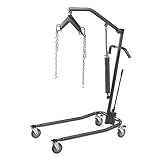 Drive Medical Hydraulic Patient Lift
A full lift is what makes one person able to manage a transfer alone. It is the single purchase that most often delays a move into residential care.
Check price on Amazon →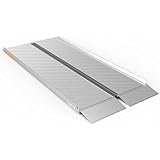 EZ-ACCESS Singlefold Wheelchair Ramp, 6 ft
Folds like a suitcase and carries in a car boot, so the same ramp handles the front step at home and the kerb at an appointment.
Check price on Amazon → Drive Medical Nitro Rollator with Seat
The seat matters more than the wheels. Being able to stop and rest is what decides whether someone still goes out at all.
Check price on Amazon → Vive Stand Assist Rail for Couch or Chair
Getting out of a low sofa is where most falls at home start. This is the cheapest thing on the list and often the first one needed.
Check price on Amazon →As an Amazon Associate we earn from qualifying purchases, at no extra cost to you. Researched guidance, not medical advice. Prices change, so check before buying.
What to Tell the ER Staff
When you arrive, you'll need to provide information quickly. Be prepared to answer:
About the Emergency
- What happened and when (be as specific as possible)
- Was there a fall? Did they hit their head?
- Are they on blood thinners? (Critical if there was head trauma)
- What symptoms are you seeing?
- Is this different from their baseline? How?
- What were they doing when this started?
About Their Baseline
- What's their normal mental status? (Alert, confused, dementia?)
- Can they normally walk? With what assistance?
- Are they normally continent?
- What do they eat? Any swallowing problems?
- Where do they live? (Home alone, with you, assisted living, nursing home?)
Doctors need to know how your parent normally functions to understand what's changed. "Confused" means something very different if they have dementia (and this is their normal) versus if they were sharp as a tack yesterday. Be clear about what's baseline and what's new.
About Code Status
Be prepared to discuss:
- Do they have a DNR (Do Not Resuscitate) order?
- What are their wishes about life support?
- Would they want CPR? A ventilator?
- If you have legal authority (HCPOA), you may need to make decisions
At the ER: Advocating for Your Parent
Stay With Them If Possible
Elderly patients, especially those with dementia, do much better with a familiar person present. If staff try to separate you:
- Explain that your parent has dementia or becomes anxious without you
- Ask to speak with the charge nurse
- Be polite but persistent, your presence helps them provide better care
Take Notes
- Write down names of doctors and nurses who see your parent
- Note what tests were ordered and results
- Write down any diagnoses mentioned
- Record medications given and times
- Note what you're told about next steps
Ask Questions
- What do you think is going on?
- What tests are you ordering and why?
- How long will we be waiting?
- Will they be admitted or sent home?
- If sent home, what should we watch for?
- Who should we follow up with and when?
If you're being dismissed and your gut says something is wrong, say: "I'm concerned because this is not my parent's baseline. I want this documented in the chart." Doctors take documentation seriously.
Watch for Common Problems
- Dehydration: Ask for IV fluids if they've been waiting hours
- Hunger: Ask if they can eat (if they're NPO, ask why and for how long)
- Pain: Advocate for pain management, elderly patients often under-report pain
- Confusion: ER environments worsen confusion in dementia patients, this doesn't mean they're sicker
- Falls: If your parent tries to get up alone, alert staff. Use the call button.
If They're Being Admitted
If your parent is being admitted to the hospital:
- Ask what floor/unit they're going to
- Ask the expected length of stay
- Confirm that all their medications are documented
- Make sure the inpatient team knows their baseline
- Ask about visiting hours and policies
- Find out who the attending physician will be
- Ask about the discharge planning process
Ask whether they're being admitted as an "inpatient" or placed on "observation status." This matters for Medicare coverage. Observation status (technically outpatient) has different coverage rules and may affect eligibility for skilled nursing facility coverage later. Ask to speak with the case manager if you have concerns.
If They're Being Sent Home
Before leaving the ER:
- Get clear discharge instructions in writing
- Understand what medications were prescribed
- Know what symptoms should bring them back to the ER
- Confirm follow-up appointments
- Ask if they need any equipment (walker, oxygen, etc.)
- Arrange safe transportation home
- Make sure they can safely be at home (or with you)
Create Your ER Information Sheet
Prepare this one-page document now and keep copies in your wallet, car, and go-bag:
ER Information Sheet
- Patient name, date of birth, address
- Emergency contact (you) with phone number
- Healthcare proxy name and phone
- Primary care physician name and phone
- List of medical conditions
- List of surgeries with approximate dates
- List of allergies (and what happens)
- Current medication list with doses
- Insurance information
- Code status (Full code? DNR?)
- Baseline mental status
- Baseline mobility
- Preferred hospital (if they have a choice)
Special Situations
If Your Parent Has Dementia
- Tell staff immediately: "My parent has dementia"
- Request a sitter if you need to leave briefly
- Ask about dementia-friendly protocols
- Bring familiar comfort items
- Expect increased confusion (hospital delirium is common)
If Your Parent Lives in a Nursing Home
- Ask the facility to send current medication list and recent notes
- Get the name and number of the facility's medical director
- Clarify transfer paperwork
- Confirm who notifies the facility about discharge
If You're Not Local
- Have a local contact who can go to the ER
- Ask to speak with the doctor by phone
- Request the case manager's contact information
- Consider a geriatric care manager who can advocate in person
Be Prepared Before the Emergency
Our Care Coordination Binder includes printable ER information sheets, medication trackers, and emergency wallet cards, everything you need organized and ready.
Get the Complete GuideAfter the ER Visit
- Follow up with their primary care doctor within 2-3 days
- Fill any new prescriptions promptly
- Watch for the symptoms you were told to watch for
- Keep the discharge paperwork somewhere accessible
- Update your medication list if anything changed
- Replenish your ER go-bag
You're reading this guide, which means you're thinking ahead. Take 30 minutes this week to assemble your ER go-bag and create your information sheet. When the emergency comes, you'll be ready.