This is the question no one wants to ask: Has the time come when I can no longer care for my parent at home? When does what they need exceed what I can give, even with help? When does keeping them home stop being the loving choice and become dangerous, for them and for me?
There's rarely one clear moment. Instead, it's a gradual accumulation of incidents, close calls, and exhaustion. This guide helps you honestly assess whether nursing home or memory care has become necessary.
Choosing placement is not abandoning your parent. It's getting them the level of care they need when that care exceeds what one person (or even a team of caregivers) can provide at home. Sometimes the most loving choice is recognizing your limits.
Signs It May Be Time
Safety Concerns
- Frequent falls: Despite interventions and modifications
- Wandering: Especially nighttime or leaving the house unsupervised
- Fire safety: Leaving stove on, smoking unsafely, can't respond to emergencies
- Medication errors: Taking wrong doses, forgetting, or refusing medications
- Unable to be left alone: Not even briefly
- Self-neglect: Not eating, drinking, or managing basic hygiene
Care Needs Exceed Capacity
- 24-hour supervision required: No breaks possible
- Two-person transfers: Need two people to move them safely
- Complex medical care: Wound care, feeding tubes, catheters
- Total dependence: Can't do any activities of daily living alone
- Behavioral symptoms: Aggression, psychosis that can't be managed safely
Caregiver Breaking Point
- Your health is deteriorating: Physical illness, mental health crisis
- Chronic sleep deprivation: You can't function safely
- Depression or anxiety: Severe and interfering with life
- You're unable to work: And you need the income
- Your relationships are destroyed: Marriage, children, friendships
- Resentment has replaced love: You're angry all the time
- You've thought about harming yourself or them: Crisis point
If you're at the point of complete exhaustion, you're not thinking clearly. Your judgment is impaired, your health is suffering, and you may be providing worse care than you realize. Sometimes it takes others pointing this out.
The equipment that changes the most
Most of what caregiving costs is time. These four are the purchases that reliably buy some of it back, and they are the ones families tell us they wish they had bought sooner.
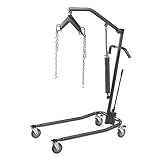 Drive Medical Hydraulic Patient Lift
A full lift is what makes one person able to manage a transfer alone. It is the single purchase that most often delays a move into residential care.
Check price on Amazon → EZ-ACCESS Singlefold Wheelchair Ramp, 6 ft
Folds like a suitcase and carries in a car boot, so the same ramp handles the front step at home and the kerb at an appointment.
Check price on Amazon → Drive Medical Nitro Rollator with Seat
The seat matters more than the wheels. Being able to stop and rest is what decides whether someone still goes out at all.
Check price on Amazon → Vive Stand Assist Rail for Couch or Chair
Getting out of a low sofa is where most falls at home start. This is the cheapest thing on the list and often the first one needed.
Check price on Amazon →As an Amazon Associate we earn from qualifying purchases, at no extra cost to you. Researched guidance, not medical advice. Prices change, so check before buying.
Questions to Ask Yourself
Answer honestly:
- Can they be safely left alone for any period of time?
- Have there been dangerous incidents (falls, fires, wandering)?
- Are their medical needs being met?
- Are they eating and drinking enough?
- Are they getting any socialization and mental stimulation?
- Can I physically do what they need (transfers, toileting)?
- Am I sleeping enough to function?
- Am I able to maintain my own health?
- Are my other responsibilities being met (job, children, spouse)?
- Can I continue this for the months or years it may require?
Types of Care Settings
| Setting | Best For | Provides |
|---|---|---|
| Assisted Living | Need help with daily activities but not medical care | Meals, medication reminders, housekeeping, some personal care, social activities |
| Memory Care | Dementia requiring secure environment and specialized care | Secured unit, dementia-trained staff, structured activities, 24-hour supervision |
| Skilled Nursing Facility | Significant medical needs, rehabilitation, total care | 24-hour nursing, medical care, physical/occupational therapy, complete assistance |
The goal is finding the right level of care, not more, not less. Assisted living is appropriate if they need help but not medical care. Memory care is needed when dementia creates safety issues. Skilled nursing is for those with significant medical needs or total dependence.
Common Triggers for Placement
Placement often happens after a specific event:
- Hospitalization: Often reveals how much care is actually needed
- A bad fall: Especially hip fracture
- Caregiver illness: You can't care for them if you're sick
- A wandering incident: Found by police, got lost
- A fire or near-miss: Left stove on, fell asleep smoking
- Aggression: You or others have been hurt
- Caregiver burnout: You simply cannot do this anymore
But They Made Me Promise...
"Never put me in a nursing home." Many adult children feel bound by this promise. Consider:
- They made that promise imagining a different scenario than what's now reality
- They didn't know they'd have dementia, need 24-hour care, or become aggressive
- They wouldn't want you to destroy your health and life
- Modern memory care facilities are not the nursing homes they imagined
- You can still be actively involved in their care
- Sometimes the most loving choice is the hardest one
When they said "never put me in a nursing home," they also never imagined not recognizing you, hitting you, needing two people to move them, or requiring medical care around the clock. The promise was made in a different reality than you're now living.
The Decision Process
Gather Information
- Document current care needs and how they're being met
- List incidents and close calls
- Get input from their doctors
- Have a geriatric care manager assess the situation
- Research facilities and understand options
- Understand costs and how to pay
Include the Right People
- Family meeting with all stakeholders
- Doctor's input on medical needs
- Consider a neutral facilitator for difficult family dynamics
- Include your parent if they have capacity to participate
Consider Alternatives First
- More home care hours
- Live-in care (if affordable)
- Adult day programs (for daytime supervision)
- Moving in with family (if practical)
- Modifications to make home safer
If you've exhausted alternatives and placement is still necessary, you've done your due diligence.
Quality Placement
If placement becomes necessary, focus on finding the best option:
- Visit multiple facilities
- Visit unannounced at different times
- Check state inspection reports
- Talk to families of current residents
- Evaluate staff-to-resident ratios
- Assess how staff interacts with residents
- Look for meaningful activities and engagement
- Ensure it can accommodate their specific needs
Placement doesn't end your involvement. You become the advocate, the visitor, the family member who ensures they're well cared for. Many families find that when caregiving exhaustion lifts, they can actually enjoy time with their parent again.
Dealing with Guilt
Guilt is almost universal. Strategies for coping:
- Remind yourself why: List the specific reasons placement was necessary
- Focus on quality: You found the best place and stay involved
- Talk to others: Other caregivers who've been through this
- See a therapist: Professional support for processing this decision
- Give it time: Initial guilt often fades as you see them receiving good care
- Stay involved: Visit regularly, know the staff, advocate for them
When They Refuse
If your parent has dementia and lacks capacity, you may need to make this decision for them. This is what having power of attorney and healthcare proxy is for.
If they have capacity and refuse:
- You cannot force a competent person into placement
- You can set boundaries on what you will and won't do
- You can be clear about what you can no longer provide
- A crisis may ultimately force the issue
- Consider whether depression or fear (treatable) is driving refusal
If they have dementia and lack the capacity to understand their situation and make safe decisions, the healthcare proxy has the authority to make placement decisions. This is never easy, but it's sometimes necessary.
Making the Transition
- Prepare their room: Bring familiar items, photos, comfort objects
- Provide history: Give staff information about their life, preferences, routines
- Visit consistently: But don't overwhelm the adjustment period
- Build relationships: Get to know the staff
- Attend care conferences: Stay involved in care planning
- Be patient: Adjustment takes time for everyone
Make an Informed Decision
Our Assisted Living Tour Pack includes evaluation checklists, questions to ask, and comparison worksheets for finding the right placement.
Get the Complete Caregiver Kit- Placement becomes necessary when care needs exceed what can be safely provided at home
- Signs include: safety incidents, 24-hour supervision needs, complex medical care, caregiver burnout
- This is not failure, it's getting them the care they need
- Match the care setting to their actual needs
- Exhaust alternatives first, but don't wait until crisis
- The promise "never put me in a home" was made in a different reality
- Your role changes from caregiver to advocate
- Guilt is normal but can be managed