You want to be there for your aging parent, but life has made it impossible to be their primary caregiver. Maybe you live far away. Maybe your own health is compromised. Maybe work or children or your spouse needs you. The guilt is crushing, but you can still make a meaningful difference.
Valid Reasons You Can't Be Primary Caregiver
You don't need to justify why you can't provide daily hands-on care. These are all legitimate reasons:
Distance
You live hours or states away. Moving isn't realistic due to your job, your partner's job, your children's schools, or established support systems where you are.
Your Own Health
You have chronic illness, disability, mental health challenges, or physical limitations that make caregiving dangerous for you or inadequate for your parent.
Work/Financial Obligations
You can't quit your job or go part-time. You're the breadwinner. You don't have savings to live on. Your family depends on your income.
Your Own Family
You have young children, a spouse who needs you, or other family members who depend on you. You can't abandon these responsibilities.
Relationship History
Your parent was abusive, neglectful, or harmful. You've set necessary boundaries for your mental health. Being their caregiver would be damaging to you.
Lack of Caregiving Skills
Medical tasks, dementia care, or physical assistance may be beyond your abilities. Professional caregivers can provide better, safer care.
The equipment that changes the most
Most of what caregiving costs is time. These four are the purchases that reliably buy some of it back, and they are the ones families tell us they wish they had bought sooner.
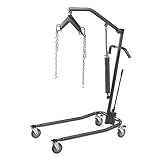 Drive Medical Hydraulic Patient Lift
A full lift is what makes one person able to manage a transfer alone. It is the single purchase that most often delays a move into residential care.
Check price on Amazon →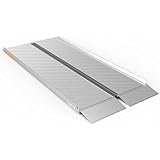 EZ-ACCESS Singlefold Wheelchair Ramp, 6 ft
Folds like a suitcase and carries in a car boot, so the same ramp handles the front step at home and the kerb at an appointment.
Check price on Amazon → Drive Medical Nitro Rollator with Seat
The seat matters more than the wheels. Being able to stop and rest is what decides whether someone still goes out at all.
Check price on Amazon → Vive Stand Assist Rail for Couch or Chair
Getting out of a low sofa is where most falls at home start. This is the cheapest thing on the list and often the first one needed.
Check price on Amazon →As an Amazon Associate we earn from qualifying purchases, at no extra cost to you. Researched guidance, not medical advice. Prices change, so check before buying.
Ways to Contribute From a Distance
Not being primary caregiver doesn't mean doing nothing. You can make a real difference with these contributions:
Financial Support
Help pay for professional caregivers, medication, equipment, or facility costs. Money lets others do what you can't.
Care Coordination
Research options, make calls, schedule appointments, manage paperwork. This is exhausting work that can be done remotely.
Administrative Tasks
Handle insurance claims, medical bills, Medicaid applications, legal documents. These tasks don't require physical presence.
Technology Setup
Set up video calling, medication reminders, medical alert systems, smart home devices to help your parent stay safe.
Regular Check-Ins
Daily or weekly calls provide emotional support and let you monitor changes. Virtual presence matters.
Respite for Primary Caregiver
Pay for the sibling or other caregiver to take breaks. Cover respite care costs so they don't burn out.
Strategic Visits
Time your visits for doctor appointments, facility tours, or to give the primary caregiver a vacation.
Emotional Support
Be a sounding board for the primary caregiver. Listen without judgment. Acknowledge their sacrifice.
Having the Conversation with Siblings
If a sibling is the primary caregiver, you need to have an honest conversation:
- Acknowledge their burden - "I know you're carrying most of this. That's not fair, and I see it."
- Explain your limitations - Be specific about why you can't do more, without over-apologizing
- Offer specific contributions - "Here's what I can do" is more useful than "Let me know how I can help"
- Follow through - If you promise to handle something, do it. Reliability builds trust.
- Check in regularly - Ask how they're doing, not just how your parent is
Managing the Guilt
Guilt is the constant companion of long-distance or limited caregivers. Here's how to manage it:
Recognize Unhelpful Guilt
Guilt is only useful if it motivates change you can actually make. If you've done what's possible given your constraints, continuing to feel guilty only hurts you without helping anyone.
Focus on What You CAN Do
Instead of ruminating on what you're not doing, pour energy into the contributions you can make. Action reduces guilt better than self-flagellation.
Set Realistic Expectations
You cannot be in two places at once. You cannot save everyone. You cannot be a perfect child, perfect spouse, perfect parent, and perfect employee simultaneously. Accept human limitations.
Stop Comparing
Your sibling who moved Mom in has different circumstances than you. Comparing only breeds resentment and shame. Each person contributes what they can.
Get Support
Caregiver support groups welcome long-distance caregivers too. Therapy can help process guilt. You need somewhere to express these feelings without judgment.
When Siblings Resent You
The sibling doing daily care may resent your "freedom." This is understandable, and painful.
- Don't get defensive - Their resentment comes from exhaustion and overwhelm, not malice
- Validate their experience - "You're right that you're doing more. That's really hard."
- Increase your contribution - Can you do more financially? More coordination? More respite?
- Don't disappear - Resentment grows when the distant sibling checks out entirely
- Consider family mediation - A neutral third party can help redistribute responsibilities
When You're the Only Child
Without siblings to share the load, you must build a care team:
- Geriatric care manager - Professional who coordinates care from a distance
- Home care agency - Provides daily caregivers you can manage remotely
- Neighbors and friends - Local people who can check in
- Area Agency on Aging - Connect to local services and resources
- Faith community - Many churches and synagogues have elder care ministries
A geriatric care manager (aging life care professional) is particularly valuable for only children. They serve as your local eyes and ears, attend appointments, coordinate services, and call you when something's wrong.
Making Visits Count
When you can visit, maximize the impact:
- Coordinate with doctors - Schedule appointments during your visit
- Give the primary caregiver a break - Let them leave while you're there
- Handle practical tasks - Organize paperwork, clean, do home maintenance
- Assess the situation - Look for changes you can't see on video calls
- Research local resources - Tour facilities, meet care providers in person
- Spend quality time - Not just logistics, actual connection with your parent
When Facility Care Becomes Necessary
If your parent needs more care than can be provided at home and no family member can step up, a care facility may be the best option. This isn't failure, it's ensuring they get the care they need.
- Research facilities thoroughly, including visiting in person
- Stay involved after placement, regular visits and calls
- Advocate for their care within the facility
- Maintain your relationship even in the new setting
Taking Care of Yourself
Even non-primary caregivers experience caregiver stress. The worry, guilt, family conflict, and grief of watching your parent decline all take a toll.
- Acknowledge your own grief - You're losing your parent slowly, even from a distance
- Don't let guilt drive you to burnout - Over-extending from guilt helps no one
- Maintain your own life - Your obligations to yourself, spouse, and children matter too
- Get support - Therapy, support groups, trusted friends
- Set boundaries - Even on guilt and worry
Coordinate Care Effectively
Our caregiver resources include tools for managing care from a distance and coordinating with family members.
View Caregiver Resources