How we choose what to recommend.
ParentCareGuide is editorially independent. Picks come from published-spec research and verified buyer-review patterns at 4.0+ stars across 200+ reviews. We are not paid by manufacturers for placement and have not received free product from any brand listed.
Disclosure: Amazon affiliate links, we earn 2–4% commission at no extra cost. How we choose → · Affiliate disclosure →
Wandering is one of the most frightening aspects of caring for a parent with dementia. Up to 60% of people with Alzheimer's will wander at some point, often leaving the home undetected and becoming lost, confused, and vulnerable. Every minute matters in those situations.
A GPS tracker won't stop wandering, but it can dramatically reduce how long your parent remains lost. The right device gives you their location within seconds, sends alerts when they leave a safe zone, and can mean the difference between a brief scare and a tragedy. These are the 8 best options in 2026, covering subscription-based professional solutions, Bluetooth trackers, and everything in between.
Call 911 immediately. Tell them your parent has dementia. Also contact the Alzheimer's Association's 24/7 helpline: 1-800-272-3900. The MedicAlert + Alzheimer's Association Safe Return program can assist with search and identification.
- Best purpose-built dementia tracker: AngelSense
- Best small wearable tracker: Tracki Mini
- Best budget Bluetooth tracker: Apple AirTag
- Best Bluetooth tile tracker: Tile Pro
- Best wrist-worn geofencing watch: Elderly 4G GPS Smart Watch (4G LTE, SOS)
- Best medical alert + GPS combo: Medical Guardian Mini
- Best for Android families: Samsung SmartTag2
- Best standalone GPS device: Brickhouse Security Spark Nano
The 8 Best GPS Trackers for Dementia Patients
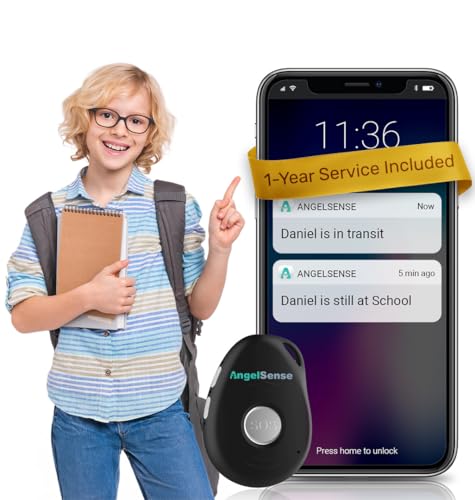
AngelSense was built specifically for vulnerable individuals who need to be located and monitored, not for tracking packages or finding lost keys. For dementia caregivers, it offers features no generic tracker provides: a listen-in mode that lets you hear what's happening around your parent in real time, a tamper alert if the device is removed (important for a parent who may not want to wear it), and a predictive alert system that learns your parent's normal routine and flags deviations.
The device can be sewn into a pocket or attached to clothing in ways that are difficult for a confused person to remove. Real-time GPS updates every 10 seconds during active wandering events. AngelSense also has a dedicated First Responder Portal so police can access your parent's location directly during a search. This is the most comprehensive solution for families dealing with active wandering risk.
Pros
- Purpose-built for dementia/vulnerable adults
- Listen-in audio monitoring capability
- Tamper and removal alerts
- Learns routine and flags deviations
- First Responder Portal for police access
Cons
- Requires monthly subscription (~$30+/mo)
- Additional device cost upfront
- Bulkier than Bluetooth-only trackers

The Tracki Mini is small and light enough to slip into a pocket, bag, or shoe. This makes it genuinely concealable on a parent who removes or protests wearing devices. It can be clipped to a belt loop, tucked into a walker pouch, or sewn into clothing. It uses 4G LTE cellular GPS, so it reports location independently regardless of what phones are nearby, a significant advantage over Bluetooth-only trackers.
Battery life runs several days depending on how often it reports. The app provides geofencing with customizable safe zones and instant departure alerts, plus an SOS button your parent can press. A monthly data subscription is required, billed separately from the low one-time device cost. Plan a regular charging routine, as the small battery needs topping up every few days with frequent reporting.
Pros
- Small and easy to conceal
- Very low one-time device cost
- Real-time 4G cellular GPS, works anywhere
- Geofence safe zones with departure alerts
- Built-in SOS button
Cons
- Monthly data subscription required
- Battery needs charging every few days
- No dedicated dementia care features

The Apple AirTag is not a dedicated GPS tracker, it is a Bluetooth location tag that updates its position when any iPhone in Apple's vast Find My network comes within range. That distinction matters: it will not give you a real-time live location, and it will not function at all without iPhone users nearby. However, in most populated areas, enough iPhones pass by regularly that updates are frequent enough to be useful.
Where the AirTag excels is cost and simplicity. No subscription, one-year battery life on a standard CR2032 coin cell, and precision finding mode (using Ultra Wideband technology on recent iPhones) that guides you within inches of the device's location. For families where the primary concern is finding a parent who has wandered in a populated area, and the parent is already in the Apple ecosystem, the AirTag is an excellent low-cost supplemental tracker. Note: Android users cannot use AirTags, choose Samsung SmartTag2 instead.
Pros
- No monthly subscription fee
- 1-year battery life
- Excellent precision finding mode
- Tiny and very concealable
- Massive Find My network coverage
Cons
- Not real-time GPS, depends on nearby iPhones
- iOS / Apple ecosystem only
- No geofencing or departure alerts
- Not appropriate as a primary safety device

Tile Pro is the Android-compatible equivalent to the Apple AirTag, a Bluetooth tracker with no subscription required for basic functionality. The Tile network is smaller than Apple's Find My network but works across both iOS and Android, making it more versatile for mixed-device families. The Tile Pro has a notably louder built-in speaker than standard Tile models (making it easier to locate nearby) and a longer Bluetooth range of 400 feet.
Like the AirTag, Tile is not a real-time GPS tracker and should be treated as a supplemental location aid rather than a primary safety device for a parent with significant wandering risk. However, for families looking for a no-cost-ongoing, discreet backup option, perhaps in a shoe or sewn into a regularly worn jacket, Tile Pro delivers solid value. Premium subscription ($3/month) adds location history and 30-day history access.
Pros
- No required subscription
- Works on both iOS and Android
- Louder speaker than standard trackers
- 400-foot Bluetooth range
- Slim, discreet design
Cons
- Not real-time GPS
- Smaller network than Apple Find My
- Best features require premium subscription
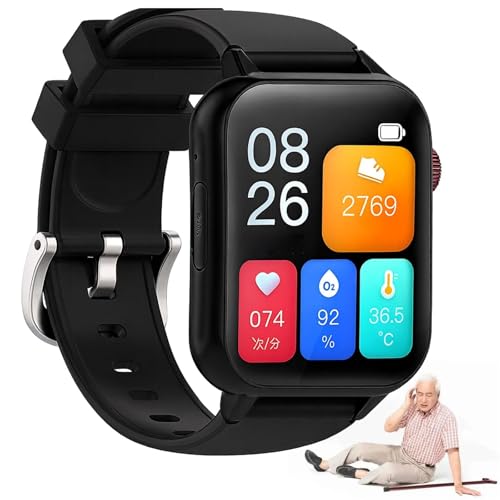
The Elderly 4G GPS Smart Watch 4G smartwatch is marketed specifically for seniors and patients with dementia or Alzheimer's who need a worn device with location awareness. It uses cellular GPS for real-time tracking and lets caregivers define a safe-zone boundary in the app, sending a departure alert when your parent crosses it. A built-in SOS button and two-way calling let your parent reach you, and you can call the watch directly.
Being worn on the wrist, it can be harder for some patients to remove than a clip-on tag, and it doubles as a familiar wristwatch rather than looking like a medical device. It requires a 4G data plan for the cellular features. Best used as a worn, geofenced safety layer, ideally alongside a backup Bluetooth tag in a regularly worn item.
Pros
- Worn on the wrist, looks like a normal watch
- Real-time 4G cellular GPS tracking
- Geofence safe zones with departure alerts
- SOS button and two-way calling
Cons
- Requires a 4G data plan
- Battery needs regular charging
- A determined patient can still remove a watch
- Lesser-known brand than the dedicated systems

The Medical Guardian MGMini combines GPS location tracking with a traditional medical alert system, so one device handles both location and emergency response. When your parent presses the help button, it connects to a live 24/7 monitoring center that can dispatch emergency services and notify family members. Meanwhile, the built-in GPS provides their location to the monitoring center during an event.
For parents in the earlier stages of dementia who still live independently or semi-independently, the MGMini addresses two major safety concerns in one lightweight, wearable device. The two-way voice capability means the monitoring center can speak directly with your parent. A monthly monitoring subscription is required, billed separately from the device. A genuinely comprehensive solution for families balancing safety and independence.
Pros
- Combines GPS tracking + medical alert in one device
- 24/7 professional monitoring center
- Emergency help button
- Two-way voice during emergencies
- Works nationwide via cellular
Cons
- Monthly monitoring fee required
- Larger than Bluetooth-only trackers
- Fall detection is not included on this model
- Parent must be willing to wear the device
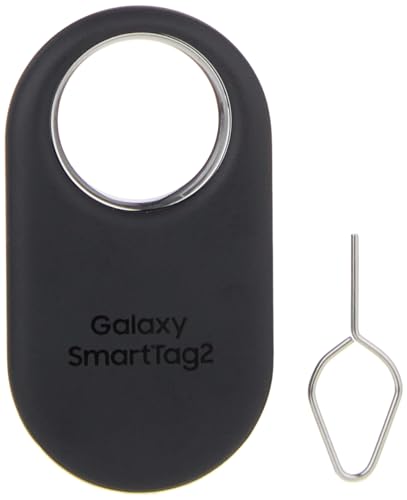
The Samsung SmartTag2 is the Android ecosystem answer to the Apple AirTag. If your family uses Samsung or other Android phones, the SmartTag2 integrates cleanly with Samsung's SmartThings Find network for crowd-sourced location updates. The Ultra Wideband chip in compatible Samsung Galaxy phones provides precision room-level location finding. The battery lasts approximately 6 months on a standard coin cell.
Like the AirTag and Tile, the SmartTag2 is a Bluetooth tracker rather than a real-time GPS device. Its strengths are zero ongoing cost, easy integration with Android devices, and the ability to trigger the phone to ring remotely. As a no-cost supplemental tracker placed in a frequently worn item, a shoe, jacket, or bag, it is an excellent option for Android-using families who want a backup layer of location awareness without a subscription.
Pros
- No subscription required
- Best-in-class for Android/Samsung users
- UWB precision finding on compatible phones
- 6-month battery life
- Can trigger phone ring remotely
Cons
- Not real-time GPS
- Samsung/Android ecosystem only
- Smaller find network than Apple

LandAirSea's Overdrive is a dedicated real-time GPS tracker with a flexible, no-contract subscription model. Unlike ecosystem-dependent Bluetooth trackers, the Overdrive uses cellular GPS and reports location independently regardless of what devices are nearby. The app provides real-time tracking, geofence zone setup with departure alerts, and location history.
It is one of the more affordable real-time GPS options on this list, with a low one-time device cost and a flexible subscription. It lacks the dementia-specific features of AngelSense (no listen-in, no tamper alerts, no First Responder Portal), but for families who want reliable real-time GPS without a large monthly commitment, it delivers the essentials competently. The compact device is easily slipped into a bag, pocket, or vehicle and the magnet mount on some models allows easy placement on walkers or wheelchairs.
Pros
- Lowest real-time GPS subscription price
- No annual contract required
- Real-time cellular GPS, works anywhere
- Geofencing with departure alerts
- Works on walkers, wheelchairs, vehicles
Cons
- No dementia-specific features
- Requires charging (battery-dependent)
- Basic app compared to dedicated care solutions
Side-by-Side Comparison
| Device | Cost | Subscription | Real-Time GPS | Geofence Alerts | Fall Detection | Best For |
|---|---|---|---|---|---|---|
| AngelSense | under $1,000 (1-yr service) | Required | Yes | Yes | , | Active wandering risk |
| Tracki Mini | under $25 + subscription | Required | Yes | Yes | , | Small wearable |
| Apple AirTag | under $25 one-time | None | , | , | , | Budget/supplement (iOS) |
| Tile Pro | under $50 one-time | Optional | , | , | , | Budget/supplement (any OS) |
| Elderly 4G GPS Smart Watch GPS Watch | under $100 + data plan | Required | Yes | Yes | Yes | Wrist-worn geofencing |
| Medical Guardian Mini | under $100 + subscription | Required | Yes | Yes | , | GPS + medical alert |
| Samsung SmartTag2 | under $25 one-time | None | , | , | , | Budget/supplement (Android) |
| Brickhouse Security Spark Nano | under $250 + subscription | Required | Yes | Yes | , | Affordable real-time GPS |
Buyer's Guide: Choosing a GPS Tracker for a Parent with Dementia
Real-Time GPS vs. Bluetooth Trackers: Which Do You Actually Need?
For a parent with significant wandering risk, real-time GPS (AngelSense, Tracki Mini, Elderly 4G GPS Smart Watch GPS watch, Medical Guardian Mini, LandAirSea) is non-negotiable. These devices report location continuously via cellular networks regardless of what else is nearby. Bluetooth trackers (AirTag, Tile, SmartTag2) only update location when other devices in their network happen to be nearby, they are useful as supplemental layers but not appropriate as the primary safety device for someone who may wander into an unpopulated area.
The Device Won't Help If Your Parent Won't Wear It
Compliance is the hardest challenge in dementia GPS tracking. Many patients remove unfamiliar devices, especially as the disease progresses. Strategies that help: sewing the device into a regularly worn garment, using a tracker in a shoe insert, placing a device in a bag or walker pouch that your parent always has with them, or choosing a very small device like the Tracki Mini that is easier to conceal. AngelSense specifically designs their system to resist removal.
Set Up Geofences Before You Need Them
Every real-time GPS tracker on this list supports geofencing, the ability to define a "safe zone" and receive an alert when your parent leaves it. Configure this immediately upon setup, before any wandering event occurs. Set the zone slightly inside the actual boundary to give yourself time to respond before your parent gets far. Add multiple contacts to receive departure alerts so there's always someone available to respond.
This national program maintains a database of enrolled individuals with dementia. If your parent is found wandering, police and emergency responders can call the 24/7 emergency response line and get your contact information and your parent's medical history. Enrollment is $45/year. Combined with a GPS tracker, it significantly improves outcomes in wandering events.
Consider a Layered Approach
The families who respond most quickly to wandering events typically use multiple tools together: a real-time GPS tracker worn on the person, a Bluetooth tag in a shoe or clothing item as a backup, geofence alerts sent to multiple family members, and registration with MedicAlert Safe Return. No single tool is 100% reliable. Layers of redundancy create a genuinely safer system.
Affiliate disclosure. The product picks above are Amazon affiliate links. ParentCareGuide earns 2–4% commission when you buy through them, at no extra cost to you. We are editorially independent, manufacturers do not pay us for placement and we did not receive free product from any brand listed. Read our full disclosure →
Upgrade Pick and What You'll Also Need
A tracker only helps if your parent has it on them and you know when they leave. These close the gaps.
- A hidden holder: an AirTag shoe insole holder keeps a Bluetooth tracker in a shoe, where it is less likely to be taken out or left behind.
- A door alert: a YisTech caregiver door alarm pager chimes on a receiver you carry when an exterior door opens, often the first warning of wandering.
- Upgrade pick: AngelSense is built for people who wander, with a wearable that the user cannot easily remove and live GPS with alerts.
Setting up the whole home? Our dementia care comfort kits list every item by budget, standard and premium tier on the caregiver setups page.
Deal season note: Prices on these often drop during Prime Big Deal Days and Black Friday. The picks above were checked against live Amazon listings for 2026; click through for the current price.
Frequently Asked Questions
According to the Alzheimer's Association, approximately 60% of people with dementia will wander at least once. Wandering is most common in the middle stages of Alzheimer's disease. It can happen at any time of day but occurs more frequently in the late afternoon or evening, a pattern known as "sundowning." The risk does not diminish with time; it increases as cognitive decline progresses.
No tracker prevents wandering. They help you locate a parent who has already wandered. If preventing wandering is the goal, focus on home safety modifications: door alarms, door handle covers that require cognitive steps to operate, nighttime door sensors, and motion-activated lighting that draws attention when your parent leaves a room. GPS trackers and wandering prevention strategies work best in combination.
This is a legitimate safety concern. Establish a daily charging routine, charge the device at the same time each day, such as while your parent eats breakfast or sleeps. Some devices (like the Apple AirTag and Tile Pro) use replaceable coin cell batteries that last 6-12 months, eliminating daily charging. For active dementia care, having a backup Bluetooth tracker in place is worthwhile precisely because rechargeable devices can run out at inopportune times.
This question comes up often and deserves a thoughtful answer. Many legal and medical ethics experts suggest that the benefit to safety outweighs privacy concerns when a person can no longer reliably make decisions about their own safety. However, if your parent has expressed objections to being tracked while still competent, that preference deserves weight. If a healthcare proxy or durable power of attorney is in place, the authorized decision-maker can consent on behalf of the patient. When in doubt, discuss with your parent's physician or an elder law attorney.
A smartphone with location sharing enabled (Find My on iPhone, Google Maps sharing on Android) can function as a GPS tracker, but it has significant limitations for dementia care: the phone must be charged, the parent must carry it, it can be turned off, and it doesn't provide geofence departure alerts without additional apps. A dedicated GPS tracker is more reliable for parents who may not consistently carry a phone or may turn it off.
Traditional Medicare does not cover GPS trackers or wearable location devices. Some Medicare Advantage plans include supplemental benefits that may cover devices like medical alert systems with GPS. Medicaid coverage varies by state. Some state Medicaid waiver programs that fund home and community-based care may cover safety devices, check with your local Area Agency on Aging or a Medicaid specialist.
Frame it as something for their benefit rather than surveillance: "This helps us know you're safe so we don't have to call to check in all the time." Start when the dementia is earlier stage so wearing the device becomes habitual before resistance increases. Choose a wearable that doesn't look medical, the Tracki Mini can clip to a bag, shoe, or belt loop, and the Elderly 4G GPS Smart Watch device simply looks like a wristwatch. Sewing the device into a pocket of a regularly worn garment is often the most reliable approach for patients who remove wearables.
Ensure your parent carries an ID card (in their wallet and sewn into clothing) stating their name, diagnosis, and emergency contact information. Medical ID bracelets stating "Memory Impairment, Call [number]" can prompt strangers to call you rather than leave them alone. Register with MedicAlert + Alzheimer's Association Safe Return. Brief your local police non-emergency line so they have your parent's information on file. This preparation makes a significant difference in how quickly a wandering event resolves.
Caregiver Toolkit, Everything in One Place
Get our Complete Caregiver Toolkit: 45+ checklists, scripts, and templates for managing every aspect of your parent's care.
Get the Complete Toolkit for $39Related Guides
- Dementia Wandering Prevention: A Complete Guide for Families
- Home Safety for Dementia Patients
- Best Cell Phones for Seniors 2026
- Dementia Stages: What to Expect at Each Stage
- Dementia Care Comfort Kit, A ready-to-shop list covering wandering alerts, orientation, and calming activities