Early-Onset Alzheimer's: When Dementia Strikes Before 65
Younger-onset dementia affects people in their 40s, 50s, and early 60s - often while they're still working, raising children, and nowhere near retirement. The challenges are different. So are the resources.
Early-onset (also called younger-onset) Alzheimer's refers to diagnosis before age 65. The disease itself is the same as late-onset Alzheimer's, but the life circumstances are dramatically different. Most people with early-onset are diagnosed in their 50s, though symptoms can begin in the 40s or even 30s.
Why Early-Onset Is Different
Career and Financial Impact
Most people are still working when symptoms appear. Job performance suffers, often before diagnosis. Loss of income happens during peak earning years, before retirement savings are complete. Employer health insurance may be lost.
Children at Home
Many have children still living at home or in college. Kids must process a parent's cognitive decline while still young. College plans may change due to financial strain. Young children may need extra support.
Physical Strength
Younger patients are often still physically strong even as cognition declines. This can make behavioral symptoms more difficult to manage. Wandering and agitation pose different challenges when the person is physically fit.
Misdiagnosis and Delays
Doctors often don't suspect Alzheimer's in younger patients. Symptoms may be attributed to stress, depression, menopause, or burnout. Average time to diagnosis is longer than for older patients.
Service Gaps
Most dementia programs and adult day programs are designed for people in their 70s and 80s. A 55-year-old may not fit in. Memory care facilities often lack appropriate activities.
The equipment that changes the most
Most of what caregiving costs is time. These four are the purchases that reliably buy some of it back, and they are the ones families tell us they wish they had bought sooner.
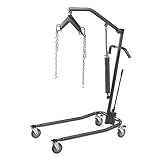 Drive Medical Hydraulic Patient Lift
A full lift is what makes one person able to manage a transfer alone. It is the single purchase that most often delays a move into residential care.
Check price on Amazon →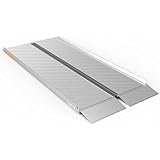 EZ-ACCESS Singlefold Wheelchair Ramp, 6 ft
Folds like a suitcase and carries in a car boot, so the same ramp handles the front step at home and the kerb at an appointment.
Check price on Amazon → Drive Medical Nitro Rollator with Seat
The seat matters more than the wheels. Being able to stop and rest is what decides whether someone still goes out at all.
Check price on Amazon → Vive Stand Assist Rail for Couch or Chair
Getting out of a low sofa is where most falls at home start. This is the cheapest thing on the list and often the first one needed.
Check price on Amazon →As an Amazon Associate we earn from qualifying purchases, at no extra cost to you. Researched guidance, not medical advice. Prices change, so check before buying.
Early Signs to Watch For
In younger people, symptoms may present differently than in older adults:
- Work problems: Missing deadlines, difficulty with tasks that were once easy, trouble with complex projects
- Word-finding difficulties: Pausing frequently to find the right word, using vague terms
- Visual-spatial problems: Trouble with depth perception, spatial relationships (may appear as vision problems)
- Personality changes: Apathy, withdrawal, depression, uncharacteristic behavior
- Poor judgment: Financial mistakes, inappropriate social behavior
- Getting lost: In familiar places, unable to follow directions
- Time confusion: Missing appointments, difficulty planning
If you suspect early-onset dementia and the doctor dismisses your concerns, push for referral to a neurologist or memory specialist. The symptoms are real. Many people spend years being told it's "just stress" before getting a proper diagnosis.
Getting Diagnosed
The Diagnostic Process
- Comprehensive evaluation: Medical history, physical exam, blood tests to rule out other causes
- Neuropsychological testing: Detailed cognitive assessments
- Brain imaging: MRI or CT to rule out tumors, strokes, or other structural problems
- PET scans: May show characteristic Alzheimer's patterns
- Lumbar puncture: CSF testing can detect Alzheimer's biomarkers
- Genetic testing: May be offered, especially with strong family history
Genetic Considerations
Early-onset Alzheimer's has a stronger genetic component than late-onset:
- About 5-10% of cases are caused by inherited gene mutations
- Three genes are linked to familial early-onset: APP, PSEN1, PSEN2
- If a parent has one of these mutations, each child has a 50% chance of inheriting it
- Genetic counseling is recommended before testing
- Testing is a personal choice with significant implications
Financial and Legal Planning
Act quickly while the person can still participate in decisions:
Immediate Priorities
- Power of attorney: Financial and healthcare, while they can still legally sign
- Review life insurance: Before capacity is lost
- Disability insurance: File claims if available through employer
- SSDI: Social Security Disability Insurance - Alzheimer's is a qualifying condition
- Estate planning: Will, trusts, beneficiary designations
Employment Considerations
| Option | Considerations |
|---|---|
| ADA Accommodations | Request modified duties, flexible schedule, or reduced responsibilities. Employer must provide reasonable accommodations for as long as essential job functions can be performed. |
| FMLA Leave | Up to 12 weeks unpaid leave to address health issues. Protects job during leave. Can be used intermittently. |
| Short-Term Disability | If available through employer, provides partial income while unable to work. |
| Long-Term Disability | Typically kicks in after short-term disability ends. May provide 50-60% of income. |
| SSDI | Federal disability benefits. Alzheimer's qualifies for Compassionate Allowances (expedited processing). 5-month waiting period after disability begins. |
Early-onset Alzheimer's is on Social Security's Compassionate Allowances list, which fast-tracks disability claims. What normally takes months can be decided in weeks. Apply as soon as the person can no longer work - don't wait.
Caregiving Challenges
For Spouses
Caring for a younger spouse with Alzheimer's is uniquely difficult:
- You're losing your partner, co-parent, and often the primary breadwinner
- Intimacy and the marriage relationship change profoundly
- You may have decades of caregiving ahead, not years
- Financial planning for a longer timeline is crucial
- Your own career may be disrupted
- Children need your support while you're already stretched thin
For Adult Children
When your parent develops early-onset Alzheimer's:
- Your other parent may become the primary caregiver
- You may need to provide significant support while building your own career/family
- Genetic implications for yourself require processing
- Watching a parent decline at a young age is traumatic
- Long-term planning must account for both parents' needs
Treatment and Management
Medications
Same medications used for late-onset Alzheimer's:
- Cholinesterase inhibitors: Aricept, Exelon, Razadyne - may modestly improve symptoms
- Memantine: For moderate to severe stages
- Newer treatments: Lecanemab and other anti-amyloid drugs may be more effective in earlier stages - discuss with neurologist
- Clinical trials: Younger patients often qualify for more trials; consider participation
Non-Drug Approaches
- Physical exercise (strong evidence for benefit)
- Cognitive stimulation and engagement
- Music therapy
- Art therapy
- Social connection and meaningful activities
- Managing sleep, nutrition, and other health conditions
Finding Age-Appropriate Resources
A 55-year-old with early-stage dementia doesn't belong in a program designed for 85-year-olds with advanced disease. Seek out programs specifically for younger people, or work with facilities to create appropriate activities.
Where to Find Support
- Alzheimer's Association: Early-stage support groups and resources specifically for younger people
- Memory cafes: Social gatherings for people with dementia and caregivers
- Online communities: Connect with others in similar situations globally
- Younger Onset Alzheimer's conferences: Annual events for networking and education
- Individual counseling: For the person with dementia and family members
Talking to Children
How to discuss a parent's early-onset Alzheimer's with children depends on their age:
Young Children
- Use simple, concrete language
- "Daddy's brain is sick, and that makes him forget things"
- Reassure them they can't catch it
- Maintain routines and stability
- Let them ask questions over time
Teenagers
- Be honest about the diagnosis and prognosis
- Acknowledge their feelings of anger, embarrassment, fear
- Allow them age-appropriate involvement in care
- Watch for signs they're struggling at school or socially
- Connect them with support groups for young people
Adult Children
- Include them in planning discussions
- Discuss genetic testing options honestly
- Be clear about what support you need
- Help them maintain relationship with affected parent
Long-Term Planning
Early-onset means potentially decades of caregiving and care needs:
- Financial projections: Plan for 10-20 years of care, not 5-10
- Caregiver health: The primary caregiver must protect their own wellbeing for the long haul
- Living arrangements: May need to plan for eventual memory care when person is still physically active
- Respite care: Build in breaks from the beginning
- Work-life decisions: Spouse may need to continue working vs. becoming full-time caregiver
Plan for the Long Journey
Our Estate Planning Workbook helps you organize legal, financial, and care planning - essential for early-onset families.
View Resources