FMLA for Caregivers: Taking Leave to Care for Elderly Parents
Your parent is in the hospital. Or needs surgery. Or has been diagnosed with a serious illness. You need to be there, but you also need your job. Can you take time off without losing your position?
The Family and Medical Leave Act (FMLA) may protect you. Here's what you need to know.
FMLA provides up to 12 weeks of unpaid, job-protected leave per year to care for a parent with a "serious health condition." Your job (or an equivalent one) must be held for you, and your health insurance continues.
Are You Eligible for FMLA?
You must meet ALL of these requirements:
1. Your Employer Is Covered
- Private employers with 50+ employees within 75 miles
- All public agencies (federal, state, local government)
- All public/private elementary and secondary schools
2. You've Worked There Long Enough
- At least 12 months total (doesn't have to be consecutive)
- At least 1,250 hours in the past 12 months (~24 hours/week)
3. Your Parent Has a "Serious Health Condition"
This includes:
- Hospital stays (inpatient care)
- Conditions requiring ongoing treatment
- Chronic conditions (diabetes, Alzheimer's, cancer)
- Conditions requiring multiple treatments
- Pregnancy and prenatal care
FMLA only covers caring for your parent (biological, adoptive, step, foster, or someone who raised you). It does NOT cover parents-in-law, grandparents, aunts, uncles, or siblings, unless your state has expanded family leave laws.
The equipment that changes the most
Most of what caregiving costs is time. These four are the purchases that reliably buy some of it back, and they are the ones families tell us they wish they had bought sooner.
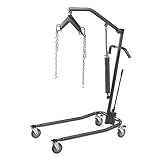 Drive Medical Hydraulic Patient Lift
A full lift is what makes one person able to manage a transfer alone. It is the single purchase that most often delays a move into residential care.
Check price on Amazon →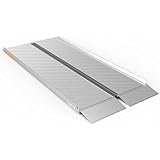 EZ-ACCESS Singlefold Wheelchair Ramp, 6 ft
Folds like a suitcase and carries in a car boot, so the same ramp handles the front step at home and the kerb at an appointment.
Check price on Amazon → Drive Medical Nitro Rollator with Seat
The seat matters more than the wheels. Being able to stop and rest is what decides whether someone still goes out at all.
Check price on Amazon → Vive Stand Assist Rail for Couch or Chair
Getting out of a low sofa is where most falls at home start. This is the cheapest thing on the list and often the first one needed.
Check price on Amazon →As an Amazon Associate we earn from qualifying purchases, at no extra cost to you. Researched guidance, not medical advice. Prices change, so check before buying.
What FMLA Provides
- 12 weeks of leave per 12-month period
- Job protection: Your job (or equivalent) must be held
- Continued health insurance: Same terms as if you were working
- No retaliation: Illegal to fire or demote you for taking FMLA
What FMLA Does NOT Provide
- Pay: FMLA leave is unpaid (but you may use PTO)
- Coverage for in-laws: Only biological/legal parents
- Unlimited leave: Capped at 12 weeks per year
Ways to Use FMLA Leave
FMLA is flexible, you don't have to take all 12 weeks at once:
- Continuous leave: Take all 12 weeks in one block
- Intermittent leave: Take leave in separate blocks (days, weeks)
- Reduced schedule: Work fewer hours per day or week
For example, you could take every Friday off for months, or take 3 weeks now and save 9 weeks for later.
How to Request FMLA Leave
1Notify Your Employer
Give at least 30 days notice if the need is foreseeable (planned surgery). For emergencies, notify as soon as practicable.
2Submit a Formal Request
Your employer will provide FMLA paperwork. You don't have to mention FMLA by name, just explain you need leave for a family medical situation.
3Provide Medical Certification
Your employer can require certification from your parent's doctor confirming the serious health condition. You have 15 calendar days to provide it.
4Get Written Confirmation
Your employer must respond within 5 business days confirming your eligibility and rights.
Can You Get Paid During FMLA?
FMLA itself is unpaid, but you may have other options:
- Use your PTO: Vacation, sick time, personal days
- State paid leave: Some states have paid family leave programs (CA, NJ, NY, WA, MA, CT, OR, CO, MD, DE, MN, ME)
- Short-term disability: If you have a policy, it may cover some situations
- Employer policy: Some employers offer paid caregiver leave
Several states have their own family leave laws that may be more generous than federal FMLA, covering more employers, more family members, or providing paid leave. Check your state's labor department website.
What If Your Employer Denies FMLA?
- Get the denial in writing with the specific reason
- Review the reason: Is it legitimate (not eligible) or questionable?
- Escalate internally: Talk to HR or your manager's supervisor
- File a complaint: Contact the Department of Labor's Wage and Hour Division (1-866-487-9243)
- Consult an attorney: If you believe your rights were violated
Protecting Your Job
To ensure a smooth return:
- Keep all FMLA paperwork and communications
- Document your leave requests and approvals
- Stay in touch with your employer as required
- Return on the agreed date (or communicate changes)
- If you're not returned to your position, ask for explanation in writing
Planning for Extended Caregiving
12 weeks may not be enough. Consider:
- Using intermittent leave strategically to stretch the 12 weeks
- Arranging alternative care for when you're at work
- Exploring remote work options with your employer
- Looking into respite care and adult day programs
- Talking to your employer about extended unpaid leave
Care Coordination Binder
Keep track of your parent's medical info, appointments, and care needs, helpful for FMLA documentation.
Get the BinderRelated Resources
- How to Get Paid as a Family Caregiver
- Respite Care Options
- Caregiver Burnout: Signs and Solutions
- Long-Distance Caregiving Guide
FMLA for elderly parents: common questions
Can I use FMLA to care for an elderly parent?
Yes. FMLA gives eligible employees up to 12 weeks of unpaid, job-protected leave per year to care for a parent with a serious health condition. You must work for a covered employer (private employers with 50 or more employees within 75 miles, and all public agencies), have worked there at least 12 months, and have worked at least 1,250 hours in the past 12 months.
Does FMLA cover parents-in-law, grandparents, or siblings?
No. Federal FMLA covers your own parent (biological, adoptive, step, foster, or someone who stood in the place of a parent), not parents-in-law, grandparents, aunts, uncles, or siblings. Some state family leave laws cover more relatives, so check your state labor department.
Can I take FMLA leave a few days at a time for my father or mother?
Yes. You can take FMLA as continuous leave, as intermittent leave in separate blocks of days or hours, or on a reduced schedule. For example, you could take every Friday off for months or take 3 weeks now and save 9 weeks for later.
Do I have to be with my parent every day if I take FMLA leave?
FMLA covers the time you are needed to care for your parent, which includes physical care, driving to appointments, arranging or changing care, and providing psychological comfort. You do not have to be at their side every hour, but the leave should be used for those care needs. Ask HR how to document your days, and keep the certification from your parent's doctor.
Can I still use FMLA if my parent with Alzheimer's is in assisted living?
It can still qualify. If your parent has a serious health condition and you are needed to care for them, for example to coordinate care, attend appointments, or provide psychological comfort, leave can apply even when they live in a facility. Your employer may ask for medical certification showing the need.
How should I describe caring for an elderly parent on an FMLA request?
You do not need to say the word FMLA. Tell your employer you need leave to care for your parent, who has a serious health condition, and what you will help with, such as treatment visits and daily tasks. Your parent's doctor completes the medical certification (Department of Labor form WH-380-F), and you have 15 calendar days to return it.
Is FMLA leave paid?
No, FMLA itself is unpaid. You may be able to use paid time off, and some states have paid family leave programs, including California, New Jersey, New York, Washington, Massachusetts, Connecticut, Oregon, Colorado, Maryland, Delaware, Minnesota, and Maine. Check your state's program.
General information, not legal advice. Check the U.S. Department of Labor and your state labor department for current rules. Updated 2026.