The best hip replacement recovery kit starts with the RMS 7-piece hip and knee kit (two reachers, a leg lifter, a sock aid, a dressing stick and a long-handle sponge), then adds a folding walker with wheels, a raised toilet seat with arms and a shower chair with back and arms. Together they cover dressing, walking, the toilet and bathing, which are the four things that go wrong in the first weeks at home.
If your parent is about to have a hip replacement or has just had a hip fracture repaired, the hospital will usually send a list of equipment to have at home. The list is easy to get wrong in both directions: families either skip something that turns out to be essential, or they buy everything and use half of it. This guide groups the items by job, gives a pick for each, and tells you what to buy before surgery and what to wait on. Always follow your parent's surgeon and physical therapist, because hip precautions differ by surgical approach.
Recovery Kit at a Glance
| Item | Budget | Job it does | Buy before surgery? | Notes |
|---|---|---|---|---|
| RMS 7-Piece Hip and Knee Kit | Budget | Dressing and reaching | Yes | 7 tools in one box |
| Drive Medical Two-Button Folding Walker with Wheels | Budget | Walking | Yes | Aluminum, 5-inch wheels |
| Carex E-Z Lock Raised Toilet Seat With Handles | Budget | Toileting | Yes | 5-inch riser with arms |
| Drive Medical Premium Shower Chair with Back and Padded Arms | Budget | Bathing | Yes | Aluminum, adjustable |
| Drive Medical Folding Bedside Commode | Budget | Toileting at night | Maybe | 3-in-1 commode |
| Drive Medical Nitro Sprint Rollator Walker with Seat | Mid-range | Longer walks | Later | Rollator with seat |
This guide is for general planning and is not medical advice. Your surgeon or physical therapist decides which hip precautions apply and what equipment your parent should use. Ask for the list during pre-surgery education and bring it with you when you shop.
How we put this kit together
We built the kit around the four daily tasks that therapists work on first after a hip operation: getting dressed, getting to the bathroom, bathing and getting around the house. For each task we picked an item that is in stock on Amazon, from a known medical equipment brand, and that suits a range of heights and body sizes. Details come from the manufacturer listings and published specifications. We did not test the products. Our existing guides go deeper on individual items, including walkers and rollators, raised toilet seats, shower chairs and reachers.
What to buy before surgery and what to wait on
Buy before surgery: the hip kit, a walker adjusted to your parent's height, a raised toilet seat or a commode, and a shower chair if the home has a tub or a walk-in shower. These are used the day your parent comes home. Wait on: lift chairs, hospital beds and ramps, unless the surgical team says they are needed, because many patients do fine without them. A recliner or a lift chair may help if standing up from low seats is hard; see our best lift chairs guide. Also set up the home: remove loose rugs, clear walkways, put essentials at waist height and place a night light between the bedroom and the bathroom.
The Hip Replacement Recovery Kit, Item by Item

The RMS 7-piece kit includes a 32-inch and a 19-inch rotating reacher, a 42-inch leg lifter strap, a deluxe molded sock aid with foam handles, a 28-inch dressing stick with S-hook and C-hook, and a 22-inch long-handle bath sponge, according to the listing. Together they let a person dress, pick things up and wash their legs without bending past the limits their surgeon sets.
This is the most-used item in the kit, so choose a complete set rather than buying pieces. The two reacher lengths matter: the long one for the floor, the short one for the counter and the bed. Practice with the tools before surgery, because learning to use a sock aid is easier when you are not in pain.
Pros
- Seven tools in one purchase
- Two reacher lengths
- Lets a person dress without bending
- Low cost
Cons
- Some tools take practice
- Check with the therapist that the tools match your parent's precautions
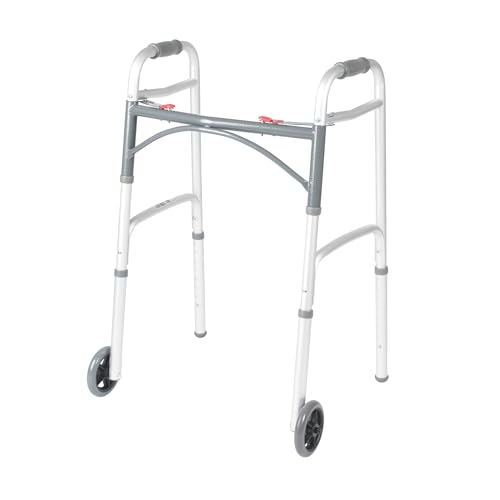
The Drive Medical two-button folding walker has an aluminum frame, 5-inch front wheels, rear glide caps and a push-button height adjustment. The listing says it supports up to 350 pounds.
This is the type of walker physical therapists most often start with after a hip replacement, because it is stable and cheap. The two-button fold makes it easy to put in a car. Set the height so the hand grips sit at your parent's wrist crease when they stand with arms relaxed, and ask the therapist to check it.
Pros
- Stable and lightweight
- Easy fold for the car
- Adjustable height
- Very low cost
Cons
- No seat or brakes
- Not ideal for long outdoor walks

The Carex E-Z Lock raised toilet seat adds 5 inches of height, has padded handles, and locks onto the toilet. The listing states it fits round, standard and elongated bowls and supports up to 300 pounds.
A hip replacement makes low seats hard because the hip cannot bend as far as it used to. A raised seat reduces how far your parent has to go down and, with the arms, gives something to push on. Measure your toilet before you buy, and test it with your parent in the store or at home, because height that is too high can be as awkward as too low.
Pros
- Raises the seat 5 inches
- Arms to push up from
- Locks securely
- Low cost
Cons
- Adds a bulky look to the bathroom
- Arms can be narrow for larger users

The Drive Medical Premium Shower Chair has a contoured back, padded arms, rubber feet and drainage holes, and the listing describes tool-free height adjustment in 1-inch increments. The aluminum frame weighs about 10 pounds.
Bathing is one of the riskiest tasks after surgery because of the wet floor, the step over the tub wall and the hip precautions. A shower chair with arms and a back lets your parent sit to wash and stand with something to hold. Pair it with a handheld shower head and ask the therapist how to enter and exit the shower.
Pros
- Back and arms for support
- Adjusts to different heights
- Light enough to move
- Low cost
Cons
- Not a transfer bench for a tub with a high wall
- Needs a bath where it can be placed

The Drive Medical folding bedside commode works as a commode, a raised toilet seat over the existing toilet and a toilet safety frame. The listing describes a 7.5-quart bucket, push-pin height adjustment and a 350-pound capacity.
It is helpful when the bathroom is far from the bedroom or at night, when your parent is tired and unsteady. Many families use it only for the first few weeks. If your parent can reach the bathroom easily with the walker, you may not need it.
Pros
- Three uses in one
- Folds for storage
- Useful at night
- Low cost
Cons
- Must be emptied and cleaned
- Takes floor space in the bedroom

The Drive Nitro Sprint is a rollator walker with a wide padded seat, a contoured back and a braking system with free, park and slowdown modes. The listing describes three bag mounting positions and a one-handed fold.
A rollator is usually not the first walker after a hip replacement, because the therapist wants a stable frame at the beginning. As your parent heals and wants to go to the store or the park, a rollator with a seat allows rest stops. Ask the therapist when your parent is ready, and choose a model with strong brakes.
Pros
- Seat for rest stops
- Strong braking options
- Folds with one hand
- Good for outings
Cons
- Higher cost
- Not recommended until the therapist approves
A simple order of operations
Start with the hip kit and walker, since your parent will use them in the hospital and the first day at home. Next add the raised toilet seat and shower chair. Add the bedside commode only if the bathroom is far from the bed. Keep the receipts in case the surgical team asks for a different size. For the rest of the home, our motion sensor night lights guide and our grab bar picks help reduce fall risk.
What your insurance may cover
Original Medicare Part B may cover some durable medical equipment, such as walkers and commodes, when a doctor prescribes it and the supplier is enrolled in Medicare. Items like hip kits, reachers and sock aids are often not covered and are paid for out of pocket. Rules vary by plan, so ask the hospital discharge planner or your parent's insurer before you buy expensive items. Our ultimate caregiver guide explains how to work with the care team.
Recovery tips from the caregiver side
Plan for help. For the first week or two, someone should be in the home for meals, bathing and trips to the bathroom. Set up a station near the main chair with water, medications, the phone, the reacher and the television remote. Use a pill organizer for post-operative medications; see the best pill organizers. Keep in touch with the surgeon about any redness, swelling, fever or sudden pain, and call right away for those symptoms.
Frequently Asked Questions
The usual list is a walker, a hip kit with a reacher, sock aid and leg lifter, a raised toilet seat or commode, and a shower chair. Your surgeon or therapist will confirm the list.
Before surgery, so everything is in the house and set up when your parent returns. Practice with the hip kit before the operation.
It depends on the surgical approach and your parent's progress, commonly a few weeks to a few months. Follow the surgeon's guidance on when to stop.
Medicare Part B may cover a walker with a prescription from a doctor and an enrolled supplier. Many smaller items are not covered. Check with the discharge planner.
Most therapists begin with a standard or two-wheeled walker for stability, then move to a cane or a rollator when ready. Ask the therapist.
Not always. A firm chair with arms and a higher seat is often enough. If standing up from a low seat is hard, a lift chair may help; discuss it with the therapist.