Physical Therapy at Home for Elderly Parents
How to get PT, what Medicare covers, exercises you can help with, and making progress stick.
After a fall, surgery, or health setback, physical therapy can mean the difference between your parent regaining independence or losing it. PT strengthens muscles, improves balance, and helps seniors safely do the activities they need to do, from walking to the bathroom to climbing stairs.
This guide explains how to get physical therapy at home, what to expect, how to support the work between visits, and what exercises are safe for caregivers to help with.
Seniors who don't get adequate PT after hospitalization or injury are more likely to fall again, lose independence faster, and end up in nursing homes. Fighting for proper PT is one of the most impactful things you can do for your parent.
How to Get Physical Therapy at Home
Home Health PT (Medicare Part A)
If your parent is "homebound" (leaving home is difficult), they may qualify for home health services including PT:
- Doctor must order it (often after hospitalization or for specific conditions)
- PT comes to the house 2-3 times per week typically
- Medicare covers 100% (no copays)
- Usually limited to 60-day episodes, though can be renewed if progress continues
- Must be "skilled" care, not just exercise but specific therapeutic goals
To qualify as homebound, leaving home must require considerable effort, not that it's impossible. Using a wheelchair, needing assistance, or experiencing symptoms when traveling all count. Brief doctor visits don't disqualify someone.
Outpatient PT (Medicare Part B)
If your parent can leave home, outpatient PT is often available:
- Parent travels to PT clinic or hospital outpatient department
- Medicare covers 80% after deductible is met
- No strict visit limits, but must show continued progress
- Often more intensive than home health (more equipment, more time)
Private Pay Options
- Some PT practices offer home visits for private pay ($100-200/visit)
- Useful when Medicare coverage ends but parent still needs help
- Can supplement Medicare-covered PT
The equipment that changes the most
Most of what caregiving costs is time. These four are the purchases that reliably buy some of it back, and they are the ones families tell us they wish they had bought sooner.
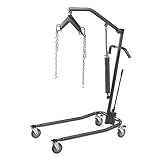 Drive Medical Hydraulic Patient Lift
A full lift is what makes one person able to manage a transfer alone. It is the single purchase that most often delays a move into residential care.
Check price on Amazon →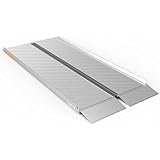 EZ-ACCESS Singlefold Wheelchair Ramp, 6 ft
Folds like a suitcase and carries in a car boot, so the same ramp handles the front step at home and the kerb at an appointment.
Check price on Amazon → Drive Medical Nitro Rollator with Seat
The seat matters more than the wheels. Being able to stop and rest is what decides whether someone still goes out at all.
Check price on Amazon → Vive Stand Assist Rail for Couch or Chair
Getting out of a low sofa is where most falls at home start. This is the cheapest thing on the list and often the first one needed.
Check price on Amazon →As an Amazon Associate we earn from qualifying purchases, at no extra cost to you. Researched guidance, not medical advice. Prices change, so check before buying.
What Physical Therapy Addresses
| Issue | How PT Helps |
|---|---|
| Balance problems | Balance exercises, strengthening leg muscles, teaching safe movement patterns |
| After a fall | Rebuilding confidence, strengthening, correcting gait issues that caused the fall |
| Post-surgery (hip, knee) | Range of motion, strength, getting back to walking and stairs |
| After stroke | Relearning movement, compensating for weakness, preventing contractures |
| Parkinson's disease | Gait training, balance, fall prevention, specific programs like LSVT BIG |
| General deconditioning | Rebuilding strength and endurance after illness or hospital stay |
| Pain management | Exercises and techniques to reduce chronic pain |
What to Expect from Home PT Visits
First Visit (Evaluation)
- PT assesses strength, balance, mobility, and pain
- Discusses goals (what does your parent want to be able to do?)
- Creates treatment plan with specific, measurable goals
- May recommend equipment (grab bars, walker, etc.)
Treatment Visits
- Typically 45-60 minutes
- Exercises targeting specific goals
- Practice functional activities (sit-to-stand, walking, stairs)
- Progress exercises as parent improves
- Teach exercises to do between visits
Your Role During Visits
- Be present if possible, learn the exercises so you can help
- Ask questions about what you can safely help with
- Share observations about how your parent is doing day-to-day
- Report any pain, dizziness, or problems with exercises
Exercises You Can Help With (With Caution)
These are general exercises commonly used in senior PT. Always follow your specific PT's instructions and stop if your parent experiences pain, dizziness, or significant fatigue.
Safety First
Never have your parent do exercises beyond what the PT has approved. Always ensure they're stable before starting. Have a chair nearby for support. Stop immediately if they become unsteady, short of breath, or in pain.
Seated Exercises (Safest)
Ankle Pumps
While seated, flex foot up and down (like pressing a gas pedal). Promotes circulation and ankle mobility.
10-20 reps each foot, 2-3 times daily
Seated Marching
While seated, lift one knee, then the other, in a marching motion. Strengthens hip flexors.
10-20 reps per leg, 2-3 times daily
Knee Extension
While seated, straighten one knee and hold for 5 seconds. Strengthens quadriceps.
10 reps per leg, hold each 5 seconds
Heel Slides
While seated, slide one heel back under the chair, then forward. Maintains hip and knee mobility.
10 reps per leg
Standing Exercises (With Support)
These require holding onto something sturdy, a counter, stable chair, or walker:
Heel Raises
Holding support, rise up on toes, then lower. Strengthens calves.
10 reps, 2-3 times daily
Side Leg Lifts
Holding support, lift one leg out to the side, then lower. Strengthens hip abductors.
10 reps per leg
Back Leg Lifts
Holding support, lift one leg straight back, then lower. Strengthens glutes.
10 reps per leg
Mini Squats
Holding support, slightly bend knees as if sitting, then stand. Strengthens legs.
10 reps
Balance Exercises (Supervised Only)
Tandem Stance
Stand with one foot directly in front of the other (heel to toe). Hold support as needed.
Hold 10-30 seconds each side
Single Leg Stance
Stand on one leg, other foot slightly off ground. Hold support as needed.
Hold 10-30 seconds each leg
Make It Routine
Exercises work best when done consistently. Link them to something your parent already does, exercises after breakfast, after the news, before bed. Make it a habit, not a special event.
Equipment That Helps
Resistance Bands
Inexpensive, versatile for strength exercises. Different colors indicate resistance levels.
Ankle Weights
Add resistance to leg exercises. Start light (1-2 lbs).
Stability Ball
For seated exercises that challenge core. Use with caution.
Balance Pad
Foam pad for standing balance challenges.
Pedal Exerciser
Portable device for seated "cycling" to improve leg strength and circulation.
Grab Bars
Essential safety equipment for bathroom. PT may recommend specific placement.
When PT Ends: Keeping Progress
Medicare-covered PT eventually ends. The key is maintaining gains:
- Ask for a home exercise program: PT should provide written instructions with pictures
- Build exercise into daily routine: Make it a habit, not optional
- Consider senior fitness classes: Silver Sneakers, community center programs
- Use PT maintenance if needed: Some Medicare Advantage plans cover ongoing PT at reduced frequency
- Know when to restart PT: After new illness, fall, or decline, ask the doctor for a new PT order
When PT Isn't Making Progress
If your parent isn't improving:
- Are they doing the exercises between visits? PT alone (2-3 visits/week) isn't enough
- Is pain holding them back? Talk to doctor about pain management
- Is motivation the issue? Depression often accompanies physical decline
- Are goals realistic? Some conditions have limits. Focus on function, not perfection
- Is the PT a good fit? Different therapists have different approaches
Fighting for More PT
Insurance often wants to limit PT visits. Here's how to advocate:
- Document progress: Keep notes on what your parent can do (walked 50 feet today vs. 20 feet last week)
- Ask the PT to document medical necessity: Clear goals and evidence of progress
- Appeal denials: Insurance denials can often be overturned with supporting documentation
- Ask about therapy caps: Medicare removed the therapy cap in 2018, but some plans still limit visits
- Consider private pay: Even one visit per month can help maintain progress
Studies consistently show that PT reduces falls, maintains independence, and improves quality of life in seniors. It's one of the most effective interventions available. Don't let your parent skip it or give up too soon.
Track Progress and Exercises
Our Care Coordination Binder includes PT tracking sheets, exercise logs, and appointment records to help you stay on top of your parent's therapy.
Get the Complete System