Handicap Ramp Cost Calculator and Length Guide (2026)
Use the free calculator below to figure out exactly what length and weight rating your parent's situation requires, then learn how to measure rise, what slope is actually safe, and the ramps most caregivers and home health agencies buy.
Quick answer. For a doorway threshold (1-2 in. rise) get an aluminum threshold ramp. For 1-2 home steps (~7-14 in. rise) get a 6-foot Singlefold Suitcase ramp. For 3+ steps or vehicle ramps, go to a Multi-Fold 8-10 foot ramp rated 600+ lb. Use the calculator below to confirm.
Wheelchair Ramp Length Calculator
30 seconds. No email required.
Standard residential step = ~7 inches. Use direct measurement for non-standard steps.
Recommended Ramp
6 ft
For a 7-inch rise with caregiver assistance.
A 6-foot Suitcase Singlefold ramp covers this. Look for at least 600 lb weight rating.
See matching ramps below ↓Calculations use the slope rules from ADA Section 4.8 (1:12 for accessible independent use) and the National Council on Aging's home modification guidelines. For permanent installations or rises over 30 inches, consult a certified contractor or occupational therapist.
Handicap Ramp Cost Calculator
Short answer: what a handicap ramp costs depends mainly on its length, which comes from the rise. At the ADA slope of 1:12 you need 1 foot of ramp for every inch of rise, so a typical 7-inch step needs a 7-foot ramp. A portable aluminum ramp for 1 to 3 steps is typically under $500; longer, permanent or modular ramps are priced per linear foot, so use the estimator below with a quote from your installer.
Step 1: Find the ramp length
Ramp length = rise in inches x slope ratio / 12. The table shows the length for common rises.
| Rise (height to climb) | Ramp length at 1:12 (ADA) | At 1:10 | At 1:8 (caregiver-assisted) |
|---|---|---|---|
| 4 in. | 4 ft | 3.3 ft | 2.7 ft |
| 7 in. | 7 ft | 5.8 ft | 4.7 ft |
| 14 in. | 14 ft | 11.7 ft | 9.3 ft |
| 21 in. | 21 ft | 17.5 ft | 14.0 ft |
| 28 in. | 28 ft | 23.3 ft | 18.7 ft |
| 30 in. | 30 ft | 25.0 ft | 20.0 ft |
Step 2: Estimate the cost
What drives the cost of a handicap ramp
| Cost factor | What to know |
|---|---|
| Ramp length | The biggest driver. Cost scales with feet of ramp, and a lower slope means more feet. Every inch of rise needs 12 inches of ramp at 1:12. |
| Ramp type | Portable folding or telescoping aluminum ramps cover 1 to 3 steps for under $500; modular aluminum systems and contractor-built wood or concrete ramps are priced per linear foot for longer rises. |
| Landings | A level landing at least 60 inches long is needed at the top and bottom, and at each 30 inches of rise. Landings add material and labor. |
| Handrails and edge protection | Ramps rising more than 6 inches need handrails on both sides under ADA guidance; raised curbs keep wheels from slipping off. |
| Weight rating | A power chair or scooter plus rider needs a higher rating than a manual chair. Check combined weight against the rating. |
| Install and permits | Permanent ramps may need a building permit and installation labor. Portable ramps need none. |
Who helps pay for a ramp
Original Medicare generally does not pay for a home ramp, because it is a home modification rather than medical equipment. Possible help includes Medicaid home and community based services waivers in many states, VA Home Improvements and Structural Alterations (HISA) grants for eligible veterans, your local Area Agency on Aging (find it through the Eldercare Locator at 1-800-677-1116), and nonprofits such as Rebuilding Together and Habitat for Humanity chapters that do accessibility repairs. A ramp ordered on a doctor's letter may qualify for HSA or FSA funds; ask your plan administrator.
Updated 2026. General information, not medical or financial advice. Confirm local building rules before building a permanent ramp.
How to Measure Rise (the Most Important Number)
Rise is the total vertical distance the ramp has to climb, measured from the lower landing to the upper landing. Get this wrong by 2 inches and you'll end up with a ramp that's too steep, too short, or both.
The 4-step measurement
- Stand on the lower surface (driveway, sidewalk, garage floor, wherever the wheelchair will start).
- Hold a tape measure vertically against the bottom edge of the upper landing (the porch, threshold, or doorway floor).
- Read the measurement at ground level. That's your rise in inches. Don't measure the step height, measure the total height from the bottom surface to the top surface.
- For multiple steps: measure from the lowest ground surface to the highest landing. Don't add step heights individually; uneven steps or settled concrete will throw the math off.
Common mistake: measuring from the top of the porch tread instead of the lower ground surface. If there's any threshold lip, raised concrete, or weather seal, add it to your rise number. Better to overshoot ramp length than land short.
Rise Over Run: What "1:12" Actually Means
Ramp slope is described as a ratio, rise (vertical inches) over run (horizontal inches of ramp length). A 1:12 ramp means for every 1 inch of vertical rise, you need 12 inches of ramp length. So a 6-inch rise needs a 72-inch (6-foot) ramp at 1:12.
| Slope | Who it's for | Safety read | Example: 7" rise |
|---|---|---|---|
| 1:20 | Best for solo manual wheelchair use | Gold standard. Almost flat. | 140 in. / 12 ft |
| 1:12 (ADA) | Independent wheelchair user | ADA-compliant. Safe for unassisted use. | 84 in. / 7 ft |
| 1:8 | Caregiver-assisted (most common) | OK with caregiver pushing. NOT for independent use. | 56 in. / ~5 ft |
| 1:6 | Occasional power chair use, vehicle loading | Steep. Tip-over risk. Caregiver only. | 42 in. / ~4 ft |
| 1:4 or steeper | Cart/equipment loading only | UNSAFE for wheelchairs. Do not use. | 28 in. / ~2.5 ft |
Which slope should you actually pick?
- 1:12 (ADA) if your parent uses the wheelchair independently, ever, even occasionally.
- 1:8 if a caregiver is always pushing and storage space is tight.
- 1:6 only for occasional vehicle loading with a power chair, never as a primary home ramp.
Safety Checklist Before You Use Any Portable Ramp
✓ Do
- • Check the ramp's lip catches the top landing fully (no gap, no overhang).
- • Confirm the bottom sits flat on the ground, no rocking.
- • Test with full weight before letting your parent transfer.
- • Keep both hands on the wheelchair handles going up and down.
- • Lock the wheelchair brakes at the top and bottom transitions.
- • Sweep the ramp surface clear of leaves, ice, gravel, and water.
- • Replace anti-skid tape every 6-12 months.
✗ Don't
- • Use a ramp wet without anti-skid tape, aluminum is slick when wet.
- • Push your parent down backwards (always face forward going down).
- • Use a 1:6 or steeper ramp without a second person spotting at the bottom.
- • Use a ramp whose weight rating you can't confirm. Check the label.
- • Use a portable ramp on stairs with uneven treads. Get a contractor.
- • Leave the ramp set up unattended where a confused parent might walk it.
- • Skip the threshold ramp at the doorway. A wheelchair caught on a sill can tip.
When to Skip Portable and Call a Contractor
A portable ramp is the right answer for most short-term, short-rise situations. Permanent or modular installations are required when:
- Rise is over 30 inches. Even with caregiver assistance, a portable ramp over 20 feet long becomes harder to deploy and store than it's worth.
- The user is independent in a power wheelchair. Power chairs are heavier and harder to control on portable ramps; permanent with handrails is safer.
- Local code requires handrails. Most jurisdictions require handrails on both sides for ramps over 6 inches of rise with more than 6 feet of length.
- The landing requires turns. Portable ramps are straight. If you need to turn 90° at a landing, you need a modular or custom build.
- The ramp will be used year-round in snow country. Snow-load ratings and ice management aren't designed into most portable ramps.
- You're applying for VA HISA or Medicaid HCBS reimbursement. These programs typically require a professionally installed ramp; portable purchases may not qualify.
Expect $1,500-$4,000 for a modular aluminum ramp install, $3,000-$8,000 for a custom wood ramp with handrails. Some VA programs and Medicaid waivers cover up to the full cost.
Top Portable Wheelchair Ramps, Caregiver Picks
 EZ-ACCESS Suitcase Singlefold Ramp (6 ft, 800 lb rated) The most-recommended single-fold ramp on the market, folds in half like a briefcase with built-in handle, 30-inch usable width. Crosses 1-2 steps, vehicle bumpers, and short stairs. under $500.
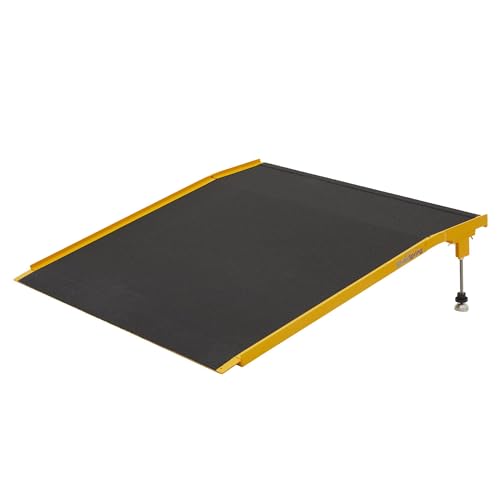 Silver Spring Aluminum Threshold Ramp (1-3 inch rise) The single best fix for a sliding glass door or interior threshold a wheelchair or walker keeps catching on. Available in 1", 1.5", 2", 2.5", and 3" rises. Anti-skid surface. Installs in 30 seconds. under $250.
 Titan Ramps Multi-Fold Aluminum Ramp (8 ft, 600 lb rated) Folds in 4 sections so it stores in a hall closet. Crosses 3-4 steps comfortably for caregiver-assisted use. Most-bought for porches and back-door entries. under $500.
 Ruedamann Solid-Surface Aluminum Ramp (4 ft, 800 lb rated) Solid (non-perforated) surface, easier to push a wheelchair on than mesh ramps, especially for one-handed caregivers. Folds in half, 30-inch width. Best for 1-2 step porches. under $250.
 VNN Seamless Aluminum Ramp (6 ft) A 6-foot folding aluminum ramp with a seamless non-slip surface, suited to in-home transfers over two or three steps. under $500.
 7-Foot Aluminum Folding Ramp A longer folding aluminum ramp for caregivers who need one occasionally, for doctor visits or family events. Folds for storage between uses. under $250.
 Prairie View Rubber Threshold Ramp (1-6 inch rise) Rubber alternative to aluminum, heavier and grippier, won't slide on hardwood or tile. Good for interior thresholds and patio doors where a metal ramp would scratch. under $250 depending on rise.
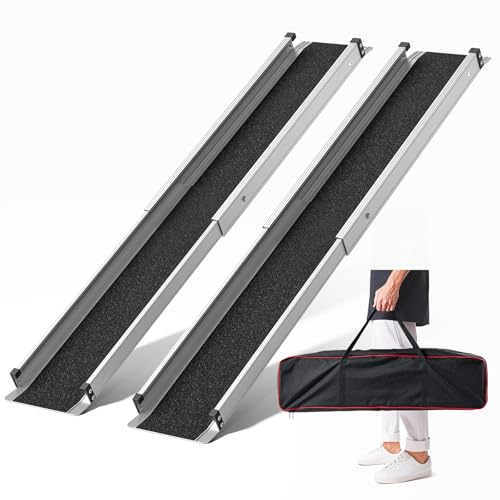 KOLOTOOL 7-Foot Telescoping Ramp (600 lb, with bag) Telescoping track-style aluminum ramp that collapses for transport, useful for vehicles and entries where a single wide ramp won't fit. Ships with a carry bag. under $250.
Ramp Accessories Worth Buying
 Anti-Skid Grip Tape Rolls Most ramps lose grip in 6-12 months. A long roll re-tapes the high-traffic strip for several years. under $50.
 gardhom 6-Foot Telescoping Ramp with Carrying Case Most ramps don't ship with a bag. If you will travel with the ramp, this telescoping set comes with its own carrying case. under $250.
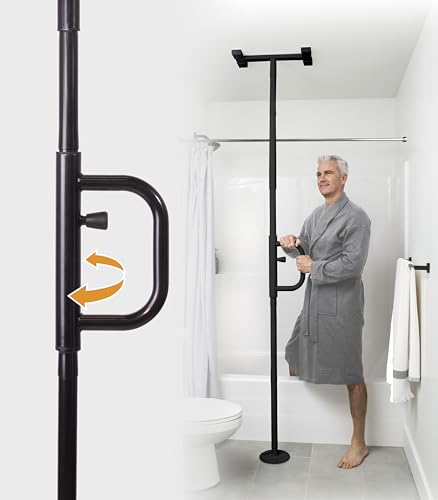 Stander Security Pole & Handle If your parent uses a walker and not a wheelchair, a security pole at the top of the ramp gives them something to grab. under $250.
 Motion-Sensor Outdoor Light (Battery) If the ramp is at a back door or in low light, a battery-powered motion light prevents nighttime falls. under $50.
Affiliate disclosure. The product picks above are Amazon affiliate links. ParentCareGuide earns 2–4% commission when you buy through them, at no extra cost to you. We are editorially independent, manufacturers do not pay us for placement and we did not receive free product from any brand listed. Read our full disclosure →
Frequently Asked Questions
How much does a handicap ramp cost?
A portable aluminum ramp for one to three steps is typically under $500. Longer, modular or contractor-built ramps are priced per linear foot, and the length depends on the rise: at the ADA 1:12 slope you need 1 foot of ramp per inch of rise, plus landings. Use the calculator on this page with a per-foot quote.
How long does a wheelchair ramp need to be?
At the ADA slope of 1:12, 1 foot of ramp per inch of rise, so a 7-inch step needs a 7-foot ramp and a 30-inch rise needs 30 feet plus landings. A caregiver-assisted ramp at 1:8 is shorter but steeper.
What is the handicap ramp cost per foot?
It varies by material and installer, so use quotes from two or three local contractors. Multiply your quoted per-foot price by the ramp length from the table above, then add landings, rails and any permit.
Does Medicare cover handicap ramps?
Original Medicare generally does not cover home ramps. Look at Medicaid waivers, VA HISA grants for veterans, your Area Agency on Aging and local nonprofits that build accessibility ramps.
Are wheelchair ramps HSA or FSA eligible?
Yes. Ramps qualify as medical equipment under IRS Publication 502 when needed for a medical condition. Save the prescription (if you have one), receipt, and product description. Most caregivers use FSA or HSA funds.
Will Medicare pay for a wheelchair ramp?
Original Medicare (Part A and B) generally does not cover ramps. Some Medicare Advantage plans include a "home modification" benefit up to $500-$1,500 annually. Check your plan's Evidence of Coverage. Medicaid may cover ramps in some states through HCBS waivers.
How do I install a portable wheelchair ramp?
Portable ramps require no installation. Unfold, position with the lip resting on the top step or doorway, and confirm the bottom sits flat on the ground. Threshold ramps slide under a doorway in seconds. Always test with weight before letting your parent use it.
What if I need to rent a ramp instead of buy?
Local durable medical equipment (DME) suppliers and home health agencies rent ramps for $50-150/month. Best if you need it for less than 3 months (post-surgery recovery, hospice). Beyond 3-4 months, buying is cheaper.
Can I deduct a wheelchair ramp on my parent's taxes?
Yes, if it's a medical necessity and the parent itemizes deductions. Medical expense deductions above 7.5% of AGI are allowed. See our guide to caregiver tax deductions for more.
When should I call a contractor instead of buying a portable ramp?
For any rise over 30 inches, for permanent installations, when local code requires handrails (typically rises over 6 inches with more than 6 feet of ramp length), or when the property has uneven landings, curves, or transitions that a straight portable ramp can't handle.
Related Guides on ParentCareGuide
One more time, because this matters. Every product recommendation on this page is independent. We accept no manufacturer payment, no sponsored placement, and no free product in exchange for coverage. When you buy through an Amazon link here, we earn 2–4% commission, that's how we keep ParentCareGuide free to read. If a pick stops being our honest recommendation, we remove it. Our editorial standards → · Affiliate disclosure →