How we choose what to recommend.
ParentCareGuide is editorially independent. Picks come from published-spec research and verified buyer-review patterns at 4.0+ stars across 200+ reviews. We are not paid by manufacturers for placement and have not received free product from any brand listed.
Disclosure: Amazon affiliate links, we earn 2–4% commission at no extra cost. How we choose → · Affiliate disclosure →
Watching a parent shuffle cautiously or grab walls for balance is frightening. The right walker or rollator can restore their confidence, prevent falls, and extend the years they live independently at home. But not every device fits every person, and choosing the wrong one can actually make things worse.
We reviewed nine of the best-selling, highest-rated walkers and rollators available today, evaluating each for stability, weight, ease of folding, seat comfort (where applicable), and overall value. Whether your parent needs basic support around the house or a full-featured rollator for longer outings, there's a strong option at every price point.
Quick Comparison: 9 Best Walkers & Rollators 2026
| Product | Type | Weight | Price | Best For |
|---|---|---|---|---|
| Drive Medical Nitro DLX | Rollator | See listing | Under $500 | Active seniors, outdoor use |
| Drive Medical Nitro (back-ordered) | Rollator | 17.5 lbs | Under $250 | Original Nitro, ships when restocked |
| Hugo Sidekick | Rollator | 15 lbs | Under $250 | Budget-friendly all-rounder |
| Medline Premium | Rollator | 16 lbs | Under $250 | Memory-foam seat, 8" wheels |
| NOVA GetGo Classic | Rollator | 13.5 lbs | Under $250 | Lightweight, easy folding |
| Drive Medical Aluminum Lightweight | Rollator | 14 lbs | Under $100 | Budget lightweight rollator |
| Lumex Walkabout Lite | Rollator | 14.5 lbs | Under $250 | Short-term or backup use |
| Hugo Elite | Rollator | 16 lbs | Under $250 | Premium comfort, tall users |
| Vive Folding Walker | Standard Walker | ~7 lbs | Under $100 | Maximum stability, post-surgery |
The 9 Best Walkers & Rollators for Seniors, Detailed Reviews
Drive Medical Nitro DLX Foldable Rollator
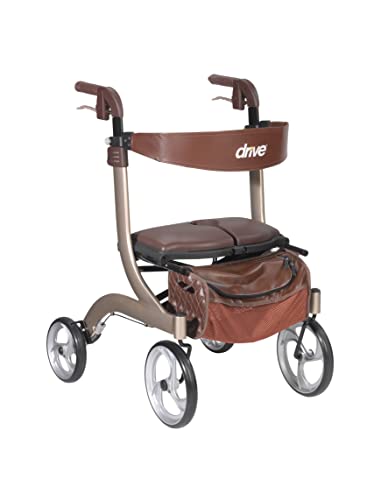 Best for: Active seniors who walk outdoors regularly
The Nitro DLX is the current model of the Drive Medical Nitro family that earned this spot, and it keeps what made the original our top choice: a euro-style frame with large 10-inch front casters that glide over curbs, sidewalk cracks and parking lots. A cross-brace design adds side-to-side stability, and the padded seat doubles as a place to rest on longer outings.
It folds with one hand to a compact size for the car trunk, the handles and backrest adjust with push buttons, and the removable zippered bag stays attached whether the rollator is open or folded. The listing gives a 300 lb weight capacity. Weight is not stated in the listing, so check the product page if lifting it into a car is a concern.
Pros
- Large 10-inch wheels handle outdoor terrain
- Cross-brace frame for stability
- Padded seat with adjustable backrest
- One-hand fold for car transport
- 300 lb weight capacity
Cons
- Costs more than entry-level rollators
- Bulkier in tight home spaces
- Firm seat rather than a thick cushion
Drive Medical Nitro Euro Style Rollator
 Best for: Active seniors who walk outdoors regularly (back-ordered right now)
This model is back-ordered on Amazon at the moment. The original Drive Medical Nitro (RTL10266BK) is the rollator that held our top spot, and the DLX above is the same family with the same 10-inch front wheels. If your parent already has this model or you can wait for it to ship, it remains a strong choice: a low center of gravity, 10-inch front wheels for uneven sidewalks and parking lots, and a sturdy aluminum frame rated to 300 lbs.
It folds with a single handle pull for the car trunk. At 17.5 lbs it isn't the lightest option, and the backrest gives real lumbar support when sitting. Use the button below to see the current ship date.
Check Availability on AmazonHugo Sidekick Rollator Walker
 Best for: Families wanting solid quality without overspending
Hugo has built a strong reputation in the mobility aid space, and the Sidekick demonstrates why. At under $250, it delivers a padded seat, under-seat storage pouch, and smooth 6-inch wheels for both indoor and light outdoor use. The loop hand brakes are easy to operate even for users with limited grip strength.
Assembly is straightforward and takes about 15 minutes. The Sidekick weighs just 15 lbs, which makes it easier for your parent to lift into a vehicle or reposition in a small space. Hugo backs the frame with a limited lifetime warranty, which adds meaningful peace of mind for a primary mobility device.
Pros
- Excellent value for the price
- Lightweight at 15 lbs
- Easy loop-lock brakes
- Lifetime frame warranty
- Storage pouch included
Cons
- Smaller 6-inch wheels (less ideal outdoors)
- Seat padding thinner than premium models
- Height range may not suit very tall users
Medline Premium Empower Rollator
 Best for: Seniors who want the most comfortable seat for resting
The Medline Premium Empower is built around comfort. Its memory-foam seat is the plushest in this review, and the 300 lb frame pairs it with sturdy 8-inch wheels, a cupholder, a storage pouch, and adjustable handle heights. It's a reliable choice for both indoor use and slow walks around the neighborhood.
The 8-inch wheels handle most sidewalks well, though deeply cracked pavement still calls for the larger-wheeled Nitro. For a parent who sits often during walks and values a genuinely cushioned seat, the Medline Premium Empower is a comfortable, dependable pick.
Pros
- Plush memory-foam seat
- Folds for easy storage
- Adjustable handle heights
- 8-inch wheels and cupholder
Cons
- Heavier than ultra-light models
- Pricier than entry rollators
- Bulkier folded footprint
NOVA GetGo Classic Rollator
 Best for: Seniors who take their rollator in the car frequently
NOVA's GetGo Classic is purpose-built for portability. It's one of the lighter full-featured rollators in this review, and its Lock N Load folding mechanism collapses the frame with a simple squeeze-and-lift motion. For a parent who attends church, doctors' appointments, or weekly errands, the ease of getting this into and out of a car trunk is a genuine quality-of-life upgrade.
The mid-size wheels perform reasonably well on both indoor floors and paved walkways. The padded seat is comfortable for short rests, and the under-seat bag has enough space for a phone, wallet, and small water bottle. Handle height adjusts to accommodate users from 5'4" to 6'1".
Pros
- Very light, easy car loading
- Intuitive one-step fold
- Wide height adjustment range
- Versatile indoor/outdoor wheels
Cons
- Pricier for the feature set
- Seat not as plush as heavier models
Drive Medical Aluminum Lightweight Rollator
 Best for: Families on a budget who still want a real four-wheel rollator
The Drive Medical Aluminum Lightweight Rollator is the most affordable four-wheel rollator in this lineup, and its portable aluminum frame is easy to lift in and out of a vehicle. The frame supports up to 300 lbs and feels solid underfoot despite the low price.
It features a removable padded backrest, a padded seat, a fold-up design, and 6-inch wheels suited to indoor floors and smooth walkways. It's an excellent choice for families who need a dependable rollator without spending premium money. The 6-inch wheels are best for indoor and light outdoor use rather than rough terrain.
Pros
- Lowest-priced four-wheel rollator here
- Lightweight, portable aluminum frame
- 300 lb weight capacity
- Removable padded seat and backrest
Cons
- 6-inch wheels less ideal outdoors
- Basic feature set
- Smaller storage capacity
Lumex Walkabout Lite Rollator
 Best for: Short-term recovery or a backup rollator
The Lumex Walkabout Lite weighs just 14.5 lbs, and for the right situation it delivers genuine value. If your parent needs rollator support for a few months of post-surgical recovery, or if you want a secondary rollator to keep at a relative's home during visits, the Walkabout Lite makes sense. It folds, has a seat, and adjusts to standard adult heights.
Be honest about the trade-offs: thinner padding, smaller wheels, and a less refined folding mechanism compared to mid-range options. This isn't a device for someone who needs a rollator as their primary long-term support. But for short-term recovery or occasional use, it's a sensible budget choice.
Pros
- Lightweight at 14.5 lbs
- Has a seat for resting
- Folds for storage
- Good for short-term or backup use
Cons
- Less durable for daily long-term use
- Thin seat padding
- Smaller, less smooth wheels
Hugo Elite Rollator Walker
 Best for: Taller seniors and those wanting maximum comfort
The Hugo Elite is the most full-featured rollator in this review. Where other rollators feel functional, the Elite feels considered. The seat is wider and more generously padded, the backrest provides actual lumbar support, and the handle height extends higher than most competitors, making it the top pick for parents over 6 feet tall who routinely struggle to find rollators that don't force them to hunch forward.
The Elite also includes a padded bag, backrest, and adjustable tension on the loop brakes so users can customize how easily the brakes engage. The 8-inch wheels handle most outdoor surfaces capably. If your parent will use their rollator every day and values comfort above all else, this is the rollator worth investing in.
Pros
- Best seat comfort in this review
- Adjustable backrest and wide seat
- Tall user friendly
- Adjustable brake tension
- Durable for daily use
Cons
- Premium price point
- Heavier than ultra-light options
Vive Folding Walker
 Best for: Post-surgery recovery and maximum stability needs
Not everyone needs a rollator. For parents recovering from hip or knee replacement, or those with significant balance impairment who need maximum stability, a standard folding walker remains the most appropriate choice. The Vive Folding Walker uses a sturdy steel frame that supports up to 300 lbs, folds flat for easy storage in a closet or car, and stays planted with each step.
The push-button height adjustment works easily, and the 5-inch front wheels paired with rear ski glides let your parent ease the walker forward without fully lifting it, while still keeping firm ground contact. For a parent who needs stability and near-zero rollaway risk, this is the correct tool. A physical therapist will often recommend a standard walker over a rollator for higher-fall-risk patients.
Pros
- Very stable steel frame
- Lightweight and easy to maneuver
- Very affordable
- Push-button height adjust
- Folds flat for storage
Cons
- No seat for resting
- Slower gait than a rollator
- Less suited to longer outdoor walks
- Awkward on stairs
Walker vs. Rollator: How to Choose the Right Device
The most common mistake families make is assuming a rollator is simply a "better" walker. It isn't, it's a different tool for a different situation. Choosing the wrong type can increase fall risk.
Choose a Standard Walker When:
- Your parent is recovering from hip or knee surgery and needs maximum weight-bearing support
- Their balance is severely compromised and they need a device that won't roll away
- A physical therapist has specifically recommended a standard walker
- They live in a very small space where rolling wheels would be a hazard
Choose a Rollator When:
- Your parent needs to rest frequently during walks (the built-in seat is essential)
- They walk longer distances, errands, outdoor walks, senior center activities
- They have mild to moderate balance issues but reasonable upper body control
- They are active enough to manage brake operation safely
Walker and Rollator Sizing Guide
An improperly fitted walker is dangerous and causes postural strain. Here's how to get the sizing right:
- Handle height: With your parent wearing their everyday shoes and standing tall, the handles should sit at wrist crease level when arms hang naturally at their sides.
- Elbow bend: When gripping the handles, elbows should bend approximately 15 to 20 degrees. Handles set too low force the user to hunch; handles too high strain the shoulders.
- Rollator seat height: Seated, your parent's hips and knees should both be at roughly 90 degrees, with feet flat on the floor.
- Test before using: Have your parent walk a few steps with a caregiver present to confirm the height feels natural before using independently.
What to Look for When Buying a Senior Walker or Rollator
- Weight capacity: Confirm the device supports your parent's weight with a reasonable safety margin.
- Wheel size: Larger wheels (8–10 inches) handle outdoor terrain better. Smaller wheels (5–6 inches) work for indoor-only use.
- Folding mechanism: Test how easily it folds. A mechanism your parent can't operate alone is a real problem.
- Brake type: Loop brakes (squeeze to brake) are most common and safest. Make sure your parent has sufficient hand strength to operate them.
- Device weight: If your parent needs to lift the device into a car, lighter is meaningfully better.
- Seat and backrest: Seat width and padding matter if your parent will sit frequently. Measure their hip width before buying.
Medicare Coverage for Walkers and Rollators
Medicare Part B may cover the cost of a walker or rollator as durable medical equipment (DME). To qualify:
- Your parent's doctor must write a prescription documenting medical necessity
- The device must be purchased from a Medicare-enrolled DME supplier
- Your parent typically pays 20% of the Medicare-approved amount after the Part B deductible
- Basic rollators are generally covered; premium models may require your parent to pay the difference
Affiliate disclosure. The product picks above are Amazon affiliate links. ParentCareGuide earns 2–4% commission when you buy through them, at no extra cost to you. We are editorially independent, manufacturers do not pay us for placement and we did not receive free product from any brand listed. Read our full disclosure →
Upgrade Pick and What You'll Also Need
A walker is used every day, so small add-ons make a big difference. These are what families add most.
- A bag with a cup holder: the Vive rollator bag keeps a phone, water and keys within reach so hands stay on the grips.
- Glides for a standard walker: walker ski glides, 4-pack let a two-wheeled walker slide instead of drag on carpet.
- Upgrade pick: the Drive Medical Nitro DLX rollator has large front casters and a cross-brace frame that folds narrow, for parents who walk outdoors.
Setting up the whole home? Our aging-in-place home safety kits list every item by budget, standard and premium tier on the caregiver setups page.
Deal season note: Prices on these often drop during Prime Big Deal Days and Black Friday. The picks above were checked against live Amazon listings for 2026; click through for the current price.
Frequently Asked Questions
What is the difference between a walker and a rollator?
A standard walker has no wheels and must be lifted with every step. A rollator has four wheels, hand brakes, and usually a built-in seat. Walkers provide maximum stability; rollators allow a more natural walking gait and the ability to sit and rest. The right choice depends on your parent's specific balance and mobility needs.
Will Medicare cover a walker or rollator?
Medicare Part B covers standard walkers and basic rollators as durable medical equipment when a doctor prescribes them and documents medical necessity. You typically pay 20% of the Medicare-approved amount after your annual deductible. Always use a Medicare-enrolled supplier to ensure coverage.
How do I know if a rollator is the right height?
Have your parent stand in their everyday shoes with arms hanging naturally. The rollator handles should align with their wrist crease. When gripping the handles, elbows should bend slightly, about 15 to 20 degrees. If they have to hunch or reach up uncomfortably, the height needs adjustment.
Are rollators safe for seniors with dementia?
Rollators require the user to consistently apply brakes before sitting and while stopping. For seniors with moderate to advanced dementia who may forget this step, a rollator can increase fall risk. Consult your parent's physician or a physical therapist before choosing a rollator for a parent with cognitive impairment.
What weight capacity do senior walkers typically support?
Most standard rollators support 250 to 300 lbs. Heavy-duty bariatric models support 400 to 500 lbs and are available for larger individuals. Always confirm the weight limit before purchasing, using a device beyond its rated capacity is a serious safety hazard.
Can my parent use a rollator on stairs?
Rollators are not designed for stair use. If your parent needs to navigate stairs, they should use a handrail or a single cane for stair transitions and switch to the rollator on flat surfaces. A physical therapist can teach safe stair strategies alongside rollator use.
How long do walkers and rollators last?
Quality rollators from brands like Hugo, Drive Medical, and NOVA typically last 5 to 10 years with normal use. Budget models may show wear in 1 to 3 years. Replace the device if wheels wobble, brakes lose tension, or the frame shows any bending or cracking.
Should my parent see a physical therapist before getting a walker?
Yes, strongly recommended. A physical therapist will assess the correct device type, set precise handle height, and provide training on safe technique. This single step reduces fall risk more than the device choice alone. Ask the primary care doctor for a PT referral when discussing the need for a mobility aid.
Which rollator is best for both indoor and outdoor use?
The Drive Medical Nitro DLX: its 10-inch front wheels roll over sidewalk cracks and grass, and the frame is narrow enough for interior doorways. For a mostly indoor user, the NOVA GetGo Classic is the lightest pick here at 13.5 lbs and turns tightly in hallways.
Which rollator has the most storage and durability?
Look for a 300 lb weight rating, a steel or thick-wall aluminum frame and an under-seat bag or pouch. On this list the Hugo Elite (300 lb frame, storage pouch) and the Medline Premium Empower are the storage-first, built-to-last picks.
What is an affordable outdoor walker?
The Hugo Sidekick (under $250) is the budget outdoor rollator: 8-inch wheels handle paved paths and packed gravel, and it folds for the car. Standard folding walkers without wheels, like the Vive here, cost less but are indoor devices; outdoors, lifting them every step is tiring and unsafe on uneven ground.
Get the Complete Caregiver Toolkit
Includes mobility safety checklists, fall prevention guides, medication trackers, and 40+ more templates for every aspect of caring for an aging parent.
Get the Complete Toolkit for $39One more time, because this matters. Every product recommendation on this page is independent. We accept no manufacturer payment, no sponsored placement, and no free product in exchange for coverage. When you buy through an Amazon link here, we earn 2–4% commission, that's how we keep ParentCareGuide free to read. If a pick stops being our honest recommendation, we remove it. Our editorial standards → · Affiliate disclosure →