Caregiver Anger: Why You're So Mad and How to Cope
You never used to be an angry person. Now you're snapping at everyone, your parent, your spouse, your kids, strangers. Little things set you off. You feel rage simmering beneath the surface. If this sounds familiar, you're experiencing one of the most common, and least discussed, caregiver emotions.
Anger tells you something is wrong, a boundary crossed, a need unmet, a situation unfair. The problem isn't that you feel angry. The problem is when anger takes over, harms relationships, or turns inward as depression. Understanding your anger is the first step to managing it.
Why Caregivers Get So Angry
You're Exhausted
Sleep deprivation and chronic fatigue make emotional regulation nearly impossible. Everything feels more intense when you're running on empty.
You've Lost Control
Your schedule, your plans, your life, you can't control any of it. You're at the mercy of someone else's needs. Loss of control is a major anger trigger.
It's Not Fair
You're doing all the work. Your siblings aren't helping. Your parent didn't take care of their health. You didn't ask for this. The injustice is infuriating.
You're Grieving
Anger is a stage of grief. You're grieving your parent as they were, your relationship, your own life. Anger at the disease, the situation, even God is part of grief.
Your Parent Is Difficult
They complain, criticize, refuse help, or ask the same question 50 times. Whether it's personality or disease, difficult behavior triggers anger.
You Feel Trapped
You can't quit this job. You can't see an end. Feeling stuck with no escape creates a pressure cooker of anger.
The equipment that changes the most
Most of what caregiving costs is time. These four are the purchases that reliably buy some of it back, and they are the ones families tell us they wish they had bought sooner.
 Drive Medical Hydraulic Patient Lift
A full lift is what makes one person able to manage a transfer alone. It is the single purchase that most often delays a move into residential care.
Check price on Amazon →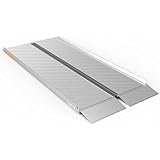 EZ-ACCESS Singlefold Wheelchair Ramp, 6 ft
Folds like a suitcase and carries in a car boot, so the same ramp handles the front step at home and the kerb at an appointment.
Check price on Amazon → Drive Medical Nitro Rollator with Seat
The seat matters more than the wheels. Being able to stop and rest is what decides whether someone still goes out at all.
Check price on Amazon → Vive Stand Assist Rail for Couch or Chair
Getting out of a low sofa is where most falls at home start. This is the cheapest thing on the list and often the first one needed.
Check price on Amazon →As an Amazon Associate we earn from qualifying purchases, at no extra cost to you. Researched guidance, not medical advice. Prices change, so check before buying.
What's Underneath the Anger
Anger is often the visible emotion covering deeper feelings:
- Fear: Of losing them, of your own future, of making mistakes
- Sadness: Watching them decline, missing who they were
- Guilt: Feeling you should do more, be better, feel differently
- Loneliness: Isolated, misunderstood, unsupported
- Powerlessness: Unable to fix the situation or stop the decline
- Hurt: Feeling unappreciated, taken for granted
Healthy Ways to Release Anger
Physical Release
- Exercise, walk, run, punch a pillow
- Scream into a pillow or in your car
- Hit something safe (mattress, punching bag)
- Do intense cleaning or yard work
- Dance to loud music
Emotional Release
- Cry, it releases stress hormones
- Journal, uncensored, honest writing
- Talk to someone who gets it (support group, therapist, friend)
- Write an angry letter you never send
Mental Strategies
- Time out: Step away before you say something you regret
- Deep breathing: Box breathing (4 in, 4 hold, 4 out, 4 hold)
- Counting: Count to 10 (or 100) before responding
- Name the emotion: "I'm feeling angry because..."
- Perspective shift: Will this matter in 5 years? Is this the disease talking?
When anger flares, pause for 10 seconds before saying or doing anything. This tiny pause engages your rational brain and can prevent you from saying something you'll regret.
When Anger Becomes a Problem
- You're yelling at your parent regularly
- You've grabbed them roughly or wanted to hurt them
- You're taking anger out on other family members
- You're using alcohol or substances to cope
- You've had thoughts of harming yourself
- You feel constant rage that doesn't subside
- You're isolating because you can't control your temper
If any of these apply, please get help. Call a therapist, your doctor, or a crisis line. This isn't weakness, it's recognizing you've exceeded human limits.
If you're afraid you might hurt your parent or yourself: Step away immediately. Put your parent somewhere safe. Call someone, a family member, neighbor, or 988 (Suicide & Crisis Lifeline). You need a break NOW. This is a medical emergency.
Reducing Anger at the Source
Get More Sleep
Sleep deprivation makes anger management nearly impossible. Prioritize sleep above almost everything else.
Get More Help
Every hour of help reduces your burden. Hire someone, ask family, use adult day care, whatever it takes.
Set Boundaries
Learn to say no. You don't have to do everything. "Good enough" is acceptable.
Address Sibling Issues
If siblings not helping is driving your anger, have the conversation. Set specific requests. Accept you may not get what you want.
Take Breaks
Even short breaks (a walk, a cup of coffee alone) can reset your emotional state.
When It's the Disease
Remember that some behaviors driving your anger are symptoms of illness:
- Dementia causes repetitive questions, accusations, personality changes
- Depression makes people negative and complaining
- Pain causes irritability
- Medications can affect mood and behavior
This doesn't make your anger wrong. But separating the disease from the person can help. You're angry at the situation, not at them.
Forgiving Yourself
You will lose your temper. You will say things you regret. You will have moments you're not proud of.
- Apologize when you need to
- Remember you're doing something incredibly hard
- Tomorrow is a new day
- Perfection is impossible, aim for "trying"
- Self-compassion isn't selfish, it's necessary
You will get angry, it's human. The goal is to express anger in ways that don't harm yourself or others, to understand what the anger is telling you, and to address the underlying causes. Progress, not perfection.
Burnout Assessment
Chronic anger is a key burnout symptom. Check your burnout level.
Take Assessment