How to Apply for Medicaid for an Elderly Parent
Your parent needs long-term care but can't afford it. Medicaid may be the answer, it's the primary payer for nursing home care in America. But the application process can be confusing and overwhelming.
Quick answer: Applying for Medicaid for an elderly parent takes 5 steps: (1) confirm eligibility (roughly under $2,829/month income and $2,000 in countable assets in 2026, varies by state, plus a nursing-home level of care need); (2) gather 5 years of financial records plus identity, income, and medical documents; (3) submit the application online, in person, by mail, or through the nursing home; (4) complete the eligibility interview; (5) wait 30-90 days for the determination. Every step is detailed below, including the 5-year look-back rules that catch most families off guard.
Medicare is health insurance for those 65+ (or disabled). It covers hospitals, doctors, and short-term rehab but NOT long-term nursing home care. Medicaid is a need-based program that covers long-term care for those with limited income and assets.
Step-by-Step Application Process
1Determine Eligibility
Before applying, understand the requirements. Medicaid eligibility is based on:
- Income limit: Generally around $2,829/month for an individual in 2026 (varies by state)
- Asset limit: Generally $2,000 in countable assets for an individual (some states higher)
- Need for care: Must require nursing home level of care
- Citizenship/residency: Must be US citizen or qualified immigrant, state resident
2Gather Documentation
Collect these documents before starting the application:
Identity Documents
- Social Security card
- Birth certificate or proof of citizenship
- Photo ID (driver's license, state ID)
- Medicare card
- Any health insurance cards
Financial Documents (60 months)
- Bank statements (all accounts) - 5 years
- Investment/brokerage statements - 5 years
- Life insurance policies
- Retirement account statements (IRA, 401k)
- Property deeds
- Vehicle titles
- Burial plot/prepaid funeral documentation
- Trust documents
Income Documentation
- Social Security benefit letters
- Pension statements
- Annuity contracts and payment info
- Recent tax returns
Medical Documentation
- Medical records supporting need for care
- Doctor's assessment of care needs
- Current medication list
3Submit the Application
Apply through one of these methods:
- Online: Most states have online applications through their Medicaid website
- In person: Local Medicaid office or Department of Social Services
- Through the facility: Many nursing homes have staff who help with applications
- By mail: Download application from state website
4Complete the Interview
Most states require an interview (phone or in-person). Be prepared to:
- Answer questions about finances and care needs
- Explain any asset transfers in the past 5 years
- Provide additional documentation if requested
5Wait for Determination
Processing takes 30-90 days typically. During this time:
- Respond promptly to any requests for information
- Keep copies of everything you submit
- Check application status regularly
- Don't make any major financial changes
Medicaid reviews all financial transactions from the 60 months before application. Gifts or asset transfers during this period can result in a penalty period (months of ineligibility). Don't try to "hide" assets, it will delay or disqualify the application.
The equipment that changes the most
Most of what caregiving costs is time. These four are the purchases that reliably buy some of it back, and they are the ones families tell us they wish they had bought sooner.
 Drive Medical Hydraulic Patient Lift
A full lift is what makes one person able to manage a transfer alone. It is the single purchase that most often delays a move into residential care.
Check price on Amazon →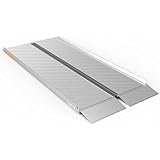 EZ-ACCESS Singlefold Wheelchair Ramp, 6 ft
Folds like a suitcase and carries in a car boot, so the same ramp handles the front step at home and the kerb at an appointment.
Check price on Amazon → Drive Medical Nitro Rollator with Seat
The seat matters more than the wheels. Being able to stop and rest is what decides whether someone still goes out at all.
Check price on Amazon → Vive Stand Assist Rail for Couch or Chair
Getting out of a low sofa is where most falls at home start. This is the cheapest thing on the list and often the first one needed.
Check price on Amazon →As an Amazon Associate we earn from qualifying purchases, at no extra cost to you. Researched guidance, not medical advice. Prices change, so check before buying.
What Counts as an Asset?
Countable Assets (Must Be Below Limit)
- Cash, checking, and savings accounts
- Stocks, bonds, mutual funds
- CDs and money market accounts
- Non-primary real estate
- Most retirement accounts (varies by state)
- Life insurance with cash value over $1,500
Exempt Assets (Don't Count)
- Primary home (with equity limit, typically $713,000 in 2026)
- One vehicle
- Personal belongings and household goods
- Prepaid burial/funeral plans
- Small amount of life insurance (under $1,500 face value)
- Wedding/engagement rings
If Your Parent Earns Too Much Income
Most states use income toward the cost of care, with Medicaid paying the difference. Your parent keeps a small personal needs allowance (typically $30-$70/month).
If income is slightly over the limit, some states offer:
- Qualified Income Trust (Miller Trust): Income goes into trust, then to facility
- Medically Needy Programs: "Spend down" excess income on medical costs
If Your Parent Has Too Many Assets
Legal ways to reduce countable assets:
- Pay off debts (mortgage, credit cards)
- Make home modifications for aging in place
- Purchase exempt items (prepaid funeral, car)
- Spend on medical expenses not covered by insurance
- Convert countable assets to exempt (with legal guidance)
The rules are complex and mistakes are costly. An elder law attorney or Medicaid planner can help legally protect assets while ensuring eligibility. The cost of advice is usually far less than the cost of mistakes.
Protecting the Spouse at Home
If your parent is married and one spouse stays home:
- Community Spouse Resource Allowance: The spouse at home can keep a portion of assets (around $154,000 in 2026)
- Monthly Maintenance Allowance: Part of the nursing home spouse's income can go to the community spouse if needed
- Home is protected: As long as the community spouse lives there
If the Application Is Denied
Common reasons for denial and what to do:
- Over asset limit: Spend down or transfer to exempt assets, reapply
- Missing documentation: Provide required documents, appeal
- Penalty period: Appeal if transfer was for reasons other than qualifying
- Doesn't meet care level: Request reassessment, appeal with medical documentation
You have the right to appeal any denial. Deadlines are strict, usually 30-90 days.
Tips for a Smoother Process
- Apply as soon as you anticipate needing care, there's often a backlog
- Be thorough and honest on the application
- Keep copies of everything
- Respond quickly to all requests
- Consider hiring an elder law attorney for complex situations
- Ask the nursing home social worker for help
Where to Apply
Find your state's Medicaid office:
- Online: Search "[your state] Medicaid application"
- Phone: Call 1-800-MEDICARE and ask for Medicaid information
- In person: Local Department of Social Services or Health and Human Services
- SHIP: Free help from State Health Insurance Assistance Program
Medicaid Planning Guide
Get our complete guide to Medicaid spend down strategies and asset protection.
Read the Guide