Medicaid Lookback Period: The 5-Year Rule Explained
Your parent needs nursing home care, and you're looking at Medicaid to help pay. But Medicaid doesn't just look at current assets, they look back 5 years to see if any assets were given away. If they find transfers, your parent may be penalized and denied coverage. Understanding the lookback period is essential before you make any moves.
Medicaid rules vary by state and mistakes can be costly. This guide provides general information, but you should consult with an elder law attorney before making any asset transfers or Medicaid planning decisions.
What Is the Lookback Period?
When someone applies for Medicaid long-term care benefits, the state reviews all financial transactions for the previous 60 months (5 years). They're looking for transfers made for less than fair market value, in other words, giving things away.
Why It Exists
The lookback period prevents people from giving away all their assets to qualify for Medicaid, then having taxpayers fund their care. Medicaid is meant for those who truly can't afford care, not those who chose to transfer wealth to heirs.
When It Starts
- The 60-month lookback begins on the date of Medicaid application
- It looks back from that date
- Example: Apply in January 2026 → they review January 2021 through January 2026
California previously had a 30-month lookback for some programs, though this has changed. Some states may have different rules for certain Medicaid programs. Always check your state's specific rules.
The equipment that changes the most
Most of what caregiving costs is time. These four are the purchases that reliably buy some of it back, and they are the ones families tell us they wish they had bought sooner.
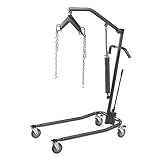 Drive Medical Hydraulic Patient Lift
A full lift is what makes one person able to manage a transfer alone. It is the single purchase that most often delays a move into residential care.
Check price on Amazon →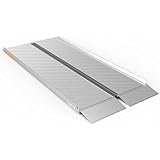 EZ-ACCESS Singlefold Wheelchair Ramp, 6 ft
Folds like a suitcase and carries in a car boot, so the same ramp handles the front step at home and the kerb at an appointment.
Check price on Amazon → Drive Medical Nitro Rollator with Seat
The seat matters more than the wheels. Being able to stop and rest is what decides whether someone still goes out at all.
Check price on Amazon → Vive Stand Assist Rail for Couch or Chair
Getting out of a low sofa is where most falls at home start. This is the cheapest thing on the list and often the first one needed.
Check price on Amazon →As an Amazon Associate we earn from qualifying purchases, at no extra cost to you. Researched guidance, not medical advice. Prices change, so check before buying.
What Triggers a Penalty?
- Giving money to children or grandchildren
- Adding a child's name to a bank account, then they withdraw
- Selling property below market value
- Transferring the house to children (with exceptions)
- Paying for a grandchild's college
- Giving large gifts
- Loaning money without proper documentation
- Paying a child for caregiving without a proper agreement
How Penalties Are Calculated
The penalty isn't just "you can't have Medicaid." Instead, there's a period of ineligibility:
- Total up all improper transfers in the lookback period
- Divide by the average cost of nursing home care in your state
- The result is the number of months of ineligibility
Example: If your parent gave away $100,000 and the average nursing home cost is $10,000/month, they face a 10-month penalty period where Medicaid won't pay.
The penalty period doesn't start when the transfer was made. It starts when your parent applies for Medicaid AND is otherwise eligible (in a nursing home, out of money). This is the worst possible time to be denied coverage.
What Doesn't Count as a Transfer
- To a spouse: Unlimited transfers between spouses
- To a blind or disabled child: At any age
- Home to certain people: (See below)
- For fair market value: Selling something for what it's worth
- Exclusively for a purpose other than Medicaid: (Hard to prove)
- If hardship exemption applies: (Rare, strict criteria)
Exempt Home Transfers
The home can be transferred without penalty to:
- Spouse: Always okay
- Child under 21: Or blind/disabled child of any age
- Sibling with equity interest: Who lived there 1+ year before nursing home
- Caregiver child: Who lived there 2+ years before nursing home and provided care that delayed nursing home placement
The "caregiver child" exemption is often misunderstood. The child must have actually lived in the home for at least 2 years AND provided care that demonstrably delayed nursing home placement. This must be documented and proven.
Planning Ahead
If You Have 5+ Years
If your parent doesn't need care for at least 5 years, there's time to plan:
- Consult an elder law attorney
- Consider irrevocable trusts
- Make gifts that will "age out" of the lookback
- Purchase long-term care insurance
- Consider Medicaid-compliant annuities
If You Have Less Than 5 Years
Options are more limited, but an attorney may help with:
- Spousal protections (if married)
- Caregiver agreements
- Promissory notes (loans)
- Life estate deeds
- Half-a-loaf strategies
If Care Is Needed Now
If your parent needs nursing home care immediately:
- Don't make any transfers, it's too late
- Apply for Medicaid and be honest
- Work with an attorney on any past transfers
- Understand spousal protections
- Consider hardship exemption if applicable
Spousal Protections
When one spouse needs nursing home care, the "community spouse" (the one staying home) has protections:
Community Spouse Resource Allowance (CSRA)
- The at-home spouse can keep a portion of assets
- Amount varies by state but has federal minimum and maximum
- In 2026: Typically between ~$30,000 and ~$150,000
- The home is generally exempt while spouse lives there
Income Protections
- Community spouse keeps their own income
- May receive some of nursing home spouse's income if needed
- Minimum Monthly Maintenance Needs Allowance (MMMNA)
Some families consider divorce to protect assets. This is rarely advisable, there are usually better options, and divorce has its own legal and emotional costs. Consult an elder law attorney before considering this.
What About the House?
During Life
- The home is usually exempt while the applicant or spouse lives there
- There may be equity limits (typically $688,000-$1,033,000 in 2026)
- Intent to return home may protect it even if in nursing home
After Death: Estate Recovery
- Medicaid will seek repayment from the estate after death
- This usually means the house must be sold to repay Medicaid
- Some protections exist for surviving spouses and dependents
- Rules vary significantly by state
Common Mistakes
- Last-minute transfers: Transferring assets when nursing home is imminent
- Adding children to accounts: Creates a deemed transfer when they can access funds
- Informal caregiving payments: Paying family without proper agreement
- Hiding assets: Medicaid fraud is a crime
- DIY planning: Internet advice without professional guidance
- Waiting too long: Starting planning when care is already needed
Legal Strategies
An elder law attorney might use strategies including:
Irrevocable Trusts
- Assets transferred to trust at least 5 years before needing care
- Parent gives up control of assets
- Trust can provide income or benefits to parent
- Assets protected from Medicaid after lookback expires
Caregiver Agreements
- Formal written agreement to pay family for care
- Must be fair market rate for services
- Must document services provided
- Should be set up before care begins
Promissory Notes
- Loan to family members instead of gift
- Must be at fair market interest rate
- Must have repayment schedule
- Must be actuarially sound