Selling Your Elderly Parent's House: A Complete Guide
When a parent moves to assisted living, a nursing home, or in with family, their house often needs to be sold. It's an emotional process layered with practical and legal complexities. This guide walks you through the decisions and steps involved.
If your parent may need Medicaid within 5 years, selling their home has major implications. The house is usually exempt while they're alive, but sale proceeds are not. Consult an elder law attorney before selling.
Do You Have Legal Authority?
Before you can sell your parent's house, you need legal authority to do so:
If Parent Has Capacity (Can Make Decisions)
- They can sell the house themselves with your help
- They can give you Power of Attorney to act on their behalf
- All documents must be in their name or with POA
If Parent Lacks Capacity
- Power of Attorney already in place: You can act for them
- No POA: You may need court-appointed guardianship or conservatorship
- Joint ownership: May simplify sale depending on state laws
Not all POAs allow real estate transactions. Read the document carefully or have an attorney review it. It must specifically grant authority to sell real property.
The equipment that changes the most
Most of what caregiving costs is time. These four are the purchases that reliably buy some of it back, and they are the ones families tell us they wish they had bought sooner.
 Drive Medical Hydraulic Patient Lift
A full lift is what makes one person able to manage a transfer alone. It is the single purchase that most often delays a move into residential care.
Check price on Amazon →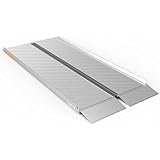 EZ-ACCESS Singlefold Wheelchair Ramp, 6 ft
Folds like a suitcase and carries in a car boot, so the same ramp handles the front step at home and the kerb at an appointment.
Check price on Amazon → Drive Medical Nitro Rollator with Seat
The seat matters more than the wheels. Being able to stop and rest is what decides whether someone still goes out at all.
Check price on Amazon → Vive Stand Assist Rail for Couch or Chair
Getting out of a low sofa is where most falls at home start. This is the cheapest thing on the list and often the first one needed.
Check price on Amazon →As an Amazon Associate we earn from qualifying purchases, at no extra cost to you. Researched guidance, not medical advice. Prices change, so check before buying.
When to Sell
Reasons to Sell Quickly
- Need funds for care costs
- House is deteriorating without occupant
- Insurance and maintenance costs are high
- Market conditions are favorable
- House is far from family caregivers
Reasons to Wait
- Medicaid planning: Keeping the house may protect it from Medicaid recovery
- Spouse still living there
- Tax benefits: Stepped-up basis at death eliminates capital gains
- Parent might return home
- Emotional readiness of parent or family
Tax Considerations
If Parent Sells While Living
- Primary residence exclusion: Up to $250,000 gain excluded (single) or $500,000 (married)
- Must have lived there 2 of last 5 years (nursing home may count)
- Gains above exclusion are taxable
If Inherited After Death
- Stepped-up basis: Heirs' cost basis is market value at death
- Often eliminates capital gains entirely
- May be reason to hold property if parent is in declining health
Consult a tax professional before making decisions, the tax implications can be significant.
The Selling Process
1Secure Legal Authority
Confirm you have Power of Attorney or other legal right to sell. Title company will verify this.
2Assess the Property
Walk through and note needed repairs. Decide whether to sell as-is or make improvements. Get a few real estate agents to give comparable sales analysis.
3Handle Belongings
Clear the house of personal property. This often takes longer than expected. See section below.
4Choose Selling Method
- Traditional listing: Usually gets highest price, takes 2-6 months
- Cash buyer/investor: Fast (days to weeks), lower price
- iBuyer: Convenience, moderate price
- Auction: Quick, unpredictable price
5Price and List
Work with agent to set realistic price. Disclose all known issues. Market the property.
6Negotiate and Close
Review offers, negotiate terms, complete inspections, close sale. Title company handles paperwork.
Dealing with Belongings
A house full of a lifetime of possessions is often the hardest part:
Getting Started
- Involve your parent if possible, even remotely via video call
- Gather family to choose meaningful items
- Take photos of sentimental items they can't keep
- Go room by room: don't try to do everything at once
What to Do with Items
- Keep: Most meaningful items (but be realistic about space)
- Distribute: Family members take what they want
- Sell: Estate sale, consignment, online marketplaces
- Donate: Charities, churches, Habitat ReStore
- Discard: Junk removal service for the rest
Professional Help
- Estate sale company: Handles selling contents (typically 30-40% commission)
- Senior move manager: Specializes in helping elderly downsize
- Junk removal: For large-scale cleanout
Medicaid and the House
If your parent is on or may need Medicaid:
- Primary residence is usually exempt from Medicaid asset limits
- If sold: Proceeds become countable assets, potentially disqualifying them
- Estate recovery: After death, Medicaid can seek repayment from estate, including house
- Spouse protections: Community spouse can often keep the home
Medicaid rules are complex and vary by state. An elder law attorney can help you protect assets legally while ensuring care is covered. The cost of advice is often far less than mistakes.
Emotional Considerations
- Involve your parent: Even if they can't help, keep them informed and include them in decisions
- Acknowledge the grief: This is their home, their independence, their life
- Don't rush: If financially possible, give everyone time to adjust
- Preserve memories: Photos, videos, saving a few small items
- It's okay to feel relief: Managing the house from afar is stressful
Checklist: Before Selling
- Confirm legal authority (POA, guardianship)
- Consult elder law attorney if Medicaid is a factor
- Consult tax professional about capital gains
- Review insurance, get vacant home coverage if needed
- Continue paying property taxes and utilities
- Secure the property (change locks, stop mail)
- Clear personal belongings
- Make necessary repairs or sell as-is
Estate Planning Workbook
Organize all the important documents and information you need.
Get the Workbook