Medicare Denial Appeals: How to Fight Back and Win
Medicare denied coverage. Now what? Whether it's a hospital stay, skilled nursing facility, home health, or medical equipment, don't give up. Medicare denials can be appealed, and a significant percentage of appeals succeed. Here's how to fight back.
Many people don't know they can appeal, or they assume it's hopeless. In reality, approximately 40-50% of Medicare appeals are successful at some level. The denial isn't always the final answer.
Common Medicare Denials
Hospital and Post-Acute Care
- Observation status instead of inpatient: Affects SNF coverage
- SNF stay not covered: "Not medically necessary"
- Home health denied: "Not homebound" or "not skilled care"
- Rehab days cut short: "No longer making progress"
Medical Equipment and Services
- Durable medical equipment (DME): Wheelchairs, hospital beds, oxygen
- Prescription drugs: Part D denials
- Procedures and tests: "Not medically necessary"
- Ambulance transport: "Not an emergency"
You have 120 days from the date of the Medicare Summary Notice (MSN) to file a Level 1 appeal. For some fast-track appeals (like ongoing care being cut), you may have only 2 days. Don't delay.
The equipment that changes the most
Most of what caregiving costs is time. These four are the purchases that reliably buy some of it back, and they are the ones families tell us they wish they had bought sooner.
 Drive Medical Hydraulic Patient Lift
A full lift is what makes one person able to manage a transfer alone. It is the single purchase that most often delays a move into residential care.
Check price on Amazon →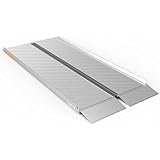 EZ-ACCESS Singlefold Wheelchair Ramp, 6 ft
Folds like a suitcase and carries in a car boot, so the same ramp handles the front step at home and the kerb at an appointment.
Check price on Amazon → Drive Medical Nitro Rollator with Seat
The seat matters more than the wheels. Being able to stop and rest is what decides whether someone still goes out at all.
Check price on Amazon → Vive Stand Assist Rail for Couch or Chair
Getting out of a low sofa is where most falls at home start. This is the cheapest thing on the list and often the first one needed.
Check price on Amazon →As an Amazon Associate we earn from qualifying purchases, at no extra cost to you. Researched guidance, not medical advice. Prices change, so check before buying.
The 5 Levels of Medicare Appeals
Level 1: Redetermination
Who decides: Medicare Administrative Contractor (MAC)
Deadline: 120 days from MSN date
Decision time: 60 days (30 days for Part D)
How to file: Written request to the MAC listed on your denial notice. Include why you disagree and any supporting documentation.
Level 2: Reconsideration
Who decides: Qualified Independent Contractor (QIC)
Deadline: 180 days from Level 1 decision
Decision time: 60 days (7 days for Part D)
How to file: Follow instructions on Level 1 decision. A fresh set of eyes reviews your case.
Level 3: Administrative Law Judge (ALJ) Hearing
Who decides: Administrative Law Judge
Deadline: 60 days from Level 2 decision
Minimum amount: Must meet threshold ($195 in 2026)
Decision time: 90 days
How to file: Request a hearing. You can present evidence, testimony, and have representation.
Level 4: Medicare Appeals Council
Who decides: Department of Health and Human Services
Deadline: 60 days from ALJ decision
Decision time: 90 days
How to file: Written request to the Appeals Council.
Level 5: Federal Court
Who decides: Federal District Court
Deadline: 60 days from Level 4 decision
Minimum amount: Must meet threshold ($1,960 in 2026)
Note: Rarely needed. Most cases resolve at earlier levels.
Step-by-Step: Filing Your Appeal
Step 1: Read the Denial Carefully
- Understand exactly why it was denied
- Note the deadline for appeal
- Find the address/method for filing
- Check if it's an initial denial or a later level
Step 2: Gather Documentation
- Medical records supporting necessity
- Doctor's statement explaining why care is needed
- Lab results, imaging, test results
- Notes from therapists showing progress/need
- Personal statement describing impact on patient
Step 3: Write Your Appeal Letter
Include:
- Your parent's name and Medicare number
- Claim number being appealed
- Clear statement that you're requesting an appeal
- Specific reasons why the denial is wrong
- Reference to Medicare coverage rules that support you
- List of enclosed supporting documents
A letter from your parent's doctor explaining why the care is medically necessary is often the most important piece of an appeal. Ask the doctor to write a detailed letter referencing specific medical criteria.
Step 4: Submit and Track
- Keep copies of everything you send
- Send by certified mail or get confirmation
- Note the date you sent it
- Follow up if you don't hear back
Fast-Track Appeals (Expedited)
If your parent is being discharged from a hospital, SNF, or home health and you think it's too soon, you can request a fast-track appeal (called an "immediate review"). You must act within 2 days of receiving the discharge notice.
How to Request Fast-Track Appeal
- Ask for a written notice of the discharge or service termination
- Call the Quality Improvement Organization (QIO) for your state
- The QIO number should be on the discharge notice
- Request an expedited review within the deadline
- Your parent can stay while the review is pending
Common Denial Reasons and How to Counter
"Not Medically Necessary"
- Get a detailed letter from the doctor
- Provide documentation of the condition
- Show what would happen without the care
- Reference Medicare coverage criteria
"Not Homebound" (for Home Health)
- Document why leaving home is a taxing effort
- Note need for assistance to leave
- List medical reasons for staying home
- "Homebound" doesn't mean can never leave, occasional outings are allowed
"No Longer Making Progress" (for Therapy)
- Get therapist documentation of continued need
- Show that skilled care is needed to maintain function
- Note that maintenance therapy can be covered
- Document what would happen if therapy stopped
"Observation Status" (Hospital Stay)
- This is harder to appeal after the fact
- Ask about changing status while still in hospital
- If SNF is denied because of observation status, appeal the SNF denial
- Document why inpatient care was needed
Getting Help with Appeals
Free Help Available
- State Health Insurance Assistance Program (SHIP): Free Medicare counseling
- Hospital patient advocates: Can help with hospital-related denials
- Social workers: At hospitals, SNFs, home health agencies
- Legal aid organizations: For complex cases
- Center for Medicare Advocacy: National nonprofit that helps with appeals
When to Hire Help
Consider professional help for:
- Large dollar amounts at stake
- Complex medical issues
- Appeals that have already been denied multiple times
- Level 3 (ALJ) and beyond
- Don't give up after the first denial
- Include more documentation at each level
- Get doctors to write detailed letters
- Reference specific Medicare rules and criteria
- Keep copies of everything
- Meet all deadlines
While You Appeal
What Happens During the Appeal?
- You may need to pay out of pocket initially
- Keep all receipts and documentation
- If you win, Medicare will reimburse
- For ongoing services, request continuation during appeal
If Your Appeal Is Denied
- You can appeal to the next level
- Get additional documentation for the next level
- Consider getting professional help
- Some cases are stronger at higher levels (especially ALJ)
Benefits Checker Tool
Make sure your parent is getting all the Medicare benefits they're entitled to.
Check Benefits