Memory Care vs Nursing Home: Which Is Right for Dementia?
Your parent has dementia and can no longer live safely at home. You're researching options and keep seeing "memory care" and "nursing home." What's the difference? Which one is right?
The answer depends on your parent's physical health, dementia stage, and budget. Here's everything you need to know.
Quick Definitions
Memory Care
A specialized form of assisted living designed specifically for people with Alzheimer's and other dementias. Features secured units to prevent wandering, dementia-trained staff, structured activities, and an environment designed for cognitive impairment.
Best for: People with dementia who are relatively mobile and don't require skilled nursing care.
Nursing Home (Skilled Nursing Facility)
A facility providing 24-hour medical care with nurses on staff around the clock. Handles complex medical needs, rehabilitation, and end-of-life care. Some have dementia units, but dementia care isn't the primary focus.
Best for: People who need medical care beyond what assisted living can provide, regardless of cognitive status.
The equipment that changes the most
Most of what caregiving costs is time. These four are the purchases that reliably buy some of it back, and they are the ones families tell us they wish they had bought sooner.
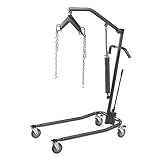 Drive Medical Hydraulic Patient Lift
A full lift is what makes one person able to manage a transfer alone. It is the single purchase that most often delays a move into residential care.
Check price on Amazon →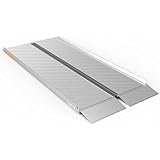 EZ-ACCESS Singlefold Wheelchair Ramp, 6 ft
Folds like a suitcase and carries in a car boot, so the same ramp handles the front step at home and the kerb at an appointment.
Check price on Amazon → Drive Medical Nitro Rollator with Seat
The seat matters more than the wheels. Being able to stop and rest is what decides whether someone still goes out at all.
Check price on Amazon → Vive Stand Assist Rail for Couch or Chair
Getting out of a low sofa is where most falls at home start. This is the cheapest thing on the list and often the first one needed.
Check price on Amazon →As an Amazon Associate we earn from qualifying purchases, at no extra cost to you. Researched guidance, not medical advice. Prices change, so check before buying.
Side-by-Side Comparison
| Memory Care | Nursing Home | |
|---|---|---|
| Primary Focus | Dementia care & safety | Medical/skilled nursing care |
| Medical Staff | Usually no nurses 24/7; medication management, personal care aides | RNs and LPNs on staff 24/7; can handle IVs, wound care, etc. |
| Secured Environment | Yes, locked units to prevent wandering | Some have dementia units; not all are secured |
| Dementia Training | All staff trained in dementia care | Varies; may not be specialized |
| Activities | Tailored for cognitive abilities; music, reminiscence, sensory | General activities; may not be dementia-specific |
| Environment | Home-like, smaller units, designed to reduce confusion | More clinical/institutional feel |
| Room Type | Usually private or semi-private rooms | Often shared rooms |
| Cost (2026) | $5,500-9,000/month | $8,000-12,000/month (private room) |
| Medicaid Coverage | Limited in most states | Yes, when qualified |
2026 Costs
Memory care is typically 30-40% less expensive than a nursing home, but Medicaid usually covers nursing homes while most memory care is private-pay.
When Memory Care Is the Right Choice
Your parent needs dementia-specialized care
They wander, get confused, need redirection, and benefit from activities designed for their cognitive level. Staff trained specifically in dementia will understand their needs better.
They're relatively physically healthy
They can walk (even if unsteadily), don't need complex medical care, feeding tubes, or wound management. Their primary needs are supervision, personal care, and cognitive support.
A secured environment is essential
Wandering is a significant concern. Memory care units are designed specifically to prevent elopement while maintaining quality of life.
You want a home-like environment
Memory care communities are typically smaller, warmer, and less clinical than nursing homes. Many families feel they offer better quality of life.
When a Nursing Home Is the Right Choice
Your parent needs skilled medical care
They need IVs, feeding tubes, complex wound care, oxygen therapy, or other medical interventions that require licensed nurses.
They need rehabilitation
After a hospitalization, surgery, or stroke, they need physical, occupational, or speech therapy. Nursing homes provide this (often covered by Medicare short-term).
They're immobile or require two-person transfers
If they're bedridden or need a Hoyer lift, memory care may not have the staffing or equipment. Nursing homes are better equipped for physical care needs.
Medicaid will pay
If your parent qualifies for Medicaid and has depleted their assets, a nursing home may be the only affordable option. Most memory care doesn't accept Medicaid.
End-of-life care is approaching
In late-stage dementia with multiple medical issues, nursing homes can provide more intensive end-of-life care (though hospice can be added anywhere).
Some nursing homes have specialized dementia units. Some memory care communities have higher levels of care. Ask specifically about what medical services are available and whether they can keep your parent if their needs increase.
Questions to Ask Memory Care Communities
- What dementia training do staff receive?
- What's the staff-to-resident ratio?
- How do you handle behavioral issues (aggression, wandering, sundowning)?
- What activities are offered? Are they tailored to different dementia stages?
- How do you manage medications?
- At what point would my parent need to transfer to a nursing home?
- Do you have a nurse on staff? How often?
- Is hospice care allowed on-site?
- What's included in the monthly rate? What costs extra?
Questions to Ask Nursing Homes
- Do you have a dedicated dementia/memory unit?
- How are dementia residents cared for differently?
- What activities are available for residents with cognitive impairment?
- What's the RN-to-patient ratio?
- Are there secured areas to prevent wandering?
- What are the visiting hours?
- What's the process if my parent's needs change?
- What are your Medicare and Medicaid ratings?
What About Assisted Living with Memory Care?
Many assisted living facilities have "memory care wings" or "memory care neighborhoods." These are essentially memory care within an assisted living setting. They typically offer:
- Secured unit within a larger community
- Higher staff-to-resident ratio than general assisted living
- Dementia-specific programming
- Personal care and medication management
This can be a good option if your parent is in early to mid-stage dementia, doesn't yet need skilled nursing, and you want a community where they might transition between levels of care.
Some facilities call themselves "memory care" without specialized training or appropriate staffing. Ask about staff certifications, dementia-specific training hours, and staff turnover. Visit at different times of day. Trust your instincts.
Making the Decision
Start by honestly assessing your parent's current needs:
- Medical needs: Do they require skilled nursing? IVs? Wound care? Complex medication management?
- Physical ability: Can they walk? Transfer? Feed themselves?
- Dementia stage: Early, middle, or late? Behavioral issues?
- Safety concerns: Is wandering a major issue?
- Budget: Can you afford private-pay, or will you need Medicaid?
Also consider future needs, dementia progresses. Ask facilities what happens when care needs increase.
Facility Comparison Checklist
Download our checklist to evaluate and compare memory care and nursing home facilities side by side.
Get the Checklist