How we choose what to recommend.
ParentCareGuide is editorially independent. Picks come from published-spec research and verified buyer-review patterns at 4.0+ stars across 200+ reviews. We are not paid by manufacturers for placement and have not received free product from any brand listed.
Disclosure: Amazon affiliate links, we earn 2–4% commission at no extra cost. How we choose → · Affiliate disclosure →
When a parent is recovering from surgery, managing a chronic condition, or spending significant time in bed, a good overbed table becomes essential, not a luxury. It means they can eat meals comfortably, read, use a tablet, and do light activities without straining or risking a fall reaching for items on the floor.
We researched eight of the best-selling, highest-rated overbed tables available today, evaluating each for stability, height adjustment range, surface size, ease of positioning, and overall value. Whether your parent needs a simple rolling table for short-term recovery or a premium unit for long-term daily use, there is a strong option at every price point.
Quick Comparison: 8 Best Overbed Tables 2026
| Product | Surface Size | Height Range | Price | Best For |
|---|---|---|---|---|
| Drive Medical Non-Tilt | 30" x 15" | 28"–45" | Under $100 | Best overall value |
| Vaunn Adjustable | 28" x 16" | 28"–44" | Under $100 | Pneumatic lift, everyday use |
| Premimax Adjustable | 31" x 16" | 28"–46" | Under $100 | Home-like finish, stable base |
| SANODESK Medical | 27.6" x 15.7" | 27"–45" | Under $100 | Hidden casters, easy rolling |
| Signature Life Freedom | Oversized swivel | 28"–48" | Under $250 | Premium stability, daily use |
| Invacare Tilting | 30" x 15" | 28"–45" | Under $100 | Tilting surface for reading |
| Vive Overbed Table | 30" x 16" XL | 28"–45" | Under $250 | Extra-large top, satisfaction guarantee |
| LINGMI Adjustable | 26" x 15" | 27"–43" | Under $100 | Lowest cost, tilting top |
The 8 Best Overbed Tables for Seniors, Detailed Reviews
Drive Medical Non-Tilt Overbed Table
 Best for: Daily use with consistent flat surface needs
The Drive Medical Non-Tilt is one of the most trusted names in hospital-style overbed tables, and its consistent quality is why you see this model in home care settings across the country. The "non-tilt" designation means the tabletop stays flat regardless of the pedestal angle, which matters for meals, beverages, and anything that could spill. The base rolls on four smooth casters and slides easily under most standard beds and hospital-style bed frames.
Height adjustment is handled by a single lever that raises and lowers smoothly. At under $100 with Drive Medical's established reliability, this is the overbed table we would choose first for most caregiving situations. The laminate surface cleans easily with a standard disinfectant wipe, important for a parent managing any health condition.
Pros
- Trusted Drive Medical brand
- Non-tilt top prevents spills
- Easy single-lever height adjustment
- Smooth-rolling casters
- Easy-clean laminate surface
Cons
- No tilting option for reading
- Standard surface size only
Vaunn Adjustable Overbed Table
 Best for: Everyday use with smooth pneumatic height adjustment
The Vaunn Adjustable uses a pneumatic gas-lift mechanism that raises and lowers the surface with a light touch, which is easier on arthritic hands than a manual crank or lever. The height range covers most adult bed heights, the casters roll smoothly, and the surface is large enough for a standard dinner plate, tablet, or laptop. For a parent who wants a recognizable medical brand with effortless adjustment, this is a practical choice.
The build is sturdy for daily use, the surface wipes clean easily, and the rolling base tucks neatly under most beds. If you want a dependable everyday overbed table from a well-reviewed brand, the Vaunn is a safe pick.
Pros
- Effortless pneumatic gas-lift height
- Recognizable medical brand
- Easy-clean surface
- Sturdy for daily use
Cons
- Casters less smooth on thick carpet
- No tilting surface option
- Compact top versus oversized models
Premimax Adjustable Overbed Table
 Best for: Parents who want a home-like look with a stable, roomy surface
The Premimax Adjustable Overbed Table earns its spot by pairing a roomy 31 by 16 inch surface with a warm walnut-brown finish that looks more like home furniture than a hospital cart. The reinforced base is noticeably more stable than lightweight alternatives, which matters for a parent who leans on the table when repositioning in bed.
The pneumatic height range extends to 46 inches, accommodating higher hospital-style beds that standard overbed tables sometimes cannot reach. Assembly is quick and the rolling base tucks under the bed cleanly. At under $100 it is a fair price for the extra stability, surface space, and the more residential look.
Pros
- Roomy 31" x 16" surface
- Reinforced stable base
- Extended height range to 46"
- Home-like walnut finish
- Good for full meal setups
Cons
- Slightly bulkier base than compact models
- No tilting surface option
SANODESK Medical Adjustable Overbed Table
 Best for: Families who move the table frequently between rooms
The SANODESK Medical Adjustable Overbed Table earns particular praise for the quality of its hidden casters. The concealed wheels roll smoothly on both hardwood floors and low-pile carpet, which matters if you are repositioning the table multiple times a day or moving it between a bedroom and a living room recliner setup. The pneumatic height lift adjusts with a light touch.
The surface is a roomy 27.6 by 15.7 inches, and the laminate wipes down easily. The hidden-caster design gives it a cleaner, more residential look than exposed-wheel models, and the smooth rolling performance makes day-to-day use genuinely easier.
Pros
- Hidden casters roll very smoothly
- Cleaner, more residential look
- Light-touch pneumatic height lift
- Easy repositioning between rooms
Cons
- No tilting surface option
- Higher price than basic carts
Signature Life Freedom Overbed Table
 Best for: Long-term daily use where features and stability matter most
The Signature Life Freedom Overbed Table is the most substantial option in this review, and the difference in build quality is immediately apparent. It adds an oversized 360-degree swivel tray, a built-in cup holder, and an organizer pouch that keeps a phone, remote, and tissues within reach. The reinforced base is heavier and more stable than budget models, so it does not drift when your parent pushes against it while repositioning.
For a parent who will use an overbed table every single day for the foreseeable future, the roughly $200 investment pays off in durability, organization, and safety. The smooth height adjustment, swivel tray, and quality casters reflect a genuinely premium product built to last years, not months.
Pros
- Highest build quality in this review
- Oversized 360-degree swivel tray
- Cup holder and organizer pouch
- Very stable reinforced base
- Built for years of daily use
Cons
- Most expensive at under $250
- Heavier to reposition
Invacare Tilting Overbed Table
 Best for: Parents who read, draw, or use a tablet in bed frequently
The Invacare Tilting Overbed Table is the standout choice when your parent spends time reading, doing puzzles, or using a tablet in bed. The tilting surface adjusts to multiple angles, propping books and screens at a comfortable viewing angle without your parent needing to hold items up, which reduces neck and shoulder strain during extended activity. The waterproof top wipes clean and the L-shaped steel base slides cleanly under the bed.
At under $100 it sits in the upper-mid range of this review, and the tilting feature plus the trusted Invacare name justify the price for the right user. The surface returns to flat for meals and beverages, the base rolls smoothly, and the height range covers most standard bed heights. If your parent is an avid reader or spends significant downtime with a tablet or laptop, the Invacare's tilting capability is a genuine quality-of-life upgrade.
Pros
- Tilting surface for reading and screens
- Locks securely at angle settings
- Reduces neck and shoulder strain
- Converts to flat for meals
- Mid-range price for premium feature
Cons
- Tilt mechanism adds assembly complexity
- Not as stable as non-tilt models when tilted
Vive Overbed Table
 Best for: Families who want a larger surface and a satisfaction guarantee
Vive backs its XL overbed table with a generous satisfaction guarantee that signals genuine confidence in the product. The extra-large top gives a parent more room for a full meal, a laptop, and a drink at the same time, and the warm brown finish looks at home in a bedroom rather than a hospital ward. For a parent who uses the table for extended periods, the larger surface makes a real difference.
The swivel wheels roll smoothly and lock for stationary use, and the height adjustment covers most standard bed heights. At a slight price premium over compact models, what you are paying for is the oversized surface, the residential look, and Vive's peace-of-mind return policy. Overall build quality is solid and consistent with Vive's reputation in the adaptive equipment category.
Pros
- Extra-large surface for meals and laptops
- Satisfaction guarantee
- Solid Vive brand quality
- Swivel wheels that lock
Cons
- Higher price than compact models
- No tilting surface option
LINGMI Adjustable Overbed Table
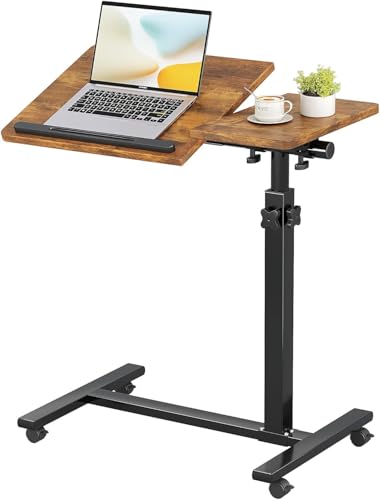 Best for: Short-term recovery or a low-cost second table
At under $100, the LINGMI is the lowest-cost overbed table in this review that still delivers reliable function, and it even adds a tilting top for reading or laptop use. It adjusts in height, rolls on wheels, and provides a surface large enough for a meal, a book, or a tablet. The construction is lighter than premium options, but for a 4 to 8 week recovery period or as a second bedside table, it performs its job without complaint.
Be clear-eyed about the trade-offs: thinner materials and a more basic frame compared to the Signature Life or Vive models. For short-term recovery or a budget setup, it is a sensible choice. For a parent who will need an overbed table for heavy long-term daily use, invest in a more durable model.
Pros
- Lowest price in this review
- Adds a tilting top for reading
- Basic height adjustment
- Rolls on wheels
Cons
- Less durable for heavy long-term use
- Lighter overall construction
- Smaller surface than oversized models
What to Look for When Buying an Overbed Table
Height Adjustment Range
Confirm the table's minimum and maximum height accommodate your parent's specific bed. Standard beds sit at about 25 inches. Hospital-style beds and adjustable bases can be significantly higher. A table that doesn't reach your parent's bed height is useless, measure before buying.
Surface Size
A standard 30 by 15 inch surface fits a dinner plate, glass, and utensils comfortably. If your parent does crafts, puzzles, or uses a laptop, a wider 32 by 16 inch surface is meaningfully better. Check the listed dimensions carefully, marketing photos can be misleading about actual usable surface area.
Caster Quality and Locking
Smooth-rolling casters matter most if the table is moved frequently. Locking casters matter most if the table needs to stay stationary while your parent leans on it. Ideally, look for a model with both smooth rolling and at least one lockable caster.
Non-Tilt vs. Tilting Surface
A non-tilt surface is best for meals and beverages. A tilting surface is best for reading, drawing, and screen use. Some premium models offer both. If your parent eats in bed and also reads in bed, a non-tilt model with a separate book stand or tablet holder may be the most practical combination.
Affiliate disclosure. The product picks above are Amazon affiliate links. ParentCareGuide earns 2–4% commission when you buy through them, at no extra cost to you. We are editorially independent, manufacturers do not pay us for placement and we did not receive free product from any brand listed. Read our full disclosure →
Frequently Asked Questions
What is an overbed table used for?
An overbed table is a height-adjustable rolling table that slides over a bed, allowing a person to eat, read, write, use a phone or tablet, or do light activities without leaving bed. They are commonly used during post-surgical recovery, hospital stays, and for seniors with limited mobility who spend significant time in bed.
How do I know what height to set the overbed table?
With your parent seated in bed at their normal resting position, adjust the table so the surface sits approximately at the level of their lower chest or stomach, where they can reach items comfortably without stretching or hunching. Elbows should be at roughly 90 degrees when resting on the table surface.
Will the overbed table work with my parent's adjustable bed?
Most overbed tables accommodate standard height ranges of 27 to 45 inches. Many adjustable beds and hospital-style frames sit higher, check your parent's bed frame height at maximum elevation and compare to the table's listed maximum height. The Signature Life Freedom model extends to 48 inches, which covers most adjustable bases.
Can my parent lean on the overbed table to stand up?
No, overbed tables are not designed as transfer aids. Using an overbed table to push to standing is a fall hazard because the table will roll or tip. For safe transfers from bed to standing, use a bed rail, a floor-based grab bar, or a trapeze bar installed over the bed.
How do I clean an overbed table surface?
Most overbed tables have a laminate surface that wipes clean with standard disinfectant wipes or a damp cloth with mild soap. For a parent with a health condition where surface hygiene is important, wipe down with hospital-grade disinfectant after each meal. Avoid soaking the surface, which can damage the laminate edge sealing over time.
Get the Complete Caregiver Toolkit
Includes home setup checklists, medication trackers, care coordination templates, and 40+ more resources for every aspect of caring for an aging parent.
Get the Complete Toolkit for $39One more time, because this matters. Every product recommendation on this page is independent. We accept no manufacturer payment, no sponsored placement, and no free product in exchange for coverage. When you buy through an Amazon link here, we earn 2–4% commission, that's how we keep ParentCareGuide free to read. If a pick stops being our honest recommendation, we remove it. Our editorial standards → · Affiliate disclosure →